
How to Become a Tattoo Artist in Missouri
August 6, 2026
How to Become a Tattoo Artist in Wisconsin
August 6, 2026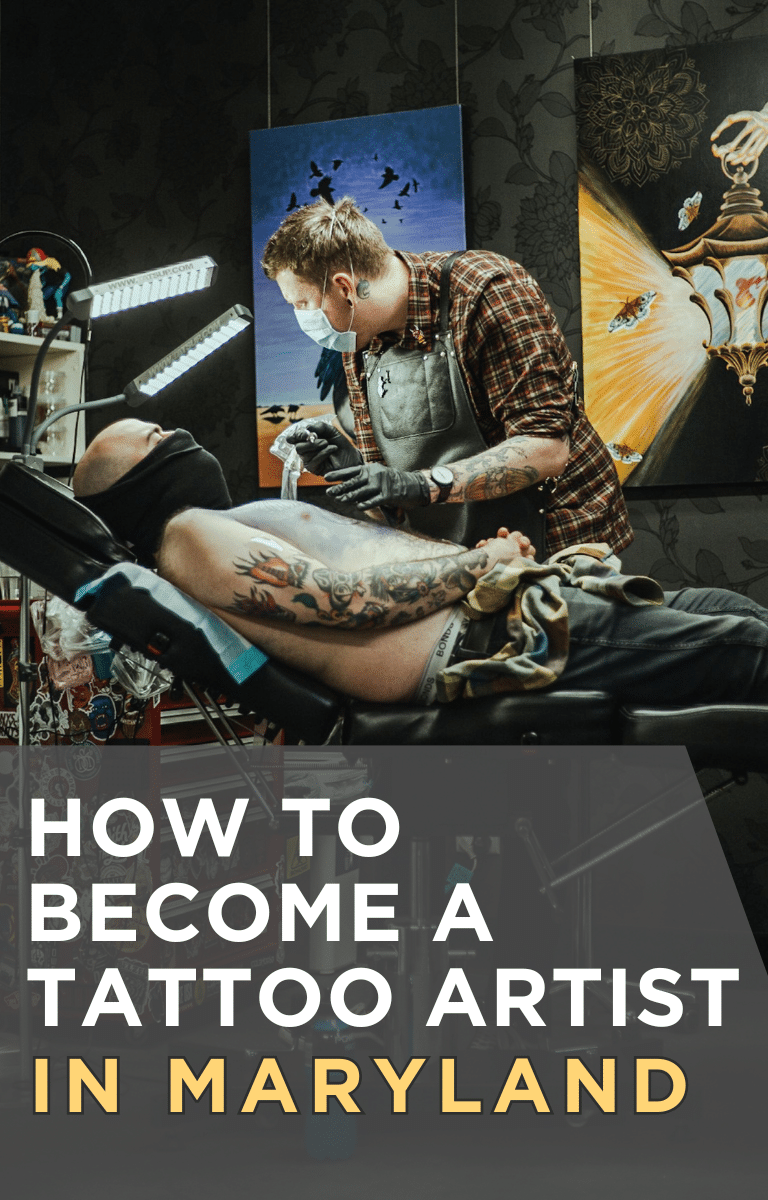
This guide walks you through how to become a Tattoo Artist in Maryland and what that local approach means for your career. It also covers how a serious tattoo apprenticeship prepares you to work professionally.
Table of Contents
- How does Maryland regulate tattooing?
- What does the minimal model mean for you?
- How do you become a Tattoo Artist in Maryland step by step?
- What does it cost to get started?
- What if you are moving to Maryland from another state?
- What mistakes should you avoid?
- How do you learn to tattoo with Ink Different?
- Frequently Asked Questions
Key Takeaways
- No state license: Maryland has no statewide Tattoo Artist license; local health departments enforce the rules.
- Governing law: Tattooing is regulated under COMAR 10.06.01.02 and 10.06.01.06.
- Core credentials: Bloodborne pathogens and First Aid certification are industry standards you should hold.
- County variation: Some counties like Montgomery add local ordinances on top of state rules.
- Career upside: A Professional Tattoo Artist can earn over $106,000 a year per ZipRecruiter.
How does Maryland regulate tattooing?
Maryland regulates tattooing through local health departments rather than a single statewide licensing board, following the state rules in COMAR 10.06.01.02 and 10.06.01.06. This is what the industry calls a minimal model, meaning the state sets baseline health and safety expectations while enforcement happens at the county level.
Because there is no statewide artist license, you will not find a central Maryland board issuing individual Tattoo Artist credentials. Instead, your local health department oversees studio compliance and sanitation within its jurisdiction. That makes your county the most important office to contact when you plan where to work.
Tip: Always confirm requirements with the specific county health department where your Tattoo Studio operates, because rules can differ from one county to the next.
The Maryland Department of Health publishes the COMAR regulations online, and reviewing them early helps you understand the sanitation and facility expectations before you ever pick up a tattoo machine.
What does the minimal model mean for you?
The minimal model means your focus should be on expert skill, health and safety certifications, and county compliance rather than chasing a state exam that does not exist. Maryland does not require a statewide test or a set number of supervised hours defined by the state.
That freedom is a double-edged sword. On one hand, you are not waiting on a bureaucratic license to start building a career. On the other hand, the absence of a mandated path puts the responsibility on you to train properly, because no state credential will vouch for your competence.
This is exactly why serious training matters so much in Maryland. Studios, clients, and county inspectors want to see that you understand sanitation, bloodborne pathogens, and safe practice. In a minimal-model state, your reputation and your training are your license.
The two credentials treated as industry standard are a bloodborne pathogens (BBP) certification and a First Aid certification. These are widely expected even where the state does not spell out a single mandatory list, and holding them signals professionalism to any Tattoo Studio you approach.
How do you become a Tattoo Artist in Maryland step by step?
To become a Tattoo Artist in Maryland, train through a structured tattoo apprenticeship, earn BBP and First Aid certification, and confirm local health department requirements for the county where you will work. Here is the practical sequence.
- Learn the craft through a tattoo apprenticeship. Work under an experienced Mentor who teaches drawing, machine control, sanitation, and client care. This is the foundation everything else rests on.
- Earn your bloodborne pathogens certification. BBP training is the industry standard and demonstrates you understand cross-contamination and safe handling.
- Earn your First Aid certification. First Aid is also an industry standard and rounds out your safety credentials.
- Confirm local health codes. Contact the health department in your county to learn what facility compliance and any registration steps apply to your studio.
- Check for county-specific ordinances. Some counties, such as Montgomery, impose additional local rules beyond the state regulations.
- Work in a compliant tattoo studio. Your workspace must meet local health codes, so the studio you join or open needs to pass inspection.
Warning: Do not assume the rules in one county apply everywhere. Maryland enforcement is county by county, so verify each time you change locations.
What does it cost to get started?
Maryland does not publish a single statewide artist license fee, so your costs center on training, certifications, and any local health department fees set by your county. Because the state uses a minimal model, there is no central fee schedule to quote here.
The verified costs you can plan around fall into a few buckets. Your BBP and First Aid certifications each carry their own course fees. Local health departments may charge facility or inspection fees that vary by county. And your most meaningful investment is the education that makes you employable.
We will not guess at specific dollar amounts, because fees change and vary by jurisdiction. For exact facility and inspection fees, contact your county health department and review the official Maryland COMAR regulations. Treat any number you find elsewhere as unverified until you confirm it with the source.
When you weigh the cost of quality training against the earning potential, the math is compelling. A Professional Tattoo Artist can earn over $106,000 a year according to ZipRecruiter, and this is a hands-on, human career that automation cannot replace.
What if you are moving to Maryland from another state?
Maryland does not offer license transfer or reciprocity because it has no statewide artist license to transfer into. If you are relocating, your out-of-state license does not carry over as a Maryland credential.
The good news is that your skills, portfolio, and certifications travel with you. When you arrive, your job is to connect with the county health department where you plan to work and confirm the local health codes that govern your studio.
Keep your BBP and First Aid certifications current, since these industry standards are recognized regardless of where you earned them. Focus on demonstrating your competence and meeting county sanitation standards rather than searching for a transfer process that does not exist in Maryland.
What mistakes should you avoid?
The biggest mistake is assuming that no state license means no rules, when in reality Maryland enforces health and safety through local health departments. A minimal model is not a no-standards environment.
- Skipping certifications. Even where the state does not list one mandatory credential, BBP and First Aid are industry standards you should never go without.
- Ignoring county ordinances. Counties like Montgomery add their own rules, and overlooking them can shut down your work.
- Choosing shortcuts over proper training. A weekend seminar is not a tattoo apprenticeship. Do not confuse the two, and never rely on a shortcut substitute for genuine mentorship.
- Working in a non-compliant studio. Your facility must meet local health codes, so the studio you join matters as much as your own skill.
- Guessing at fees or rules. Always verify with the official Maryland COMAR regulations and your county health department.
How do you learn to tattoo with Ink Different?
You learn to tattoo with Ink Different through a Traditional Tattoo Apprenticeship built on proper mentorship, professional technique, and licensing support along the way. In a state where your training is effectively your license, the quality of your education decides your career.
The Traditional Tattoo Apprenticeship runs 18 to 24 months across four phases, and beginners are welcome. Instead of theory in a lecture hall, you learn the craft the way it has always been passed down. An experienced Mentor works directly with a dedicated student. Expert skill comes from hands-on hours at the tattoo machine.
Because Maryland leaves so much to the individual, this hands-on foundation is exactly what county inspectors, studio owners, and clients want to see. You graduate with job-ready skills, the sanitation knowledge, and the portfolio that prove you belong in a professional tattoo studio.
This is also an AI-proof career. Tattooing is a human craft that lives on trust and the connection between the Tattoo Artist and client, and no algorithm can replicate it.
Ready to become a Tattoo Artist? Apply now to Ink Different’s Traditional Tattoo Apprenticeship and start building an AI-proof career, with licensing support along the way.
Frequently Asked Questions
Do you need a tattoo license in Maryland?
Maryland has no statewide Tattoo Artist license. Tattooing is regulated by local health departments under COMAR 10.06.01.02 and 10.06.01.06, so you comply with county rules rather than a single state credential.
What certifications do Maryland Tattoo Artists need?
Bloodborne pathogens (BBP) certification and First Aid certification are the industry standards. Holding both signals professionalism and helps you meet the health and safety expectations studios and clients look for.
Can I transfer my tattoo license to Maryland from another state?
No. Maryland has no statewide artist license to transfer into, so reciprocity does not apply. Bring your skills and certifications, then confirm local health codes with your county health department.
How much does it cost to become a Tattoo Artist in Maryland?
There is no single statewide license fee. Costs include training, BBP and First Aid certifications, and any county facility or inspection fees. Confirm exact amounts with your county health department.
Do Maryland counties have different tattoo rules?
Yes. Enforcement is county by county, and some counties such as Montgomery add local ordinances beyond the state regulations. Always verify requirements for the specific county where you will work.
Where can I find the official Maryland tattoo regulations?
The Maryland Department of Health publishes the COMAR regulations online. Review COMAR 10.06.01.02 and 10.06.01.06 and contact your local health department for facility-specific requirements.