
How to Become a Tattoo Artist in Rhode Island
August 18, 2026
How to Become a Tattoo Artist in South Dakota
August 19, 2026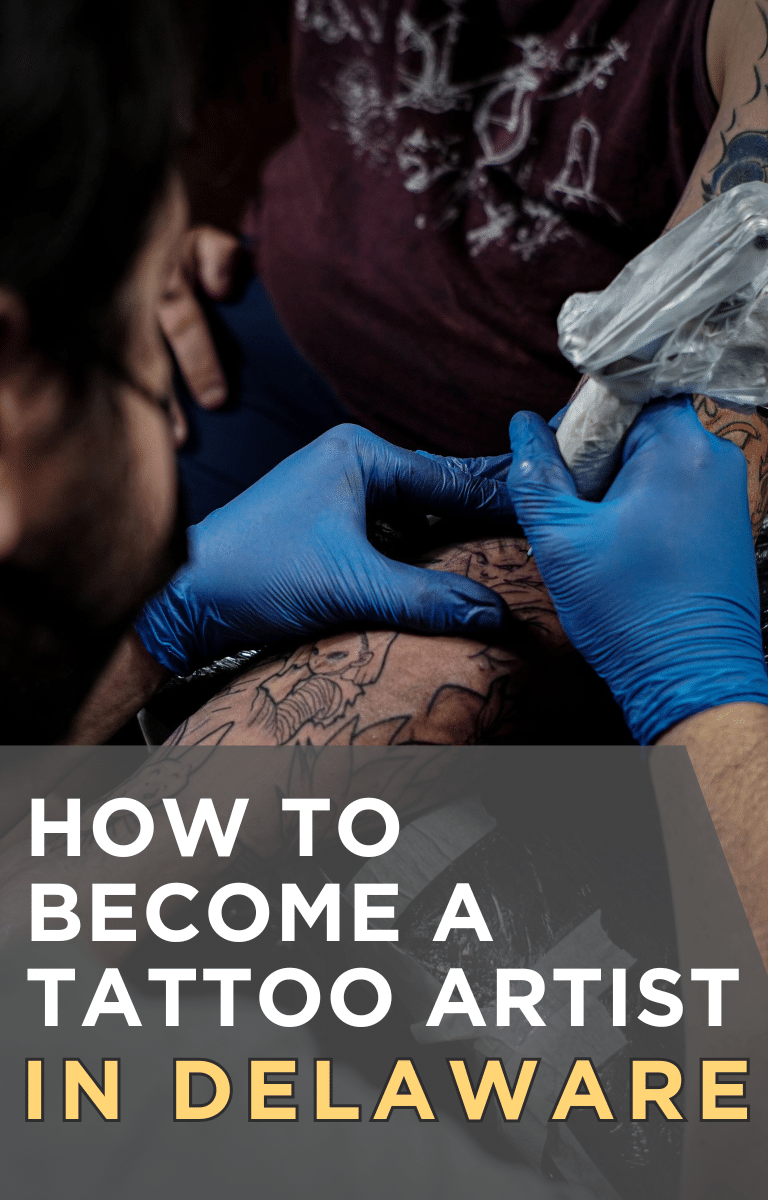
Becoming a Tattoo Artist in Delaware means learning a craft that machines cannot replicate, then meeting the state’s public health rules so you can work legally in a permitted studio. A tattoo license in Delaware is the combination of state health requirements you satisfy to tattoo legally in the state, including proof of age, a valid bloodborne pathogens certificate, and working inside a permitted establishment.
This guide walks you through exactly how the state regulates tattooing, what that means for your path to a professional career, and how to train the right way.
Table of Contents
- How does Delaware regulate tattooing?
- Delaware tattoo licensing at a glance
- What does this mean for you as a future Tattoo Artist?
- How do you get a tattoo license in Delaware step by step?
- What are the rules for tattooing minors in Delaware?
- What does it cost to get licensed in Delaware?
- Can you transfer a tattoo license into Delaware?
- What mistakes should you avoid?
- How do you learn to tattoo with Ink Different?
- Frequently Asked Questions
Key Takeaways
- Regulator: The Delaware Division of Public Health oversees tattooing through its Body Art Program.
- Governing law: Tattooing in Delaware is governed by Del. Code Ann. Title 11, Ch. 5 § 1114(a).
- Core requirements: Proof of age, a valid bloodborne pathogens certificate, and a permitted establishment are essential.
- Transfers: Delaware is listed as ineligible for out-of-state license transfers, so verify your path directly with the state.
- Career upside: A Professional Tattoo Artist can earn over $106,000 a year according to ZipRecruiter.
How does Delaware regulate tattooing?
Delaware regulates tattooing through the Division of Public Health under Del. Code Ann. Title 11, Ch. 5 § 1114(a), using a state-permit model focused on public safety. The state’s approach centers on preventing the spread of bloodborne disease and protecting minors, which shapes nearly every requirement you will encounter.
Under this model, the state cares about where you work and how safely you work. That means a permitted establishment, current safety documentation, and proof that you understand bloodborne pathogen safety are all part of the picture.
The Delaware Body Art Program is the official point of contact for the current rules, forms, and any fees. Because health regulations can be updated, always confirm the latest details directly with the state before you rely on any single summary.
Delaware tattoo licensing at a glance
Delaware uses a state-permit system administered by the Division of Public Health, with an emphasis on bloodborne disease prevention and minor protection. Here is the quick reference drawn only from verified state facts.
- Regulator: Division of Public Health (Delaware Body Art Program)
- Governing law: Del. Code Ann. Title 11, Ch. 5 § 1114(a)
- Licensing model: State permit
- Transfer status: Ineligible for out-of-state transfer
- Age: Proof of age required
- Safety training: Valid bloodborne pathogens (BBP) certificate
- Facility: Permitted establishment with a current hazardous waste contract
- Minors: Notarized written consent required for specific minor procedures
- Fees: Not specified here. Confirm current fees with the Delaware Body Art Program.
What does this mean for you as a future Tattoo Artist?
It means your route to working in Delaware runs through safe, hands-on training plus compliance with the state’s health requirements, not through a shortcut or a certificate alone. The state wants safe operators in permitted studios, and that is exactly what quality training produces.
Tattooing is an AI-proof career. A machine cannot sit with a nervous client, read their skin, adjust needle depth in real time, and deliver art that lives on a human body for decades. That human skill is what studios hire for and what clients pay for.
The earning potential is real too. A Professional Tattoo Artist can earn over $106,000 a year according to ZipRecruiter, and that is built on reputation, skill, and consistency rather than a college degree. Your job is to build those skills the right way while meeting Delaware’s public health rules.
How do you get a tattoo license in Delaware step by step?
You get set up to tattoo in Delaware by learning the craft through a tattoo apprenticeship, earning your bloodborne pathogens certificate, and working inside a permitted establishment that meets state standards. Here is a clear sequence based on the verified requirements.
- Confirm you can show proof of age. Delaware requires proof of age, so keep valid identification ready when you apply and when you work.
- Train through a structured Tattoo Apprenticeship. This is where you learn machine control, safety, skin theory, and real studio practice under a Mentor.
- Complete a bloodborne pathogens course and get your BBP certificate. A valid BBP certificate is a core Delaware requirement, so keep it current.
- Work in a permitted establishment. The studio must be a permitted establishment with a current hazardous waste contract, which handles safe disposal of contaminated materials.
- Follow the minor consent rules exactly. Notarized written consent is required for specific minor procedures, so never skip this step.
- Verify current forms and fees with the state. Contact the Delaware Body Art Program for the latest application steps, forms, and any fees before you begin.
Tip: Do not assume a requirement exists just because a neighboring state has it. Confirm every detail with the Delaware Body Art Program so your path is grounded in current state rules.
What are the rules for tattooing minors in Delaware?
Delaware requires notarized written consent for specific minor procedures, reflecting the state’s heavy focus on protecting young people. This is one of the most closely watched areas in the state’s body art rules.
Because the exact scope of allowable minor procedures and the precise consent process are set by the state, you should never rely on memory or word of mouth here. Ask the Delaware Body Art Program for the current forms and the exact documentation you must keep on file.
As a Tattoo Artist, treating minor consent as a strict, documented process protects your clients, your studio, and your career. When in doubt, decline the work until you have verified, notarized paperwork in hand.
What does it cost to get licensed in Delaware?
Specific state fees are not listed in the verified facts here, so you should confirm current costs directly with the Delaware Body Art Program. Never trust a fee figure you cannot verify against the official source.
Beyond any state fees, plan for the real investments that build a career. Those include a quality Tattoo Apprenticeship, a bloodborne pathogens course, and professional equipment once you are ready.
Compared with the cost of a traditional college degree, a tattoo apprenticeship route can be a strong value. You are training for a hands-on, AI-proof profession with high earning potential rather than accumulating debt for a credential that may not pay off.
Can you transfer a tattoo license into Delaware?
Delaware is listed as ineligible for out-of-state tattoo license transfers, so relocating artists should plan to meet Delaware’s own requirements. Do not assume your credentials from another state will automatically carry over.
If you are moving to Delaware, treat it as a fresh compliance process. Confirm your proof of age, keep a valid bloodborne pathogens certificate, and make sure the studio where you plan to work is a permitted establishment with a current hazardous waste contract.
The Delaware Body Art Program can tell you exactly how an experienced Tattoo Artist from another state should proceed. Reaching out early saves you time and prevents costly assumptions.
What mistakes should you avoid?
The biggest mistakes are skipping proper training, letting your bloodborne pathogens certificate lapse, and working in an establishment that is not properly permitted. Each of these can stall or damage your career before it starts.
- Chasing shortcuts. There is no substitute for a structured tattoo apprenticeship under a skilled Mentor. Avoid anyone promising instant results.
- Ignoring the hazardous waste requirement. The studio must hold a current hazardous waste contract, which is central to Delaware’s safety model.
- Guessing on minor rules. Only tattoo a minor when you have followed the state’s notarized consent process for the specific procedure allowed.
- Assuming your out-of-state license transfers. Delaware is listed as ineligible for transfers, so verify your path.
- Trusting unverified fee or rule figures. Always confirm current details with the Delaware Body Art Program.
Warning: Working outside a permitted establishment or without a valid BBP certificate puts your clients and your future at serious risk. Get compliant before you tattoo the public.
How do you learn to tattoo with Ink Different?
You learn to tattoo with Ink Different through a Traditional Tattoo Apprenticeship that pairs you with an experienced Mentor and builds real, studio-ready skills. We are a serious alternative to the traditional college path.
Our Traditional Tattoo Apprenticeship is built around the fundamentals that matter: machine control, safe technique, skin theory, design, and professional studio conduct. It runs 18 to 24 months across four phases, starts remote, and welcomes beginners. It is a real, mentored path toward becoming a Professional Tattoo Artist.
We also support you on the compliance side, helping you understand requirements like your bloodborne pathogens certificate and how a permitted establishment operates, so you can focus on the art while staying aligned with Delaware’s public health rules.
Ready to become a Tattoo Artist? Apply now to Ink Different’s Traditional Tattoo Apprenticeship and start building an AI-proof career, with licensing support along the way.
Frequently Asked Questions
Who regulates tattooing in Delaware?
The Delaware Division of Public Health regulates tattooing through its Body Art Program, under Del. Code Ann. Title 11, Ch. 5 § 1114(a).
What do I need for a tattoo license in Delaware?
You need proof of age, a valid bloodborne pathogens certificate, and work inside a permitted establishment with a current hazardous waste contract. Confirm exact steps with the state.
Can I transfer my tattoo license from another state to Delaware?
Delaware is listed as ineligible for out-of-state license transfers. Plan to meet Delaware’s own requirements and confirm your path with the Delaware Body Art Program.
Can minors get tattooed in Delaware?
Delaware requires notarized written consent for specific minor procedures. Always verify the exact allowable procedures and consent forms directly with the state before proceeding.
How much does a Delaware tattoo license cost?
Specific state fees are not listed in the verified facts here. Contact the Delaware Body Art Program to confirm current fees before you apply.
How much can a Tattoo Artist earn?
A Professional Tattoo Artist can earn over $106,000 a year according to ZipRecruiter, making it a strong, AI-proof career built on skill and reputation.
For official rules, forms, and current requirements, visit the Delaware Body Art Program.