How to Become a Tattoo Artist When Your Family Does Not Support It
October 7, 2026
Tattoo License Requirements for Mobile and Guest Tattoo Artists
October 7, 2026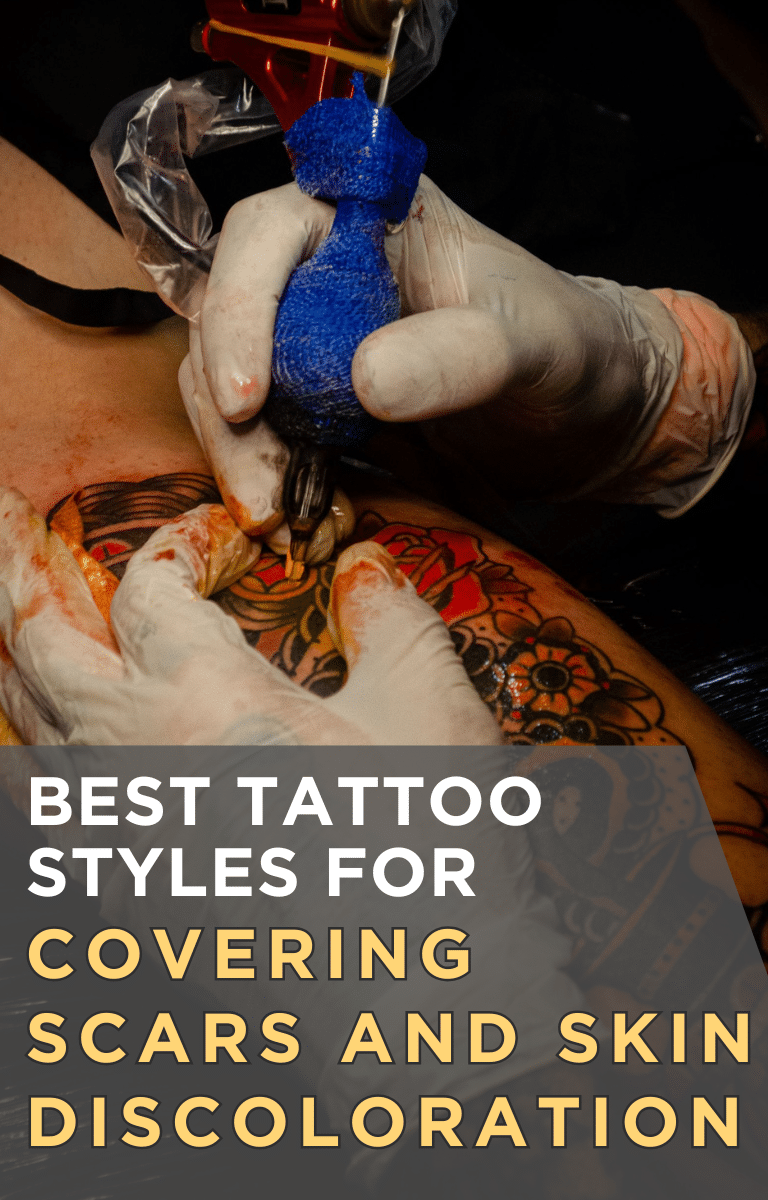
In This Article
- Key Takeaways
- What is scar cover-up tattooing?
- Why do people cover scars and skin discoloration with tattoos?
- What are the best tattoo styles for covering scars and skin discoloration?
- How does a Tattoo Artist approach scar coverage?
- What skills does covering scars require from a Tattoo Artist?
- How can you learn to tattoo over scars and discoloration?
- What You Can Expect from our Traditional Tattoo Apprenticeship
- Mentorship That Pushes Your Brand and Skills Further
- Ready to Become a Tattoo Artist?
- FAQ
Many clients have spent years hiding a surgery line, a burn, or a patch of uneven skin, hoping someone could help them turn it into something they choose. That moment, when a scar becomes something they chose rather than something that happened to them, is one of the most powerful things a Tattoo Artist can offer. Scar cover-up tattooing is the specialized practice of using tattoo designs, techniques, and color theory to disguise, camouflage, or transform scars and skin discoloration into intentional, beautiful body art.
At Ink Different Tattoos, we train aspiring Tattoo Artists to master skills exactly like this, the kind machines cannot replicate.
Key Takeaways
- Best styles: Watercolor, botanical, organic blackwork, dotwork, and realism blend best over scars and discoloration.
- Why it works: Flowing, irregular designs hide uneven texture better than rigid geometric or fine-line work.
- Timing matters: Scars should be fully healed, usually 12 to 18 months old, before tattooing over them.
- Skill required: Covering scars demands advanced color theory, needle control, and reading damaged skin.
- How to learn: Ink Different’s Traditional Tattoo Apprenticeship builds these skills through live, in-person mentorship.
What is scar cover-up tattooing?
Scar cover-up tattooing is the art of placing ink over scar tissue or discolored skin to camouflage imperfections or transform them into a deliberate design the client chooses.
Scar tissue behaves differently than healthy skin. It can be raised, sunken, shiny, or stretched, and it holds ink unpredictably. A skilled Tattoo Artist reads that terrain the way a painter reads a textured canvas, choosing styles and techniques that work with the skin instead of fighting it.
This is one of the most meaningful corners of the craft. You are not just decorating skin: you are helping someone reclaim a part of their body they may have resented for years. That is why real, hands-on training matters so much here.
Why do people cover scars and skin discoloration with tattoos?
People cover scars and discoloration with tattoos to regain confidence, turn a painful memory into empowerment, and take ownership of how their body looks and feels.
Scars come from surgery, accidents, burns, self-harm recovery, mastectomies, and more. Discoloration can result from vitiligo, stretch marks, or healed injuries. For many clients, a tattoo is the first time they feel in control of that mark.
The emotional weight here is real. When you help someone transform a reminder of trauma into something they love to show off, you change how they see themselves.
That human connection is exactly why tattoo artists are still essential even as technology advances.

What are the best tattoo styles for covering scars and skin discoloration?
The best tattoo styles for covering scars and skin discoloration are ones with organic, flowing, and layered elements: watercolor, botanical florals, organic blackwork, dotwork, and realism. Scars create irregular surfaces and unexpected shading. Designs that embrace movement and texture distract the eye, while rigid lines or large flat fields of color expose flaws. Here are the styles that consistently perform best:
- Botanical and floral: Leaves, vines, and petals flow naturally around scar shapes and hide edges with organic lines.
- Watercolor: Soft, blended color washes disguise discoloration and uneven tones without demanding crisp borders.
- Organic blackwork: Bold, intentional black areas can fully cover darker scar tissue and surface texture.
- Dotwork and stippling: Clusters of dots build shading gradually, which helps blend across inconsistent skin.
- Realism: In expert hands, realistic imagery (feathers, animals, landscapes) layers depth that camouflages raised or sunken areas.
What usually does not work well? Fine-line minimalism, small geometric pieces, and single thin-line lettering, because a scar can distort a straight line and draw attention to the very spot the client wants hidden.
Pro Tip: Always build extra ink saturation into your design plan for scar tissue. Damaged skin often rejects pigment, so artists frequently schedule a touch-up session months later.
How does a Tattoo Artist approach scar coverage?
A Tattoo Artist approaches scar coverage by assessing the scar’s age and texture, choosing a forgiving style, mapping the design to the skin’s shape, and tattooing with adjusted pressure and multiple passes. Timing is everything. Most professionals wait until a scar is fully healed, often 12 to 18 months old, before tattooing over it. Working too early can irritate tissue and lead to poor healing.
Safety cannot be an afterthought, either. Tattooing over compromised skin demands strict hygiene and bloodborne pathogen awareness, in line with OSHA bloodborne pathogen standards. This is a cornerstone of what you learn in any serious Tattoo Artist training. The American Academy of Dermatology tattoo care guidelines also provide authoritative reference for how skin heals and responds to ink.
Step-by-step: How do scar cover-up tattoos come together?
- Step 1: Consult. Discuss the client’s goals, the scar’s history, and realistic expectations for coverage versus full concealment.
- Step 2: Assess the skin. Evaluate texture, color, and healing. Confirm the scar is mature enough to tattoo.
- Step 3: Design to the terrain. Choose a forgiving style and shape the artwork so it flows with the scar’s contours.
- Step 4: Tattoo with care. Adjust needle depth and pressure, use multiple light passes, and prioritize even saturation.
- Step 5: Heal and touch up. Follow aftercare closely and schedule a touch-up to reinforce areas that reject pigment.
What skills does covering scars require from a Tattoo Artist?
Covering scars requires advanced color theory, precise needle control, strong composition instincts, and the ability to read and adapt to damaged, unpredictable skin in real time. This is not beginner territory you reach overnight. It is a layered skill set you build phase by phase. You start with fundamentals like line work and shading, then add color blending, then learn to adapt your technique to skin that does not behave normally.
You also need emotional intelligence. Scar clients are often vulnerable, and reading the room is part of the job. These soft skills, combined with technical mastery, are exactly what separate a true professional from someone who watched a few videos.
If you are just starting, avoid the common traps we outline in our guide to mistakes aspiring tattoo apprentices should avoid.

How can you learn to tattoo over scars and discoloration?
You learn to tattoo over scars and discoloration through a structured, in-person tattoo apprenticeship that teaches fundamentals first, then advanced camouflage techniques under a licensed Mentor. You cannot shortcut this. Scar work sits at the intersection of art, science, and human trust. You need live feedback, real skin, and a Mentor standing beside you, not a screen playing on repeat.
That is exactly why so many career changers are choosing tattoo apprenticeships over a four-year degree. If you are weighing your options, our breakdown of tattoo apprenticeships as a college alternative lays out the case. And if you are feeling stuck in a job that drains your creative potential, a career change tattoo apprenticeship may be the path you have been circling for years.
What You Can Expect from our Traditional Tattoo Apprenticeship?
Ink Different’s Traditional Tattoo Apprenticeship is an 18 to 24 month, four-phase tattoo apprenticeship that takes you from complete beginner to a job-ready Tattoo Artist through personalized, hands-on training. You train hands-on in our tattoo studios surrounded by working professionals. No prior art experience is required, because we teach you the drawing fundamentals, machine handling, and color theory you will need to eventually tackle advanced work like scar coverage.
For over a decade since 2011, we have trained professional Tattoo Artists the right way: in person, phase by phase, inside a supportive, family-like community we call our Good Humans culture.
A career that comes with confidence. Our apprenticeship delivers job-ready skills, licensing support, and a guaranteed job offer at one of our tattoo studios, so you graduate prepared to work professionally.
Remember: Seats in a live, in-person tattoo apprenticeship are limited by nature, because real mentorship cannot be mass-produced.
Mentorship That Pushes Your Brand and Skills Further
Ink Different’s Master Mentorship is a one-year, in-person program designed to help beginner and experienced artists master a specific style, grow their career, and build a business. If scar camouflage, realism, or watercolor is the style you want to own, this is where you go deep. You train alongside celebrity and award-winning Mentors including Al Fliction, Liz Cook, Kyle Dunbar, Boneface, and Jordi Pla, learning the intensive skill development that defines standout artists.
Once your skills are sharp, your brand needs a voice. Our guide to platforms to help Tattoo Artists build their brand shows you how to get your scar cover-up portfolio in front of the clients who need you most.
Making tattoo training accessible for everyone. Ink Different operates nationwide, with the Traditional Tattoo Apprenticeship available in 60+ locations, including Spanish-speaking locations in Denver, Orange County, NYC, Miami, San Antonio, and San Diego.
Ready to Become a Tattoo Artist?
Covering scars and skin discoloration is one of the most rewarding skills a Tattoo Artist can develop, because it turns pain into power for the people in your chair.
Ready to become a Tattoo Artist? Apply now to Ink Different’s Traditional Tattoo Apprenticeship and start building an AI-proof career, with licensing support along the way. Not sure yet? Fill out our quick questionnaire to get personalized support and find out if our Traditional Tattoo Apprenticeship is right for you.
Frequently Asked Questions
Can you tattoo over any scar or discoloration?
Most fully healed scars can be tattooed, but it depends on texture, age, and depth. A skilled Tattoo Artist assesses the skin first and may recommend waiting until the scar matures.
What tattoo style best hides scars?
Organic, flowing styles work best. Watercolor, botanical florals, organic blackwork, dotwork, and realism camouflage uneven texture and discoloration far better than fine-line or geometric designs.
How long should you wait before tattooing over a scar?
Most professionals wait until a scar is fully healed, usually 12 to 18 months old. Tattooing immature scar tissue can cause irritation and poor ink retention.
Do I need art experience to learn scar cover-up tattooing?
No. Ink Different’s Traditional Tattoo Apprenticeship starts with drawing fundamentals and builds toward advanced techniques, so beginners with no formal art background can learn step by step.
How long does the Ink Different Tattoo Apprenticeship take?
The Traditional Tattoo Apprenticeship takes 18 to 24 months across four phases. You start remote to learn fundamentals, then finish hands-on in our Tattoo Studios with live mentorship.
What makes Ink Different different from other training?
Ink Different offers live, in-person mentorship, over a decade of experience since 2011, award-winning Mentors, licensing support, and a supportive Good Humans culture: a true college alternative.