The Juilliard Standard for Tattoo Artists: Why Where You Train Changes Everything
June 17, 2026
The Best Time to Start a Tattoo Apprenticeship Was Yesterday. The Second Best Time Is Now.
June 19, 2026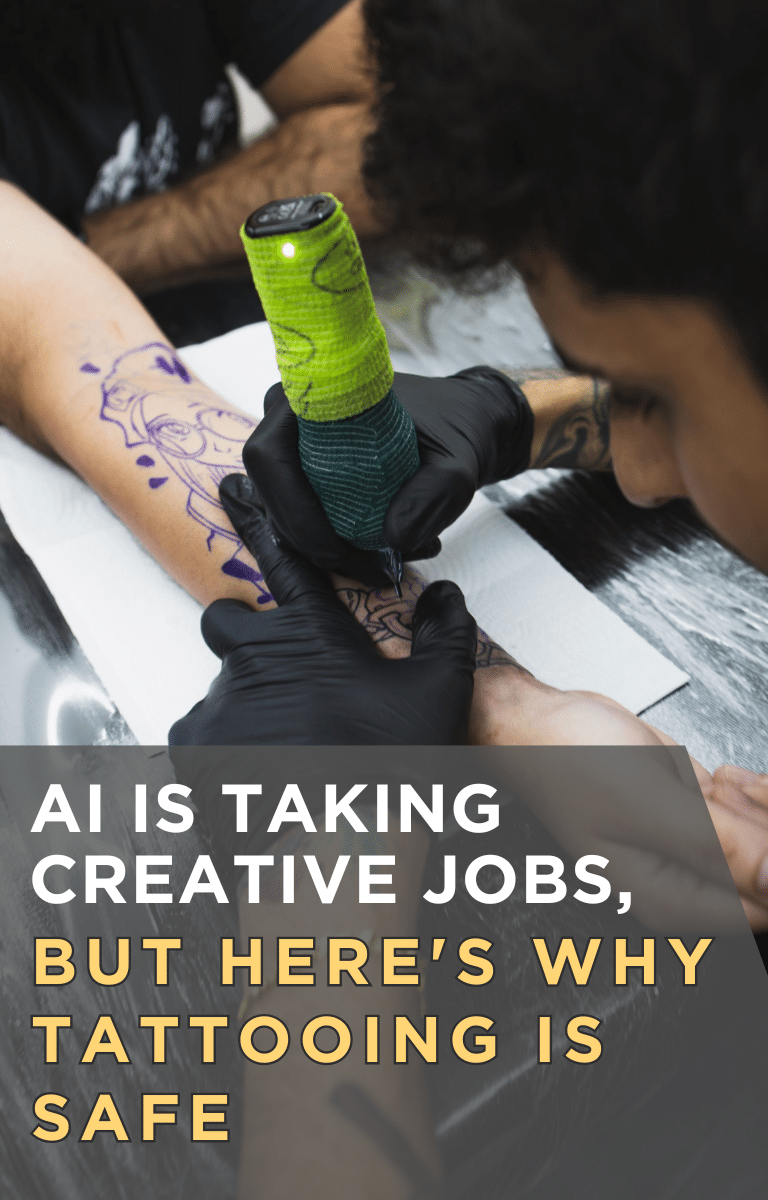
In This Article
- Key Takeaways
- Why Can’t Robots Replace Tattoo Artists?
- What Jobs Is AI Actually Replacing Right Now?
- How Is Tattooing Different From Other Creative Fields?
- Why Is Tattooing a Stable Career Choice in 2026?
- How Can You Secure Your Spot in a Human-Centered Trade?
- What Are the Steps to Start Your Tattoo Apprenticeship?
- Get Serious About Your Career With Become A Tattoo Artist
- The Spots Are Limited — Don’t Let This Pass You By
- FAQ
AI tools are replacing real people in their jobs right now. Graphic designers are watching budgets shift to image generators. Stock photographers are seeing AI image tools undercut demand for their work. Illustrators, data entry workers, customer service reps – the list keeps growing.
If you work in a creative field, that’s not paranoia. That’s the reality of 2026.
But not every creative career is equally at risk. Tattooing sits in a category of its own: a physical, human-centered trade that AI literally cannot perform. If you’ve been thinking about making a career move, the window is open right now. Here’s why tattooing is one of the safest bets in the current job market.
Key Takeaways
- AI is actively replacing jobs in design, photography, and more, but tattooing is built differently.
- Tattooing requires human touch, emotional intelligence, and real-time physical judgment that no machine can replicate.
- It’s a licensed, regulated trade, meaning not just anyone can pick up a machine and legally tattoo.
- Ink Different Tattoos offers an 18–24 month Traditional Tattoo Apprenticeship with a guaranteed job offer after completion.
- Spots are extremely limited; Ink Different only accepts 2 tattoo apprentices per studio per Mentor.
Why Can’t Robots Replace Tattoo Artists?
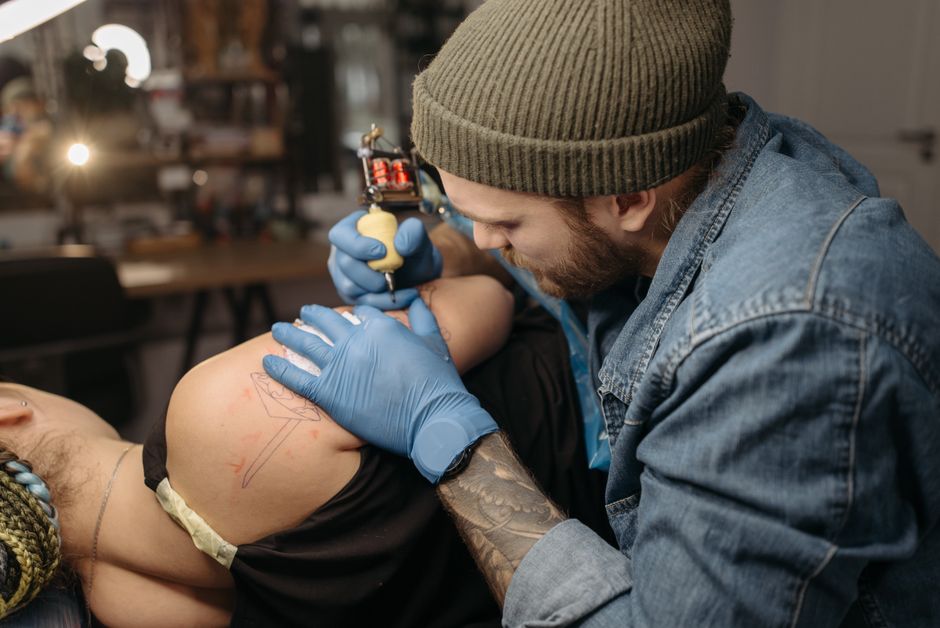
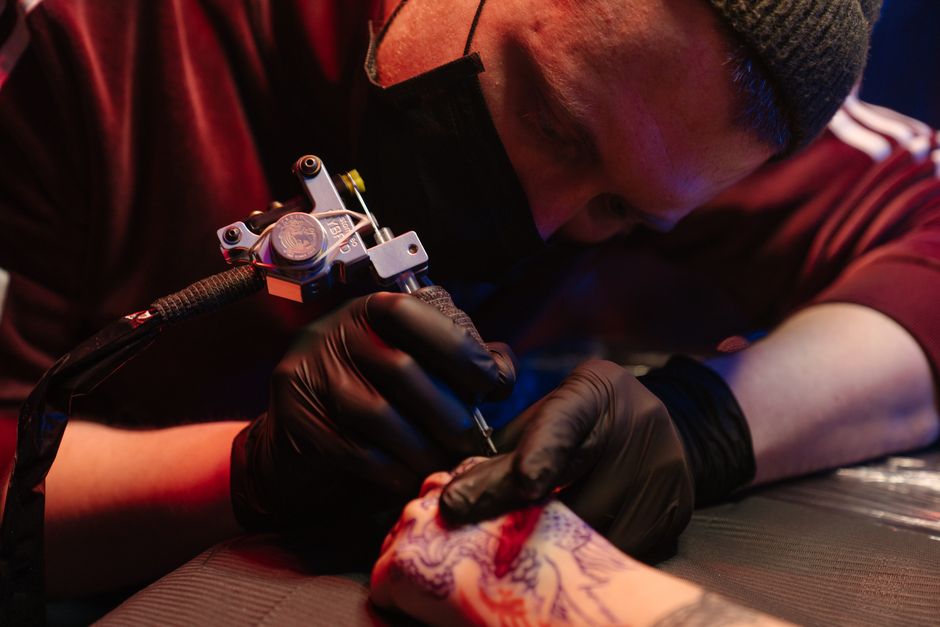
Tattooing happens on living, breathing, moving human skin. That alone makes it impossible to automate in any practical sense.
A machine can generate a tattoo design on a screen. What it cannot do is feel the resistance of skin over a rib cage, notice a client tensing up, or adjust needle depth in real time based on how that person’s skin responds. That kind of tactile feedback and in-the-moment judgment is entirely human.
There’s also the emotional side of it. Clients aren’t just buying a drawing. They’re trusting another person with something permanent on their body. That relationship, that conversation, that trust, none of it can be scripted or automated.
What Does AI Mean for Creative Jobs in 2026?
To understand why tattooing is safe, it helps to look at where AI is doing the most damage.
AI is actively disrupting these careers in 2026:
- Graphic designers — AI image generators are replacing entry-level design work at a rapid pace.
- Stock photographers — AI image tools have significantly reduced demand for stock photos.
- Illustrators — Brands are turning to AI for concept art, social media graphics, and even book covers.
- Customer service representatives — AI chatbots now handle the majority of first-line customer interactions.
- Data entry and administrative roles — Automation has been quietly eliminating these for years.
- Paralegals and junior legal researchers — AI tools are taking over document review and legal research tasks.
- Junior accountants and bookkeepers — Accounting software powered by AI handles tasks that used to require human hours.
What all of these have in common: they involve creating or processing information. AI is extraordinarily good at that. What AI cannot do is perform a skilled physical trade on a human being.
How Is Tattooing Different From Other Creative Fields?
Most creative work in 2026 lives on a screen. That’s exactly why it’s vulnerable.
Tattooing is different because the work itself is physical and permanent. A Tattoo Artist applies a tattoo to real skin using a needle, ink, and years of practiced hand-eye coordination. There is no digital shortcut. There is no “generate” button.
It’s also a regulated profession. State and local health departments license Tattoo Artists and require them to follow bloodborne pathogen standards and strict sanitation protocols. That regulatory layer protects the profession in ways that purely digital creative fields simply don’t have.
You can’t replace a licensed Tattoo Artist with a subscription.
Why Is Tattooing a Stable Career Choice in 2026?
Demand for tattooing has stayed consistently strong even through economic shifts. People don’t stop wanting tattoos during a recession. They may adjust their spending, but the desire for personal, meaningful body art doesn’t go away.
More importantly, the rise of AI has actually made handmade, human-created work more valuable. When everything around us starts to feel generated, people crave something real. A tattoo is about as real as it gets, made by human hands, on a human body, for a human reason.
Tattoo Artists are also largely self-employed or studio-based, which means they aren’t tied to corporate hiring cycles or susceptible to mass layoffs. Your skill set travels with you.
How Can You Secure Your Spot in a Human-Centered Trade?
Here’s the thing: getting into tattooing isn’t as simple as deciding to do it. A proper tattoo apprenticeship is the only legitimate path in, and spots are genuinely limited.
At Ink Different Tattoos, we only accept 2 tattoo apprentices per studio per Mentor. It’s how the training actually works. Personalized mentorship requires serious attention, and you can’t give that to a room full of people at once.
If you’ve been sitting on this idea, waiting for the “right time,” this is it. The longer you wait, the more competitive those limited spots become.
What Are the Steps to Start Your Tattoo Apprenticeship?
Getting started is more straightforward than most people expect. Here’s how it works at Ink Different:
-
-
- Step 1 — Apply and get assessed. No prior tattoo experience required. What matters is your commitment and your drive to learn.
- Step 2 — Start with remote drawing training. You build your foundational art skills from home, on your schedule. You don’t have to quit your day job to get started.
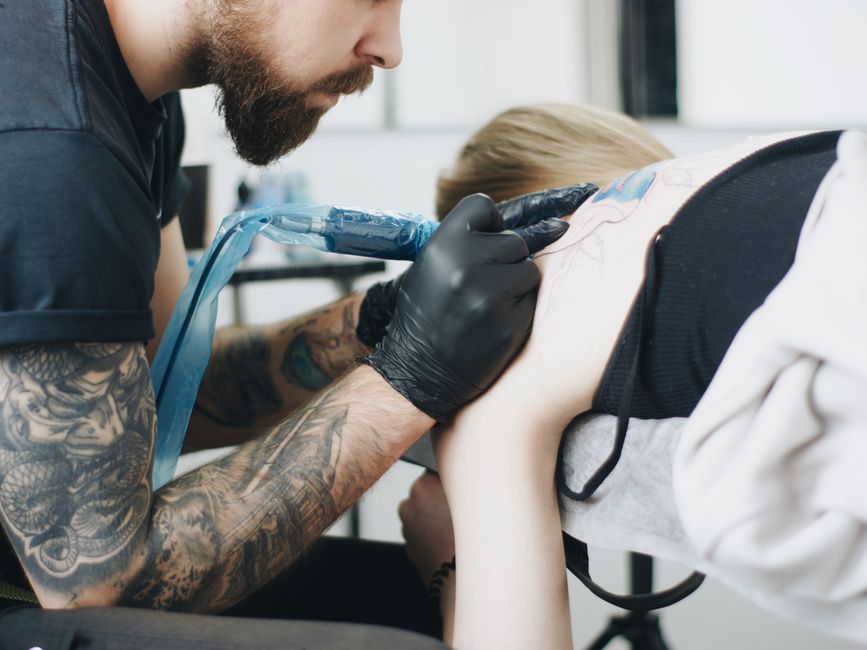
- Step 3 — Move to hands-on skin practice. Once your drawing foundation is solid, you transition to practicing on fake skin under direct Mentor supervision.
- Step 4 — Work with real clients. The final phase puts you in the studio, tattooing real clients, building your portfolio, and preparing for licensing.
-
The full Traditional Tattoo Apprenticeship runs 18–24 months. Every graduate receives a guaranteed job offer upon completion.
Get Serious About Your Career With Become A Tattoo Artist
Ink Different Tattoos has spent 14 years building a tattoo apprenticeship that actually prepares people for a professional career. The Traditional Tattoo Apprenticeship is a hands-on, Mentor-led training path built for beginners. No prior experience needed, just the willingness to put in the work.
What you get: structured training that starts remote and finishes in-studio, direct access to professional Tattoo Artists who are invested in your growth, and a guaranteed job offer when you complete the tattoo apprenticeship.
For Tattoo Artists who want to go further, the Master Mentorship offers an intensive in-person year of training with celebrity and award-winning Mentors including Al Fliction, Liz Cook, and Kyle Dunbar. It’s built for both beginners and Tattoo Artists who are ready to master a specific style and build a serious career.
Making Tattoo Training Accessible for Everyone
Ink Different Tattoos offers Spanish-speaking training in select locations so language is never a barrier to getting started. Spanish-speaking studios are available in Denver, Orange County, Brooklyn/NYC, Miami, Naples, Oklahoma City, and San Diego.
The Spots Are Limited — Don’t Let This Pass You By
AI is reshaping the job market faster than most people expected. The safe careers are the ones built on human skill, human touch, and human connection. Tattooing checks every one of those boxes.
Ink Different Tattoos only accepts 2 tattoo apprentices per studio per Mentor. When those spots are filled, they’re filled. If you’re ready to build a career that no algorithm can take from you, now is the time to apply.
Apply to Ink Different’s Traditional Tattoo Apprenticeship and get a guaranteed job offer after completion. Stop wasting time and start building a legacy that no machine can erase.
Frequently Asked Questions
Will AI replace Tattoo Artists?
No. Tattooing requires physical skill, real-time tactile judgment, and a human connection with clients that AI cannot replicate. It’s also a licensed, regulated trade, which adds another layer of protection that purely digital creative fields don’t have.
How long does a tattoo apprenticeship take?
Ink Different’s Traditional Tattoo Apprenticeship takes 18–24 months to complete, depending on individual progress.
Do I need art experience to start a tattoo apprenticeship?
No prior tattoo experience is required. Ink Different’s tattoo apprenticeship is built for beginners and teaches drawing fundamentals from day one.
How many spots are available at Ink Different?
Ink Different only accepts 2 tattoo apprentices per studio per Mentor. Spots are limited by design, it’s how serious mentorship works.
Is tattooing a stable career in 2026?
Yes, tattooing is a stable career because it is a human-centric trade regulated by health departments and driven by the permanent need for self-expression.