Missouri’s Algoa Prison Is Training Inmates to Become Licensed Tattoo Artists
September 10, 2026
How Tattoo Artists Actually Get Paid: Commission, Booth Rent and Guest Spots
September 10, 2026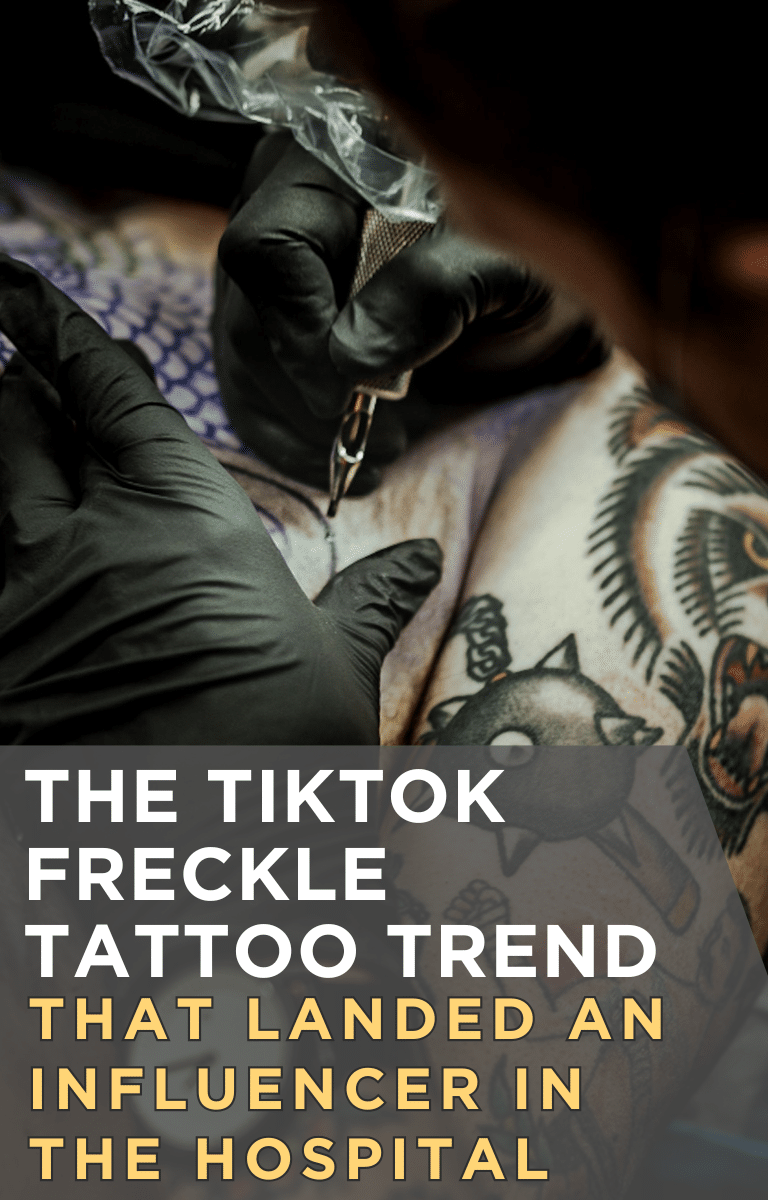
In This Article
- Key Takeaways
- What Is the TikTok Freckle Tattoo Trend?
- Why Did This Trend Land an Influencer in the Hospital?
- What Are the Real Risks of Untrained Cosmetic Tattooing?
- Why Does Professional Training Matter So Much?
- How Do You Learn to Tattoo the Right Way?
- What Does the Traditional Tattoo Apprenticeship Include?
- What Is Master Mentorship?
- How Does Ink Different Make Training Accessible?
- Ready to Become a Tattoo Artist?
- FAQ
Tilly Whitfeld was 26, a former Big Brother Australia star, and she wanted the kind of soft, sun-kissed freckles she’d seen all over TikTok. So she bought brown tattoo ink online and went at her own face with a sewing needle. “It didn’t hurt at all, so I didn’t think I should stop,” she later told the New York Times.
What followed was severe swelling, a serious infection, and temporary vision loss in one eye. The ink turned out to be counterfeit, reportedly loaded with lead. She spent close to $12,000 trying to repair the damage. Her message now is blunt: leave it to the professionals. That’s the whole story in a sentence, and it’s worth sitting with, because it’s exactly what proper training is built to prevent.
Key Takeaways
- The trend: DIY freckle tattoos use unsterile needles and unverified ink on facial skin, done at home with no oversight.
- The cost: Tilly Whitfeld’s attempt led to infection, temporary vision loss, and close to $12,000 in medical bills.
- The cause: The tattoo ink she used online turned out to be counterfeit and reportedly contained lead.
- The path: Ink Different Tattoos trains beginners over 18 to 24 months with professional Mentors and licensing support.
- The payoff: A trained Tattoo Artist builds a career rooted in real skill, safety, and trust.
What Is the TikTok Freckle Tattoo Trend?
The freckle tattoo trend is a viral look where people hand-poke small dots of ink onto their own faces at home, chasing a natural, sun-kissed effect without any training or sterile setup.
It’s an easy sell on video. A good angle, a few dots, and suddenly you’ve got “freckles” for the price of a cheap ink bottle. What the clips leave out is everything that actually matters: where that ink came from, whether it’s safe for skin, and what happens if something goes wrong on a part of the body this sensitive.
Tilly Whitfeld’s case is the clearest example of how that gap plays out. She wasn’t reckless by nature. She just didn’t know what she didn’t know, which is exactly the position most people trying this trend are in.

Why Did This Trend Land an Influencer in the Hospital?
Whitfeld ended up hospitalized because puncturing facial skin with a sewing needle and unverified ink introduced an infection, and the swelling that followed was severe enough to temporarily impair her vision in one eye.
The face isn’t like a forearm or a calf. It’s thinner, it sits close to the eyes and sinuses, and it heals differently. A trained Tattoo Artist accounts for that. A $12 online kit does not, and neither does a tutorial that never mentions sterilization.
That’s the part the OSHA bloodborne pathogen standards exist to address: puncturing skin without proper controls is a real health hazard, not just bad luck. Whitfeld later learned the ink she’d bought was counterfeit and reportedly contained lead, a detail that never shows up in a fifteen-second clip.
What Are the Real Risks of Untrained Cosmetic Tattooing?
Untrained cosmetic tattooing carries real risks: infection, permanent scarring, allergic reactions, pigment that migrates under the skin, and damage that sometimes needs laser removal or medical treatment to fix.
Your skin treats ink as something foreign, and how it responds depends on the needle, the depth, and what’s actually in that pigment. Get any one of those wrong on your face, and you’re not looking at a quick fix.
- Infection: Unsterile needles introduce bacteria directly under the skin.
- Scarring: Going too deep damages tissue and can leave it raised or discolored permanently.
- Migration: Ink placed incorrectly can blur and spread instead of staying put.
- Allergic reactions: Unverified ink, like the counterfeit batch Whitfeld used, can trigger inflammation that lingers.
The American Academy of Dermatology tattoo care guidelines make it clear that healing and skin health hinge on proper practice. When you understand these risks, you understand why the pros make it look easy. It’s the same reason we tell beginners to study the mistakes aspiring tattoo apprentices should avoid before they ever pick up a Tattoo Machine.
Why Does Professional Training Matter So Much?
Professional training matters because tattooing safely means understanding skin anatomy, needle depth, sterilization, and pigment quality, none of which you can pick up from a video.
Whitfeld’s own plan afterward makes the point well. She’s since said she’s developing a line of freckle-tattoo products meant to be safer than what she used on herself, and she’s been clear she’d never repeat the original attempt. Even she landed on the same conclusion the trade already knows: this takes real preparation, not guesswork.
Training in a licensed tattoo studio teaches you the same safety systems that keep clients safe and keep you working legally. It’s also part of why a skilled Tattoo Artist has a career that’s hard to automate. A machine can generate an image, but it can’t read someone’s skin or make a judgment call in the moment.
Reality check: The Bureau of Labor Statistics on craft and fine artists tracks tattooing as a legitimate skilled profession. Tattooing is a career, not a content genre.
How Do You Learn to Tattoo the Right Way?
You learn to tattoo properly through a structured tattoo apprenticeship, where a licensed Mentor teaches you the fundamentals, safety protocols, and live technique inside a real tattoo studio.
If Whitfeld’s story got under your skin a little, good. Here’s where that energy can actually go:
- Step 1: Build your foundation. Start remote with drawing fundamentals, line work, and design theory before you ever touch skin.
- Step 2: Learn safety and sterilization. Master bloodborne pathogen protocols and studio hygiene the way OSHA requires.
- Step 3: Practice under supervision. Move to synthetic skin and supervised sessions with your Mentor watching every pass.
- Step 4: Work live clients. Take on real client work under direct guidance, then prep for licensing.
Notice the difference? Every step the trend skipped is a step this path builds in. If you want to know which gear supports that learning curve, our guide to the tools every beginner tattoo artist should know is a smart next read.

What Does the Traditional Tattoo Apprenticeship Include?
The Traditional Tattoo Apprenticeship at Ink Different Tattoos is an 18-to-24-month, four-phase path that takes beginners from zero experience to job-ready, with licensing support built in.
We’ve spent over 15 years training professional Tattoo Artists, and this apprenticeship is built for people who are done watching their creative potential go to waste in the wrong job. You don’t need prior art experience. You need to actually show up.
- Personalized hands-on training with a dedicated Mentor.
- Start remote, finish in studios so you build fundamentals before live work.
- Beginner-friendly with no formal art background required.
- Licensing support and job-ready skills upon completion.
This is the college alternative that trades lecture halls for Tattoo Machines and student debt for real, marketable craft. If you’ve been sitting on the fence, our post on why tattoo apprenticeships are gaining ground as a solid alternative to college will show you that you’re not alone.
What Is Master Mentorship?
Master Mentorship at Ink Different Tattoos is a one-year, in-person program where beginner and experienced artists train intensively with award-winning Mentors to master a style and build a sustainable business.
If your ambition runs even hotter, this is your accelerant. You’ll learn directly from names the industry knows: Al Fliction, Liz Cook, Kyle Dunbar, Boneface, and Jordi Pla. This track is built for career explosion, style mastery, and studio ownership.
Whether you want to specialize or eventually run your own Tattoo Shop, mentorship is what turns raw talent into a lasting name.
How Does Ink Different Make Training Accessible?
Ink Different Tattoos makes training accessible with Spanish-speaking locations in Denver, Orange County, New York City, Miami, San Antonio, and San Diego, plus a remote start that lowers the barrier to entry.
Talent doesn’t speak just one language, and neither do we. If you learn best in Spanish, you can train near you in any of those cities with Mentors who meet you where you are.
Our “Good Humans” culture means you’re joining a family, not a factory. You’ll be surrounded by people who want you to win, which is exactly the opposite of the isolated, comment-chasing culture that put that influencer in the hospital. Timing matters too, and there’s a real case for why spring is the best time to become a tattoo artist and finally make your move.
Ready to Become a Tattoo Artist?
Whitfeld’s story could have gone a very different way with the right training behind it. The same curiosity that pulls someone toward a DIY trend is the same instinct that makes a good Tattoo Artist, once it’s pointed at real mentorship instead of a shortcut.
Seats in the Traditional Tattoo Apprenticeship are limited, because real mentorship isn’t something that scales infinitely. If a dead-end job has been standing between you and a real craft, this is a reasonable moment to look into starting your tattoo apprenticeship.
Ready to become a Tattoo Artist? Apply now to Ink Different’s Traditional Tattoo Apprenticeship and start building an AI-proof career with licensing support along the way.
Frequently Asked Questions
Is the TikTok freckle tattoo trend safe to do at home?
No. Puncturing facial skin with an unsterile needle and unverified ink risks infection, scarring, and allergic reactions, as Tilly Whitfeld’s case showed. Cosmetic tattooing should only be done by a trained, licensed Tattoo Artist in a proper tattoo studio.
Do I need prior art experience to start a tattoo apprenticeship?
No. Ink Different Tattoos’ Traditional Tattoo Apprenticeship is built for beginners. You’ll learn drawing fundamentals, safety, and technique from day one under a dedicated Mentor.
How long does the Traditional Tattoo Apprenticeship take?
The Traditional Tattoo Apprenticeship takes 18 to 24 months across four phases. You start remotely with fundamentals and finish with supervised live client work and licensing support.
What makes Ink Different different from learning online?
Ink Different offers live, in-person mentorship, a “Good Humans” community, and 15 years of experience training professional Tattoo Artists. No video can replace a Mentor guiding your hands in real time.
Is tattooing really an AI-proof career?
Yes. Tattooing requires reading living skin, real-time judgment, and human connection that automation can’t replicate. A skilled Tattoo Artist builds a hands-on career that technology cannot outsource.
Can I train in Spanish near me?
Yes. Ink Different Tattoos offers Spanish-speaking locations in Denver, Orange County, New York City, Miami, San Antonio, and San Diego, plus a remote start to make training accessible.
Related reading: Ready for a career change? Try a tattoo apprenticeship, mistakes aspiring tattoo apprentices should avoid, and learn about the why spring is the best time to become a tattoo artist.