The TikTok Freckle Tattoo Trend That Landed an Influencer in the Hospital
September 10, 2026
Amsterdam Tattoo Convention Turns 20 With Over 350 Artists in Attendance
September 11, 2026
In This Article
- Key Takeaways
- How do tattoo artists actually get paid?
- What is a commission split and how does it work?
- What is booth rent for tattoo artists?
- What are guest spots and how do they pay?
- Which pay structure is best for a new artist?
- How can you maximize your income as a Tattoo Artist?
- How Ink Different prepares you to earn
- Ready to build an income you control?
- FAQ
You have felt it: that quiet frustration of clocking in for a paycheck that never reflects your real worth, watching your creative potential collect dust while someone else profits from your time. Tattoo Artist pay is the combination of commission splits, booth rent arrangements, and guest spot earnings that determine how much of each session’s revenue an artist takes home.
At Ink Different Tattoos, we have spent over fifteen years helping people just like you turn raw talent into a real, sustainable income. Understanding these three models is the difference between spinning your wheels and building a career you own.
Key Takeaways
- Three main models: Tattoo Artists earn through commission splits (studio keeps 40 to 60 percent), booth rent (artist pays a flat fee, keeps 100 percent), or guest spots (temporary work at other tattoo studios).
- Commission is best for beginners: Lower risk, built-in clients, and mentorship access make it the ideal starting point.
- Booth rent rewards loyalty: Once you have a strong following, paying a flat fee lets you keep more income.
- Guest spots expand reach: Traveling to other shops exposes you to new clients and diversifies your income.
- Licensing and skills unlock earnings: Proper training, licensing, and safety standards directly increase what clients will pay.
How do tattoo artists actually get paid?
Tattoo Artists get paid primarily through three arrangements: a commission split with the tattoo studio, booth rent where they keep all earnings after a flat fee, or guest spots working temporarily at other shops.
Unlike a traditional job with a fixed hourly rate, tattooing income is built on your skill, your reputation, and the deal you strike with a tattoo studio. You are not just an employee: you are a craftsperson whose earnings scale with your ability.
Many craft and fine artists are self-employed, meaning your income ceiling is largely shaped by your hustle and craftsmanship, not a manager’s budget.
What is a commission split and how does it work?
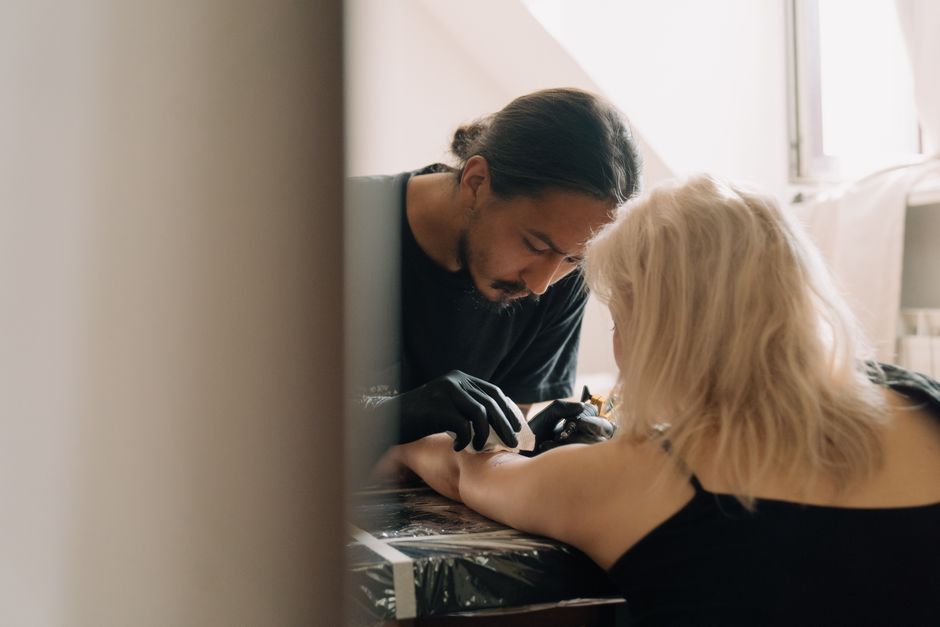
A commission split is an arrangement where the tattoo studio keeps a percentage of each session’s revenue, often 40 to 60%, in exchange for providing the space, supplies, walk-in clients, and business support.
This is the most common model for new Tattoo Artists, and for good reason. When you are starting out, a commission split means you are not shouldering the full weight of overhead. You do not have to buy every machine, needle, and bottle of ink yourself. You focus on getting reps in and building a client base.
- Lower risk: No large upfront costs for equipment or rent.
- Built-in clients: Walk-ins and studio reputation bring you work.
- Mentorship access: You learn from seasoned Tattoo Artists in the same room.
Pro Tip: A higher commission split is not always better. A studio that takes 50% but sends you a steady flow of clients can outperform one that takes 30% but leaves you scrambling for bookings.
What is booth rent for tattoo artists?
Booth rent is a fixed weekly or monthly fee an artist pays to a Tattoo Studio for a workstation, allowing them to keep 100% of what they earn from clients.
This is the model that experienced artists graduate into once they have a loyal following. Instead of sharing every dollar, you pay a set amount for your chair and pocket the rest. It rewards artists who can consistently fill their own schedule.
The tradeoff is responsibility. When you rent a booth, you typically buy your own supplies, manage your own bookings, handle your own marketing, and cover slow weeks out of your own pocket. It is more freedom, but also more risk.
To thrive on booth rent, you need a strong personal brand. If you are still building that muscle, our guide to platforms that help Tattoo Artists build their brand is a great place to start.
What are guest spots and how do they pay?
Guest spots are short-term stints where a Tattoo Artist works at a studio other than their home shop, usually splitting revenue with the host and reaching an entirely new pool of clients.
Guest spots are how ambitious artists expand their world. You might spend a week at a shop in another city, tattoo local clients who found you on social media, and build relationships with artists you admire. It is part income, part networking, part adventure.
Pay for guest spots usually mirrors a commission split, since you are using the host studio’s space and resources temporarily. But the real value often comes from exposure: new followers, new referrals, and a reputation that travels.
Many artists use guest spots strategically to test new markets before relocating, or simply to keep their craft fresh. It is one more reason tattooing is a career still driven by human connection and creativity.

Which pay structure is best for a new artist?
For most beginners, starting on a commission split is the smartest choice because it lowers financial risk, provides steady clients, and surrounds you with mentorship while you build the skills and following needed to eventually go independent.
Here is a simple way to think about the progression from apprentice to independent earner:
- Step 1: Learn the craft. Master line work, shading, and safety through hands-on training before worrying about splits.
- Step 2: Start on commission. Join a studio, use their clients and resources, and build a portfolio and reputation.
- Step 3: Grow your following. Develop a personal brand so clients seek you out by name.
- Step 4: Transition to booth rent. Once your schedule fills itself, keep more of your income by renting a booth.
- Step 5: Add guest spots. Travel strategically to expand your reach and diversify your income streams.
Rushing to booth rent before you can fill your own calendar is one of the most common missteps. See our breakdown of mistakes aspiring Tattoo Apprentices should avoid so you do not learn this the hard way.
How can you maximize your income as a Tattoo Artist?
You maximize your income by mastering a signature style, building a loyal client base, maintaining strict safety standards, and choosing the pay model that matches your current stage in the journey.
Your income is a reflection of trust. Clients pay more for artists who deliver consistent, clean, well-healed work. That means safety is not just ethics, it is economics. Following OSHA bloodborne pathogen standards and educating clients on proper American Academy of Dermatology tattoo care guidelines protects both your clients and your reputation.
A few levers that directly move your earnings:
- Specialize: Artists known for a specific style command higher rates.
- Book smart: Fill gaps, reduce no-shows with deposits, and value your time.
- Retain clients: A returning client and their referrals are worth more than a one-time walk-in.
- Get licensed: Proper licensing opens doors to better studios and higher-paying markets.
Licensing rules vary by state, which affects where and how you can legally earn. Whether you are looking at how to get your tattoo license in Texas or transferring a tattoo license to California, knowing the rules early saves you money and time.
How Ink Different prepares you to earn
Ink Different’s Traditional Tattoo Apprenticeship gives you the hands-on training, safety knowledge, and licensing support you need to walk into a tattoo studio ready to earn, no matter which pay model you eventually choose.
For over 15 years, we have been a college alternative for aspiring artists who are done wasting their potential and ready to build something real. The pay structures we just covered only work when you have the skills to back them up, and that is exactly what we build in you.
What you can expect from our Traditional Tattoo Apprenticeship
Our Traditional Tattoo Apprenticeship runs 18 to 24 months across four progressive phases. You start remotely to build your foundations, then finish in real Tattoo Studios working with live guidance. No prior art experience is required, because we teach you from the ground up. This structured approach means you graduate job-ready.
- Personalized, hands-on training with experienced Mentors using proven techniques.
- Start remote, finish in studios so you learn theory then apply it in the real world.
- Built for beginners with no prior experience needed. We teach drawing, machine handling, and safety.
- Licensing support and job-ready skills so you can step into a paying career immediately.
A career that comes with confidence
When you finish, you understand not just how to tattoo, but how to earn from it: how commission splits work, when booth rent makes sense, and how to carry yourself in a professional Tattoo Studio. That confidence is what separates artists who survive from artists who thrive.
Mentorship that pushes your brand and skills further
If you already have some experience or want to explode your career, our one-year, in-person Master Mentorship trains you alongside celebrated Mentors like Al Fliction, Liz Cook, Kyle Dunbar, Boneface, and Jordi Pla. It is built for mastering a specific style, growing your brand, and stepping toward business ownership.
Making tattoo training accessible for everyone
We offer Spanish-speaking locations near Denver, in Orange County, in NYC, in Miami, in San Antonio, and in San Diego, so language never stands between you and your future. Our Good Humans culture means you join a supportive, family-like community from day one. This accessibility reflects our commitment to building the next generation of diverse tattoo artists.
Remember: Seats in our live, in-person Tattoo Apprenticeship Program are limited by design, because real mentorship cannot be mass-produced. The best time to plant a tree was years ago. The second best time is today.
Curious whether the timing is right? Our post on why spring is the best time to become a tattoo artist and our guide on career change tattoo apprenticeship can help you decide.
Ready to build an income you control?
You already know what it feels like to stay stuck. Commission, booth rent, and guest spots are all just doors, and the key that opens every one of them is skill you can trust.
Ready to become a Tattoo Artist? Apply now to Ink Different’s Traditional Tattoo Apprenticeship and start building a recession-proof career, with licensing support along the way. Prefer to test the waters first? Fill out our quick questionnaire to get personalized support and find out if our Tattoo Apprenticeship Program is right for you.
Frequently Asked Questions
Do tattoo artists get a salary or hourly pay?
Most Tattoo Artists do not earn a fixed salary. Instead, income comes from commission splits, booth rent, or guest spots, meaning earnings scale with skill, reputation, and how many clients you serve.
What percentage do tattoo shops take from artists?
Commission splits commonly range from 40% to 60% for the studio. The exact percentage depends on the shop’s location, client volume, and the resources it provides to the artist.
Is booth rent better than commission?
Booth rent lets you keep 100% of earnings after a flat fee, but it works best for established artists who can fill their own schedule. New artists usually earn more security on commission.
Do I need prior art experience to start earning as a tattoo artist?
No. Ink Different’s Traditional Tattoo Apprenticeship is built for beginners and teaches drawing, machine handling, and safety from day one, no formal art background required.
How long before a tattoo apprentice starts earning income?
Ink Different’s Traditional Tattoo Apprenticeship runs 18 to 24 months. Apprentices build job-ready skills and licensing support so they can enter a paying studio role upon completion.
Where does Ink Different offer tattoo apprenticeships?
Ink Different Tattoos operates studios nationwide, including Spanish-speaking locations near Denver, in Orange County, NYC, Miami, San Antonio, and San Diego.