
From Warehouse to Tattoo Artist: How Career Changers Make the Switch
September 9, 2026
The TikTok Freckle Tattoo Trend That Landed an Influencer in the Hospital
September 10, 2026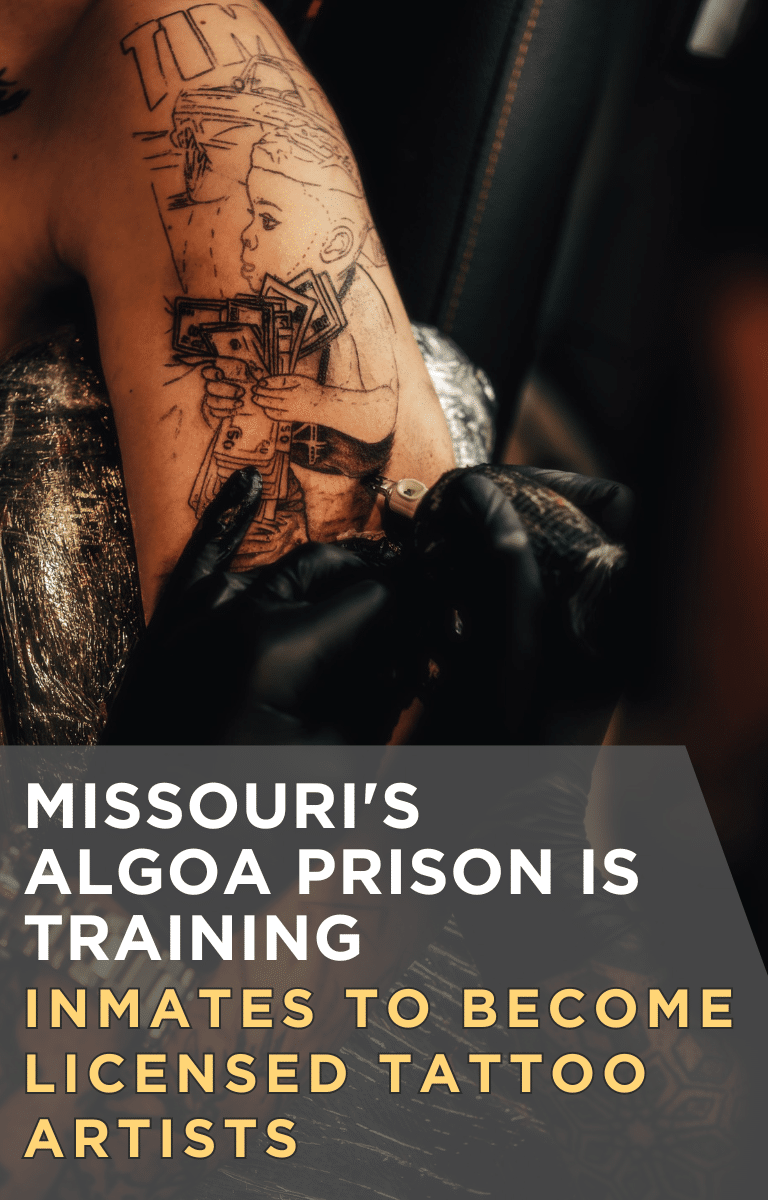
In This Article
- Key Takeaways
- What is happening at Algoa Prison in Missouri?
- Why is tattooing being used as a rehabilitation tool?
- How does tattoo licensing work for these inmates?
- What does this program prove about tattooing as a career?
- Who can start a tattoo career from scratch?
- How do you begin your own tattoo apprenticeship?
- How does Ink Different train the next generation?
- What is the Master Mentorship program?
- Making tattoo training accessible for everyone
- Ready to become a Tattoo Artist?
- FAQ
At Algoa Correctional Center outside Jefferson City, Missouri, three men are learning to tattoo on synthetic skin under the eye of a licensed Tattoo Artist. One of them, Harlan Shaver, already carries thirteen tattoos from his time behind bars, done the way most prison tattoos are done: with makeshift tools and no sanitation. The new tattoo apprenticeship he is enrolled in is meant to replace that risk with a real license.
At Ink Different Tattoos, we see the same principle at work outside prison walls. A tattoo apprenticeship is structured, hands-on training in drawing, machine handling, safety, and client care that leads to a state license, and it does not require a background in art to start.
Key Takeaways
- The initiative: Algoa Correctional Center in Missouri runs a Department of Corrections tattoo apprenticeship where inmates earn a real tattoo license before release.
- The numbers: Each participant logs three hundred training hours and learns sanitation, art history, and machine work before tattooing paying clients at ten dollars an hour.
- The lesson: Vocational training of this kind has been shown to cut recidivism by forty-three percent, according to the Council of State Governments Justice Center.
- Your path: Ink Different’s Traditional Tattoo Apprenticeship takes eighteen to twenty-four months with live, in-person mentorship.
- The payoff: Tattooing rewards human trust and judgment in ways automation cannot replace.
What is happening at Algoa Prison in Missouri?
Algoa Correctional Center is running one of the first state-sanctioned tattoo licensing programs inside a U.S. prison. Instructor Deakin O’Connor, a licensed Tattoo Artist, is currently working with his first three apprentices, who spend weeks on sanitation and art history before they ever pick up a machine on real skin.
Erica Williams, who runs education programs at Algoa, said the facility worked with outside agencies to make sure the training matches what a tattoo apprenticeship looks like on the outside, including the 300 logged hours each apprentice needs to qualify. Once O’Connor decides a apprentice is ready, they open a small tattoo parlor inside the facility where other inmates pay ten dollars an hour for the artist’s time.
This is not informal practice. It mirrors the same core skills, line work, machine handling, sanitation, and client care, that any Tattoo Artist has to master before working professionally.
Why is tattooing being used as a rehabilitation tool?
Contraband tattooing is common in prisons, done with improvised tools that carry a real risk of infection. Algoa’s answer was to replace that risk with a licensed alternative rather than trying to eliminate tattooing altogether.
Josh Gaines, a deputy program director at the Council of State Governments Justice Center, points to vocational training broadly: it has been found to cut the odds of recidivism by forty-three percent and return two hundred five percent on investment across the states that have studied it. Tattooing fits that model because it gives someone a marketable skill and a legitimate way to earn money.
There is also the trust element built into the work itself. Instructor O’Connor frames it as a chance for apprentices to feel like professionals again, not just inmates serving time. Eric Higgins, one of the three current apprentices, put it simply: everyone deserves a job, and a mistake should not define a person for good.
The takeaway: A licensed tattoo apprenticeship gave three men in one of the hardest environments imaginable a real trade. That same structure is available to you without the walls.
How does tattoo licensing work for these inmates?
Algoa’s apprentices work toward the same 300 hours of supervised training that a standard tattoo apprenticeship requires, plus sanitation and bloodborne pathogen safety before they touch a client.
Safety comes first. Training follows OSHA’s bloodborne pathogen standards, the same rules that govern cross-contamination prevention in any licensed tattoo studio, and aftercare instruction typically follows guidance from the American Academy of Dermatology.
Licensing rules vary by state. If you want to see how the process looks in the real world, explore our guides on how to get your tattoo license in Texas and how long a tattoo license takes in Colorado.
What does this program prove about tattooing as a career?
None of Algoa’s three apprentices came in with formal art training. What they had was 300 hours to put in and a Mentor willing to walk them through it, which is the same formula that gets anyone licensed on the outside.
If that model works for men with no prior experience and far more obstacles than most people will ever face, a slow start is not a real barrier for you. It is exactly why Ink Different structures its own training as a career-change tattoo apprenticeship rather than assuming prior skill.
Tattooing is also one of the most AI-proof careers left. A robot cannot build trust with a nervous client or adapt a design to living skin in real time. Our deep dive on why Tattoo Artists are still essential explains exactly why human hands still win.
Who can start a tattoo career from scratch?
Eric Higgins had no tattoo background before Algoa. Now he is 300 hours into a licensed apprenticeship, tattooing a tiger’s paw onto practice skin. If that is possible from inside a prison, it is possible from wherever you are starting.
The gap between a dead-end job and a real trade is usually not talent. It is finding a Mentor and putting in the hours.
If you are worried about beginner missteps, we lay them out in mistakes aspiring tattoo apprentices should avoid. And when you are ready to gear up, our list of tools every beginner Tattoo Artist should know gives you a running start.
How do you begin your own tattoo apprenticeship?
Algoa’s apprentices followed a clear sequence: sanitation and art history first, then supervised practice, then real clients. A tattoo apprenticeship outside prison walls follows the same order.
- Step 1: Commit to the decision. Decide you are done waiting. This is the life-changing choice that everything else depends on.
- Step 2: Master the foundations. Study drawing, line work, shading, and design principles until they become second nature.
- Step 3: Find a real Mentor. Live, in-person guidance from experienced Tattoo Artists is what separates a career from a hobby.
- Step 4: Learn safety and sanitation. Earn your bloodborne pathogen certification and internalize sterile studio practices.
- Step 5: Practice, then tattoo under supervision. Move from fake skin to live clients while your Mentor guides every step.
- Step 6: Build your brand and get licensed. Grow your portfolio and finish your licensing requirements to work professionally.
When you are ready to grow that audience, our roundup of platforms to help Tattoo Artists build their brand shows you where to plant those seeds.
How does Ink Different train the next generation?
Ink Different Tattoos runs a nationwide Traditional Tattoo Apprenticeship: an 18- to 24-month, four-phase path built for people with zero prior experience, the same starting point as Algoa’s apprentices.
We have spent over 15 years refining that structure for people ready to change careers.
Here is what our Traditional Tattoo Apprenticeship gives you:
- Personalized training: Hands-on coaching tailored to your pace and goals.
- Start remote, finish in studios: Learn the foundations wherever you are, then complete your training in a working Tattoo Studio.
- Beginner-friendly: No prior experience required; we build your foundation from day one.
- Career-ready outcomes: Job-ready skills and licensing support so you can step confidently into the industry.
- Good Humans culture: A supportive, family-like community that has your back the entire way.
We promise a real path: live, in-person mentorship, an AI-proof craft, and the support to get licensed and work professionally. If you have been weighing college against something more hands-on, read why tattoo apprenticeships are gaining ground as a college alternative.
What is the Master Mentorship program?
The Master Mentorship is a one-year, in-person program where you train directly with celebrity and award-winning Mentors to master a style, explode your career, or launch your own studio. It suits beginners and experienced artists alike.
You learn alongside award-winning industry leaders. This is intensive skill development focused on business ownership and standing out in a crowded field. Master Mentorship proves that world-class guidance can accelerate careers just as powerfully as foundational structure.
Making tattoo training accessible for everyone
Ink Different offers Spanish-speaking locations so language is never a barrier to building an AI-proof tattoo career. Your background should open doors, not close them.
You can train in Spanish near Denver, in Orange County, in NYC, in Miami, in San Antonio, and in San Diego. Wherever you are starting from, there is a seat with your name on it, though seats are always limited.
Ready to become a Tattoo Artist?
Three men at Algoa are 300 hours into building a licensed trade with a Mentor and a machine. You have fewer walls in your way than they do.
If you are in work that drains you and your creative potential is going unused, this is your signal. A full career change through a tattoo apprenticeship could be the most important choice you make this year.
Ready to become a Tattoo Artist? Apply now to Ink Different’s Traditional Tattoo Apprenticeship and start building an AI-proof career with licensing support along the way. Not sure yet? Fill out our quick questionnaire to get personalized support and find out if the Traditional Tattoo Apprenticeship is right for you.
Frequently Asked Questions
What is the Algoa Prison tattoo program in Missouri?
It is a Missouri Department of Corrections tattoo apprenticeship at Algoa Correctional Center where inmates complete three hundred supervised training hours to earn a tattoo license before release.
Do I need prior art experience to become a Tattoo Artist?
No. Algoa’s own apprentices started with no formal art background, and Ink Different’s Traditional Tattoo Apprenticeship is built the same way, teaching drawing, machine handling, and safety from day one.
How long does a tattoo apprenticeship take?
Most tattoo apprenticeships take 18 to 24 months. Ink Different’s four-phase Traditional Tattoo Apprenticeship follows this timeline, with progress based on how quickly you master each phase.
What makes Ink Different different from other options?
Ink Different offers live, in-person mentorship, over 15 years of experience, award-winning Mentors, and a supportive Good Humans culture as a serious college alternative.
Is tattooing really an AI-proof career?
Yes. It depends on reading a client in the moment and adapting a design to living skin, which is not something automation can replicate.
Where can I do a tattoo apprenticeship near me?
Ink Different operates nationwide with Spanish-speaking locations near Denver, Orange County, NYC, Miami, San Antonio, and San Diego. You start remotely and finish in a working studio.