What Juilliard and a Serious Tattoo Apprenticeship Have More in Common Than You Think
June 10, 2026
Why Waiting to Start Your Tattoo Career Is the Biggest Mistake You Can Make
June 12, 2026
In This Article
- Key Takeaways
- Why can AI not automate the art of tattooing?
- What makes tattooing a human-only art form?
- How does AI currently attempt to replace Tattoo Artists?
- Where does AI fail in tattoo execution?
- Why is human skin the ultimate AI limitation?
- How can you start your tattoo career today?
- Frequently Asked Questions
You feel it, don’t you? The robots aren’t coming because they’re already here. Algorithms are writing code. AI is generating logos, composing music, and churning out content by the millions. Entire job categories are disappearing in real time. And if you’re a creative person wondering where you fit in this new world, that fear is completely valid. But here’s the thing: there is one art career that AI cannot touch, automate, or replace. Not now, not in 2026, not ever. That career is tattooing. And Ink Different Tattoos is here to show you exactly why, and how you can claim it for yourself.
Key Takeaways
- Tattooing requires tactile feedback: AI cannot replicate the physical sensation of needle resistance on human skin.
- Human connection is irreplaceable: The trust and intimacy between the Tattoo Artist and client cannot be automated.
- Live skin behavior: Every body part moves and heals differently, requiring real-time human adaptation.
- Guaranteed job security: Ink Different’s Traditional Tattoo Apprenticeship offers a guaranteed job offer in an AI-proof career.
Why can’t AI automate the art of tattooing?
AI cannot automate tattooing because it lacks the tactile sensitivity and emotional intuition required to work on living human skin. While algorithms can generate digital designs, they cannot physically handle the resistance of the dermis or navigate the curves of a human body with the nuance of a trained Tattoo Artist.
Think about the last time you felt truly understood by another person. It wasn’t a chatbot; it was a conversation filled with eye contact, empathy, and shared silence. Tattooing is that conversation, but etched in ink. It is a physical dialogue between the Tattoo Artist’s hand and the client’s body. Machines don’t have hearts, and they certainly don’t have the steady hand that comes from years of mentorship.
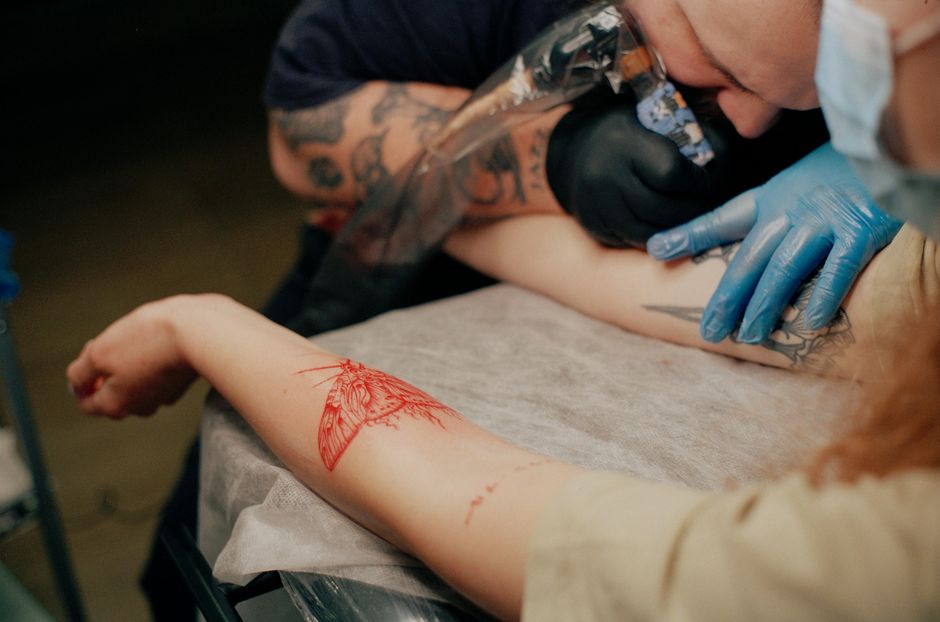
When you train under a mentor, you aren’t just learning to draw; you’re learning to feel. You learn how skin stretches over a bicep versus a rib cage. You learn to read the subtle flush of irritation before it becomes a problem. That’s the “Good Humans” culture at Ink Different, where empathy matters just as much as linework.
What makes tattooing a human-only art form?
Tattooing is a human-only art form because it combines technical precision with deep emotional intelligence and physical adaptability. Unlike graphic design, which exists on a screen, tattooing lives on a canvas that breathes, sweats, and bleeds.
Consider the anatomy of trust. A client sits in a chair, often vulnerable, exposing their skin to a needle. They are placing immense trust in the Tattoo Artist’s hands. An AI machine, no matter how advanced, lacks the ability to offer comfort, reassurance, or a steady presence during a painful process. It is a sterile transaction. Tattooing is a sacred exchange.
The Unautomatable Truth: You can’t download “bedside manner” or “artistic soul” into a hard drive. These are cultivated through human experience and mentorship.
How does AI currently attempt to replace Tattoo Artists?
AI attempts to replace Tattoo Artists by generating digital flash and simulating designs, but it remains confined to the screen. Current generative tools can mash up styles and create visuals, yet they fail to translate those pixels into permanent body art.
We’ve seen the rise of AI-generated “tattoo designs” flooding social media. They look shiny and perfect in a JPEG, but they lack the structural integrity needed for a tattoo. A design that looks good on a 2D monitor might blow out or warp when applied to the 3D curvature of a shoulder blade. This is where the expertise of a human Tattoo Artist, trained through hands-on mentorship, becomes irreplaceable.
- Digital Generation: AI creates the “idea” of a tattoo.
- Human Execution: The Tattoo Artist refines the idea for anatomy and longevity.
- The Gap: No machine currently exists that can safely and artistically inject ink into skin autonomously.
If you are worried about AI taking over, look at the tools it actually produces. They are assistants, not replacements. This is why starting your career now is crucial. Learning to wield these tools while mastering the physical craft ensures you stay ahead of the curve. You can read more about this in our post on platforms to help Tattoo Artists build their brand.
Where does AI fail in tattoo execution?
AI fails in tattoo execution where the machine cannot adapt to the living nature of human skin. The physical act of tattooing requires constant micro-adjustments that no algorithm can currently process in real-time.
Imagine a robot arm trying to tattoo a knee. The skin moves, the cap shifts, and the surface angle changes constantly. A human Tattoo Artist anticipates this movement, shifting their hand and machine angle in a split second. An automated system would likely result in blown-out lines or uneven saturation. This is the reality of “null” in automation. The technology simply does not exist to replicate this dexterity.
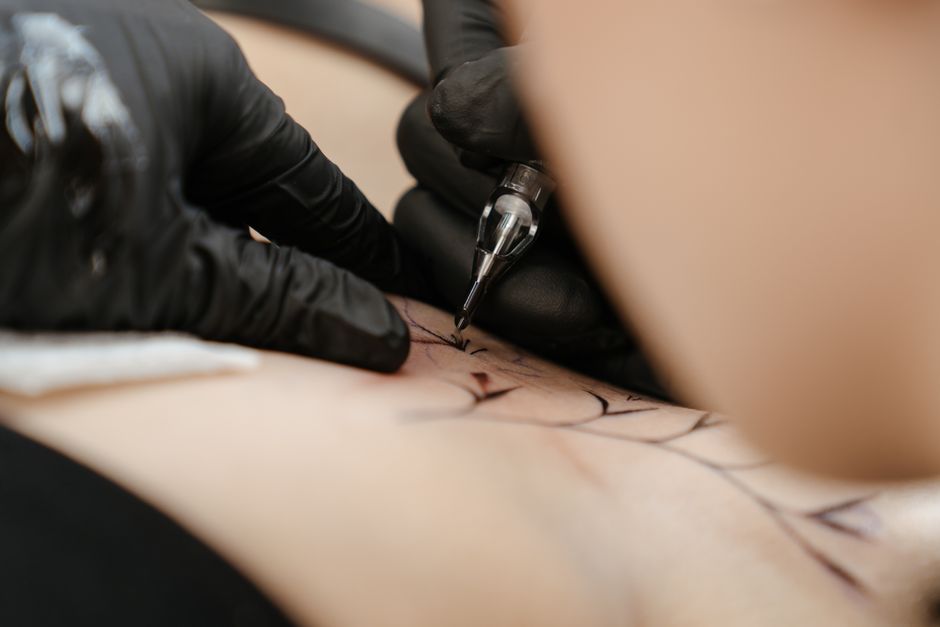
Step-by-Step: The Human Execution Process
- Stencil Application: The Tattoo Artist ensures the stencil fits the client’s unique body geometry, adjusting for muscle flexion.
- Needle Depth & Hand Speed: The Tattoo Artist adjusts depth based on skin thickness and sensitivity, using a tactile feedback loop.
- Real-time Healing Assessment: During the session, the Tattoo Artist monitors for signs of trauma, adjusting pressure immediately.
- Post-Session Aftercare: The Tattoo Artist provides personalized healing advice, referencing guidelines like those from the American Academy of Dermatology.
Each step requires a level of sensory input and decision-making that is currently beyond the scope of artificial intelligence.
Why is human skin the ultimate AI limitation?
Human skin is the ultimate AI limitation because it is an unpredictable, biological canvas that changes constantly. Unlike a static tablet screen, skin has texture, pores, oil, and elasticity that vary from person to person.
Skin resistance changes based on hydration, scar tissue, and sun exposure. An AI would need sensors far beyond anything that currently exists to measure those variables and adjust in real time. On top of that, safety regulations like OSHA bloodborne pathogen standards require constant human judgment.
This is why the tactile nature of the trade is your greatest asset. By training your hands to feel what the machine cannot sense, you become indispensable.
How can you start your tattoo career today?
You can start your tattoo career today by enrolling in Ink Different’s Traditional Tattoo Apprenticeship, a college alternative designed for beginners. This tattoo apprenticeship bridges the gap between your creative potential and a guaranteed professional future.
We know the fear of wasted time. Another year drifting in a dead-end job is a year of your art gathering dust. We plant the seed for your growth now. Our 14 years of experience have honed a curriculum that bypasses the guesswork of finding a mentor and goes straight to skill acquisition.
Why wait for “someday”? Someday is not a day of the week. The time to build your foundation is now, before another cycle of the sun passes you by.
What You Can Expect from Our Traditional Tattoo Apprenticeship
Our Traditional Tattoo Apprenticeship is a structured 18- to 24-month journey divided into four phases. It starts remotely, allowing you to learn the fundamentals from anywhere, and finishes in our studios with hands-on mentorship. Unlike the uncertainty of a DIY apprenticeship, we provide a clear roadmap.
- Phase 1: Foundations in drawing, sanitation, and machine theory.
- Phase 2: Practice on synthetic skin and volunteer canvases.
- Phase 3: Live client work under direct supervision.
- Phase 4: Licensing prep and your guaranteed job offer.
This is not just training; it’s a career launchpad. Upon completion, you receive a Guaranteed Job Offer at one of our tattoo studios. This offer is the safety net that allows you to leap confidently into your new life.
Mentorship That Pushes Your Brand and Skills Further
For those looking to explode their career or master a specific style, we offer the Master Mentorship program. This 1-year intensive in-person program connects you with celebrity and award-winning mentors like Kyle Dunbar, Boneface, and Jordi Pla. It’s the ultimate accelerant for your art.

Ready to Become a Tattoo Artist?
You have the passion. You have the drive. Now, you need the path. The world is moving fast, but the art of tattooing remains a deeply human craft that machines cannot touch. Don’t let another year go by wondering “what if.” Step into the role of the hero in your own story and let Ink Different be your guide.
Ready to become a Tattoo Artist? Apply to Ink Different’s Traditional Tattoo Apprenticeship and secure your guaranteed job offer today. Spots are limited to two per month per location, so don’t miss your chance.
For those in Spanish-speaking communities, we have locations in Denver, Orange County, Brooklyn/NYC, Miami-Fort Lauderdale, Naples, Oklahoma City, and San Diego to make this passion accessible.
Frequently Asked Questions
Can AI really not replace Tattoo Artists?
AI cannot replace Tattoo Artists because it lacks the tactile feedback and emotional intelligence required to work on living skin. The physical and emotional connection in tattooing is strictly human.
How long does it take to become a Tattoo Artist?
Becoming a professional Tattoo Artist typically takes 18 to 24 months through a structured apprenticeship like Ink Different’s Traditional Tattoo Apprenticeship.
Do I need art experience to start a tattoo apprenticeship?
No prior art experience is needed for Ink Different’s Traditional Tattoo Apprenticeship. The program is designed to teach drawing fundamentals and tattoo techniques from scratch.
What is the job outlook for Tattoo Artists?
The job outlook is strong, as tattooing is an AI-proof creative career. Ink Different enhances this with a guaranteed job offer upon graduation from the apprenticeship.
Is tattooing a good career change?
Tattooing is an excellent career change for creative individuals stuck in unfulfilling jobs. It offers a unique blend of artistic expression and stable income, secured through mentorship.