How to Become a Tattoo Artist Starting With Zero Drawing Experience
September 23, 2026
Robots Are Officially Living in Our Homes — Tattoo Artists Are Still the Job They Can’t Touch
September 24, 2026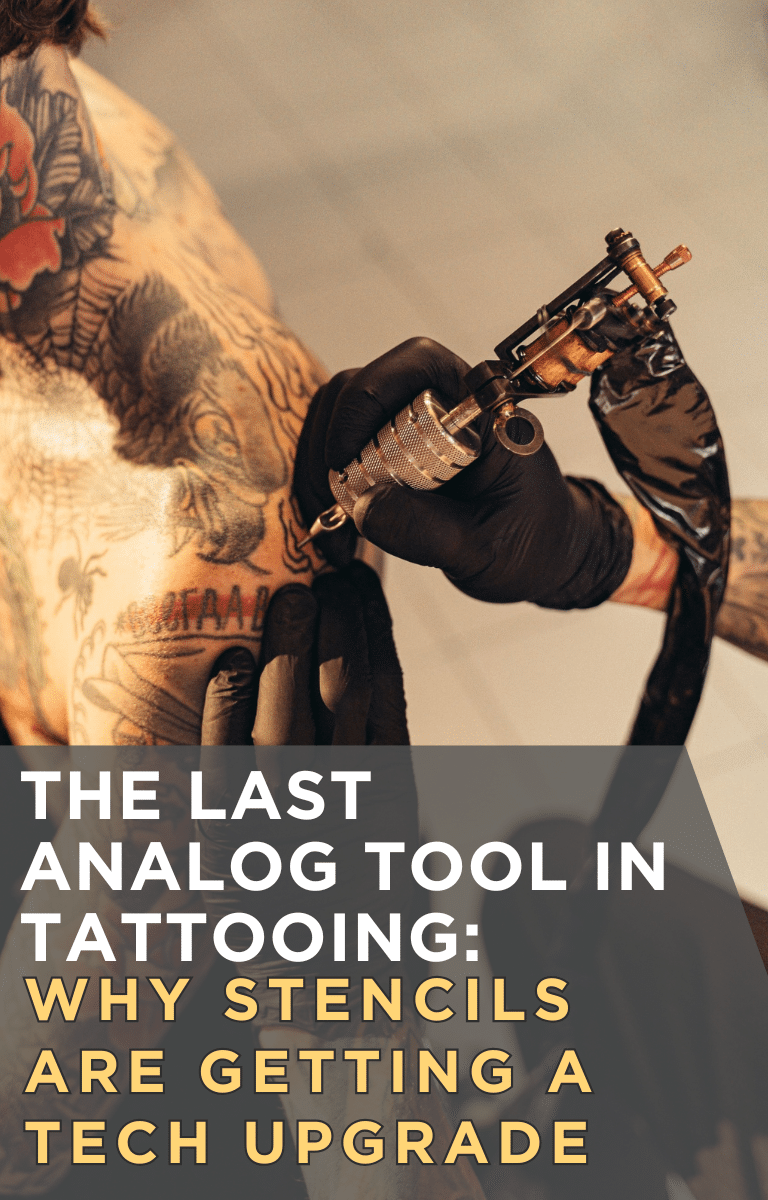
In This Article
- Key Takeaways
- What Is a Tattoo Stencil and Why Does It Still Matter?
- Why Has the Stencil Stayed Analog for So Long?
- What Does a Tech Upgrade for Stencils Actually Look Like?
- Does New Stencil Technology Replace an Artist’s Skill?
- How Do You Use Modern Stencil Tools Like a Pro?
- Why Should You Learn Both Analog and Digital Methods?
- How Does Ink Different Train You for This New Era?
- Ready to Master the Craft?
- FAQ
Walk into almost any tattoo studio, and you’ll find rooms full of wireless machines, tablets, and rechargeable power supplies. Then you’ll find the humble stencil, a tool that’s barely changed in decades. Artists have been experimenting with inkjet printers to modernize it, but standard desktop units weren’t built for that job.
Clogged nozzles, streaky transfers, and ruined hardware were common. Companies like Purple Stencil, backed by ink formulation expertise from parent company TROY Group, have been building ink specifically engineered for the printers artists actually use, rather than asking artists to adapt cheap ink to hardware it was never designed for.
A tattoo stencil is the transferable outline of a design, applied to the skin as a guide so a Tattoo Artist can place and execute a tattoo accurately. Understanding where this tool is headed is a good window into a career where the craft itself never stops evolving.
Key Takeaways
- Definition: A tattoo stencil is the transferable design outline applied to skin that guides accurate tattoo placement.
- The shift: Stencils are moving from thermal transfer paper toward purpose-built inkjet systems designed specifically for precision stencil work.
- Skill first: Better tools speed up prep, but they never replace the human hand and judgment behind a great tattoo.
- Career path: Learning both traditional and modern stencil methods builds a well-rounded, adaptable career.
- Training: Ink Different’s Traditional Tattoo Apprenticeship teaches both foundational and modern skills with live, in-person mentorship.
What Is a Tattoo Stencil and Why Does It Still Matter?
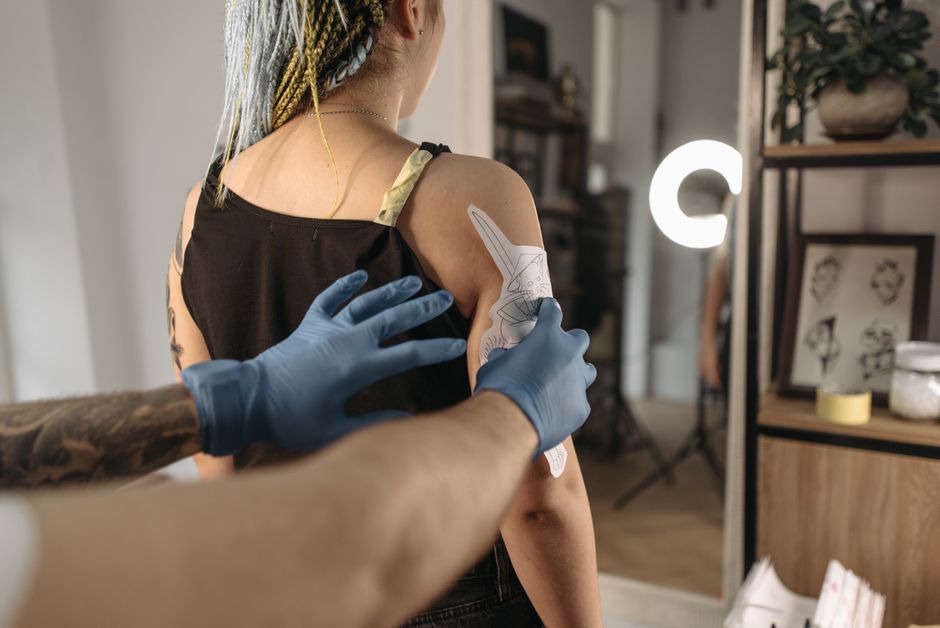
A tattoo stencil is the outline of a design transferred onto the skin, giving a Tattoo Artist a reliable guide to follow during the tattoo. It’s the bridge between a design on paper and permanent ink on a body.
Stencils matter because they eliminate guesswork. Placement, proportion, and flow all get locked in before the tattoo machine ever touches skin. A crooked stencil means a crooked tattoo, so this step carries real weight for something that looks simple.
For decades, this process ran on thermal transfer paper, tracing or printing a design, pressing it to prepped skin, and peeling it back to reveal a guide. It works. It’s just not exactly modern.
Why Has the Stencil Stayed Analog for So Long?
The stencil stayed analog because thermal transfer is cheap, reliable, and trusted, and because artists tend to value proven results over trendy tools.
When artists started trying inkjet printing to get sharper detail for styles like fine-line realism and micro-work, the DIY approach hit a wall. Aftermarket ink poured into standard desktop printers clogged microscopic printheads, leading to streaky transfers and wasted hours troubleshooting instead of tattooing.
That’s a real risk for a working artist. A machine that misfires ruins one line. A stencil method that fails ruins the whole placement. It’s part of why so many artists stuck with the tools their Mentors used before them, until a system built specifically for this problem came along.
Pro Tip: Never trust a tool you can’t use without power. Learning the traditional method first means a dead battery or printer jam never ends your workday.
What Does a Tech Upgrade for Stencils Actually Look Like?
The upgrade companies like Purple Stencil have built is a full system: ink formulated specifically for inkjet stencil printing, matched paper, dedicated technical support, and desktop, mobile, and scanning setups designed around how tattoo artists actually work.
Instead of forcing artists to hack off-the-shelf printers with ink they weren’t built for, this approach starts from the printer and paper and builds the ink to match. That precision matters before the first line is ever pulled. Fine linework, subtle gradients, and small details all have to survive the move from digital design to printed stencil, and when a piece needs resizing, being able to adjust it digitally and print a clean stencil in seconds keeps the focus on placement and execution.
These systems have also been tested outside the controlled environment of a home studio. Purple Stencil has run dedicated stencil stations for hundreds of artists at major three-day conventions, where unfamiliar workstations and a steady rotation of clients leave little room for equipment problems.

Does New Stencil Technology Replace an Artist’s Skill?
No. Better stencil technology speeds up preparation, but it never replaces the human hand, judgment, and craft that turn a design into a healed, finished tattoo.
A printer can lay down a flawless outline and still end up on a bad tattoo in the wrong hands. Needle depth, hand speed, shading, and reading how skin responds are all human skills. The Bureau of Labor Statistics notes that craft and fine artists rely on developed technique and creativity that tools alone can’t replicate.
This is the same reason tattooing remains a craft that resists automation. We dug into that idea in our post on why tattoo artists are still essential. Tools evolve. The irreplaceable value of a skilled human hand does not.
How Do You Use Modern Stencil Tools Like a Pro?
Using modern stencil tools well means prepping the design digitally, printing a clean transfer, applying it precisely, and always verifying the result with your own trained eye.
Here’s a simple workflow that blends newer tools with the fundamentals:
- Design digitally. Build or refine your piece on a tablet, adjusting size and proportion to fit the client’s anatomy.
- Preview on skin. Use an AR overlay or a test print to confirm the design flows with the body’s curves.
- Prep the surface. Clean and shave the area following proper hygiene standards, like those outlined in OSHA bloodborne pathogen standards.
- Transfer the stencil. Print directly to skin or apply your thermal transfer, pressing evenly and peeling with care.
- Check with your eye. Step back, look in a mirror, and confirm placement before you ever pick up the tattoo machine.
- Tattoo with confidence. Follow your guide, but adapt live to how the skin responds.
Notice that steps three, five, and six are all human. The tech assists you, but your training carries the outcome. Master the foundational tools every beginner tattoo artist should know to sharpen your fundamentals.
Why Should You Learn Both Analog and Digital Methods?
Learning both matters because traditional skills keep you working when technology fails, while digital fluency makes you faster and more adaptable across different studio setups.
Picture relying only on a printer, then losing power or having it jam mid-shift. An artist who can produce a clean stencil by hand keeps working. One who can’t has to stop. Foundation is what gives you that flexibility.
At the same time, clients increasingly expect the precision modern tools deliver, especially for detailed styles. Being fluent in both is part of what makes an artist adaptable, and building that professional identity matters too.
How Does Ink Different Train You for This New Era?
Ink Different Tattoos trains you through a live, in-person Traditional Tattoo Apprenticeship that pairs foundational skills with modern tools, so you graduate job-ready with skills that hold up as the industry evolves.
Stencils going digital is one small chapter in a bigger story: tattooing keeps evolving, and the artists who thrive are the ones trained well from the start. For over 15 years, we’ve helped people trade a routine that wasn’t working for a craft they actually own. Tattoo apprenticeships have earned their place as a serious college alternative, and we built ours around that.
What You Can Expect from Our Traditional Tattoo Apprenticeship
Our Traditional Tattoo Apprenticeship runs 18 to 24 months across a proven 4-Phase structure. You start remotely to build your foundations, then finish hands-on in real tattoo studios. No prior art experience is required. We plant the seed and help you grow, step by step, alongside experienced mentors who genuinely want you to win.
A Career That Comes With Confidence
By the end, you walk away with a guaranteed job offer, job-ready skills built to last as tools, and techniques change around you, plus the licensing support and guaranteed job offer that come with finishing the apprenticeship.
Mentorship That Pushes Your Brand and Skills Further
Want to go deeper or explode an existing career? Our one-year, in-person Master Mentorship connects you with celebrity and award-winning Mentors, including Al Fliction, Liz Cook, and Kyle Dunbar. It’s built for mastering a specific style, growing a personal brand, and stepping into tattoo studio ownership.
Making Tattoo Training Accessible for Everyone
We offer Spanish-speaking locations in Denver, Orange County, New York City, Miami, San Antonio, and San Diego, so language never stands between you and this career. Our Good Humans culture means you join a supportive, family-like community from day one. Seats are limited, since real, live mentorship can’t scale to everyone at once.
Ready to Master the Craft?
Stencils are getting a real upgrade, and the industry is moving forward with it. The question is whether you’re building the skills to move with it.
Ready to become a tattoo artist? Apply now to Ink Different’s Traditional Tattoo Apprenticeship and start building an AI-proof career with licensing support along the way. Prefer to test the waters first? Fill out our quick questionnaire to get personalized support and find out if our Traditional Tattoo Apprenticeship is right for you.
Frequently Asked Questions
Are digital stencils replacing traditional thermal stencils?
Not entirely. Precision inkjet stencil systems are growing fast, but many Tattoo Artists still keep thermal transfer on hand as a reliable, power-independent backup.
Do I need to learn traditional stencil methods if newer tools exist?
Yes. Traditional skills keep you working when technology fails and build the hand control that makes every tattoo better. Foundations first, tools second.
How long does the Traditional Tattoo Apprenticeship take?
Ink Different’s Traditional Tattoo Apprenticeship takes 18 to 24 months across four phases, starting remotely and finishing hands-on in real tattoo studios.
Do I need art experience to start a tattoo apprenticeship?
No. Our Traditional Tattoo Apprenticeship is built for beginners and teaches drawing fundamentals from day one, so you can start with no formal art background.
What makes Ink Different different from other options?
Ink Different offers live, in-person mentorship, award-winning mentors, a Good Humans culture, and over 15 years of experience training professional tattoo artists nationwide.
Will technology ever fully automate tattooing?
Unlikely. Tattooing depends on human judgment, adaptation, and craft that machines cannot replicate, which is why it remains an AI-proof career worth pursuing.