No Degree, No Problem: How Tattoo Artists Build Six-Figure Careers Without College
June 22, 2026
How a Juilliard-Level Tattoo Education Opens Doors That Self-Taught Tattoo Artists Can’t Access
June 24, 2026
In This Article
- Key Takeaways
- What does “the right move” actually mean for your career?
- Why tattooing is one of the best career moves right now?
- Who this career path is actually built for
- How to assess whether you’re actually ready
- What skills and traits matter most
- Why the timing of your decision matters
- Why Ink Different Tattoos is built for career changers
- Ready to make the move?
- Frequently Asked Questions
If you’ve been in the same career for years and something still feels off, you’re not alone. A lot of adults reach a point where the job pays the bills but costs them something harder to name: time, energy, the sense that their work actually means something. For people who’ve always been drawn to art but took the “practical” route, that feeling tends to get louder with age, not quieter.
Changing careers is a huge decision that comes with real questions. Can you afford to start over? Is it too late? What if you’re not good enough? Those questions are worth taking seriously, and this article is here to help you work through them honestly.
What you’ll find is that a tattoo apprenticeship is one of the more practical and direct career paths available right now, especially compared to going back to school. It’s hands-on, it’s structured, and it leads somewhere specific. If you’re considering it, here’s how to know whether it’s the right move for you.
Key Takeaways
- A tattoo career is one of the few skilled trades that remains AI-proof and in high demand across the country.
- You don’t need an art degree or a perfect portfolio to start a tattoo apprenticeship. You need commitment.
- Ink Different Tattoos accepts only two tattoo apprentices per studio per Mentor, so spots are genuinely limited.
- A tattoo apprenticeship takes 18 to 24 months to complete and comes with a guaranteed job offer upon graduation.
- This path is designed for career changers of all ages and backgrounds, not just people in their twenties.
What does “the right move” actually mean for your career?
The right move trades a dead end for a direction. For a lot of career changers, tattooing isn’t a sudden impulse. It’s something they’ve thought about for years and kept pushing aside.
The question isn’t whether you’re passionate enough. The question is whether you’re ready to take that passion seriously and put in the work to build something with it. A tattoo career isn’t a side hustle or a hobby you monetize on weekends. It’s a skilled trade that demands full commitment and rewards it with a career that’s genuinely yours.
If you’ve been in a job that doesn’t challenge you, doesn’t pay you what you’re worth, or has no clear future, that’s important information. It means you already know something isn’t working. The harder question is what you’re going to do about it.
Why tattooing is one of the best career moves right now?
Most industries are dealing with some level of disruption from automation and AI. Entire job categories are shrinking, and the people most at risk are the ones doing repetitive, replicable work. Tattooing is not that.
A tattoo is a physical, permanent piece of work done by a human on another human. No software can replicate the judgment, precision, and relationship involved in that process. The demand for skilled Tattoo Artists has stayed strong and continues to grow as tattooing becomes more mainstream and more accepted across age groups and industries.
For someone weighing a career change, that stability matters. You’re not training for a job that might not exist in five years. You’re entering a trade where skill compounds over time and the work can’t be outsourced or automated away.
On top of that, Ink Different’s tattoo apprenticeship is 18 to 24 months – not four years. And it doesn’t leave you with six figures of student debt. For adults who’ve already spent years in careers that didn’t pan out, that’s a meaningful difference.
Who this career path is actually built for
Tattooing as a career often gets associated with people who’ve known since they were teenagers that this is what they wanted. But that’s not the full picture, and it’s not the audience Ink Different Tattoos was built to serve.
Our target career changers are adults in their thirties, forties, and sometimes fifties who are skilled, experienced, and serious, but done with the career they’re in. Some have always had an artistic side that never had an outlet. Others are coming from industries that are shrinking and are looking for something with a more stable, skill-based future.
What connects them isn’t age or background. It’s the willingness to commit to learning something new from the ground up, with the same work ethic they’ve already proven in their careers so far.
If you’re worried that you’re too old, too far behind, or starting from scratch, that’s a normal fear, and it’s also not a reason to stay stuck. Ink Different Tattoos works with adults at all stages. What matters is that you’re serious.
How to assess whether you’re actually ready
This is the practical part. Before you apply anywhere or make any financial decisions, it helps to be honest with yourself about a few things.
Do you have a genuine interest in tattooing as a craft, not just the lifestyle?
Tattooing looks a certain way from the outside. The reality is that learning it involves a lot of repetitive practice, a steep learning curve, and a long period of being a beginner. If your interest is in the craft itself (the drawing, the technique, the client relationship), that’s a good foundation. If it’s mostly about the image, that tends to wear off quickly when the work gets hard.
Can you handle feedback without shutting down?
Training under a Mentor means receiving consistent, direct feedback on your work. Some of it will be uncomfortable. The people who move fastest in a tattoo apprenticeship are the ones who can hear criticism, make adjustments, and keep going. Defensiveness is one of the biggest things that slows people down.
Are you in a position to commit fully?
A tattoo apprenticeship is not something you can do halfway. It requires consistent time, focus, and presence. If your current situation makes that genuinely impossible right now, it’s worth being honest about that before starting rather than after.
Are your expectations realistic about the timeline?
18 to 24 months is the range. Some people move faster, some slower, depending on the structure and their learning pace. Either way, it’s a period of investment before you’re earning at a professional level. Going in with clear expectations makes that period easier to navigate.
What skills and traits matter most
You don’t need a degree, a formal art background, or an existing portfolio of tattoo designs to start a tattoo apprenticeship. Those things can help, but they’re not the baseline requirement.
What does matter:
Drawing consistency. You don’t need to be exceptional, but you need to draw regularly. The ability to practice and improve is more important than where you start.
Attention to detail. Tattooing is precise work. Small errors on skin are permanent. The people who do this well are the ones who notice the small things and care about getting them right.
Professionalism. Tattooing is a client-facing trade. How you communicate, how you handle a difficult client interaction, how you show up every day; all of it matters. A Tattoo Artist who’s technically skilled but difficult to work with doesn’t build a sustainable career.
Hygiene and safety standards. This is non-negotiable. Understanding and following bloodborne pathogen standards and studio safety protocols is part of the job from day one. It’s not optional, and it’s not something to take lightly.
Coachability. This comes up with every Mentor who trains someone. The ability to listen, take direction, and apply feedback consistently is the trait that separates people who advance from people who stall.
Why the timing of your decision matters
There’s a version of this decision that gets delayed for another year, and another year after that. Most people who’ve been thinking about a career change for a while already know what that pattern looks like.
The urgency here isn’t manufactured. Ink Different Tattoos accepts two tattoo apprentices per studio per Mentor. That’s a small number by design; it’s what makes the training effective and personal. It also means spots fill up, and waiting doesn’t hold your place.
Every year you spend in a career that isn’t working is a year of building someone else’s business instead of your own. A tattoo career, once established, is yours. Your clients, your skills, your income, your schedule. That doesn’t happen overnight, but it also doesn’t happen if you keep waiting for a better moment to start.

Why Ink Different Tattoos is built for career changers
Ink Different’s Traditional Tattoo Apprenticeship is available in 40+ studios across the country, including Spanish-speaking locations in Miami, Brooklyn, Denver, Orange County, Naples, Oklahoma City, and San Diego. The reach matters because it means the training is accessible without requiring you to relocate to a major city you can’t afford.
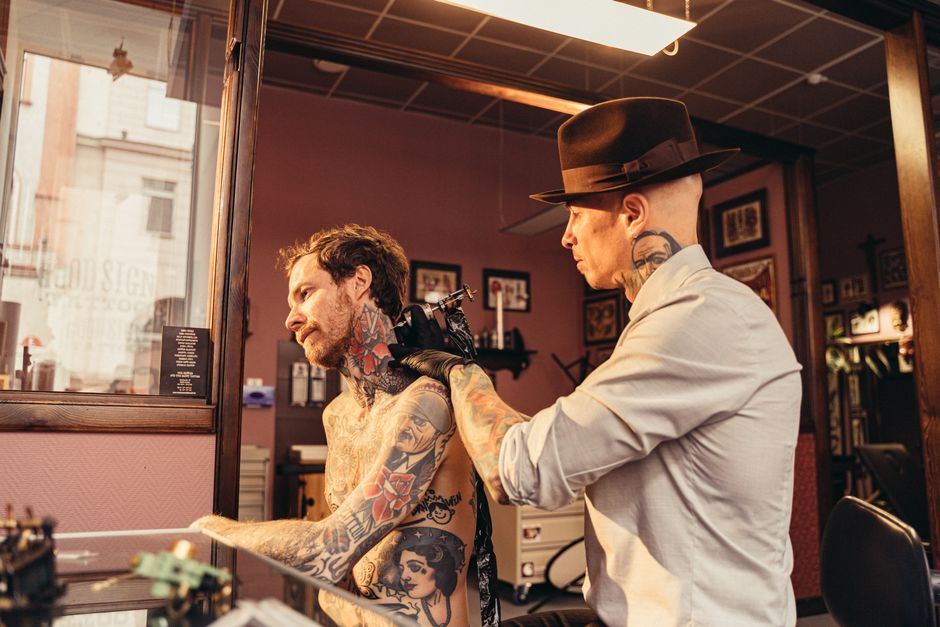
The tattoo apprenticeship structure at Ink Different is 18 to 24 months of hands-on, in-studio training under working professional Tattoo Artists. You’re not watching videos on your own. You’re in an actual tattoo studio, training under a Mentor, working toward a professional tattooing career.
When you complete the tattoo apprenticeship, you receive a guaranteed job offer. That’s not a vague outcome or a maybe. It’s a built-in part of how the tattoo apprenticeship works. You also graduate with the preparation needed to pursue state licensing and start seeing clients professionally.
For those who want to go further, our Master Mentorship program offers intensive training with some of the most recognized names in the industry, like James Vaughn, Big Ceeze, Billy Jack Gunter, Liz Cook, and Kyle Dunbar. This is for the person who doesn’t just want a career in tattooing but wants to build a name in it.
The structure, the Mentors, the guaranteed job offer, and the limit of two tattoo apprentices per studio per Mentor. All of it is designed to give you a solid shot, not just access to a course.
Ready to make the move?
You’ve done the self-assessment. You know the pain of staying where you are, and you feel the pull of a creative life. The only thing standing between you and a career as a tattoo artist is the decision to start.
Our Traditional Tattoo Apprenticeship is the most comprehensive college alternative for aspiring Tattoo Artists. You can expect personalized hands-on training, a supportive community, and a clear path to a guaranteed job offer.
Ready to Become a Tattoo Artist? Apply now to Ink Different’s Traditional Tattoo Apprenticeship and get a guaranteed job after completion. Don’t forget to fill out our quick questionnaire to get personalized support and find out if our tattoo apprenticeship is right for you.
Frequently Asked Questions
Is it too late to change careers to tattooing if I’m in my thirties, forties, or older?
No. Ink Different Tattoos works with career changers across a wide range of ages. What matters is your commitment to learning the craft, not how old you are when you start.
Do I need an art degree or formal training to start a tattoo apprenticeship?
No formal art background is required. Ink Different’s tattoo apprenticeship is built for people starting from the beginning. Drawing consistently and showing up ready to learn matters more than credentials.
How long does a tattoo apprenticeship take to complete?
A tattoo apprenticeship at Ink Different takes 18 to 24 months, depending on your pace and the structure of your training.
What do I get when I finish the tattoo apprenticeship?
You receive a guaranteed job offer after completing the tattoo apprenticeship at Ink Different Tattoos. Not just a certificate, but a direct path into working as a professional Tattoo Artist.
Why does Ink Different only accept two tattoo apprentices per studio per Mentor?
Keeping the number small is what makes the training effective. You’re not one of dozens of tattoo apprentices. You’re working directly with a Mentor who has the time and focus to develop your skills properly.
Is tattooing a stable career given how much the job market is changing?
Yes. Tattooing is a hands-on trade that cannot be replicated by automation or AI. Demand for skilled Tattoo Artists has remained consistent and continues to grow. It’s one of the more stable skill-based career paths available right now.