How to Become a Tattoo Artist in Michigan
July 31, 2026
How to Become a Tattoo Artist in Washington
August 3, 2026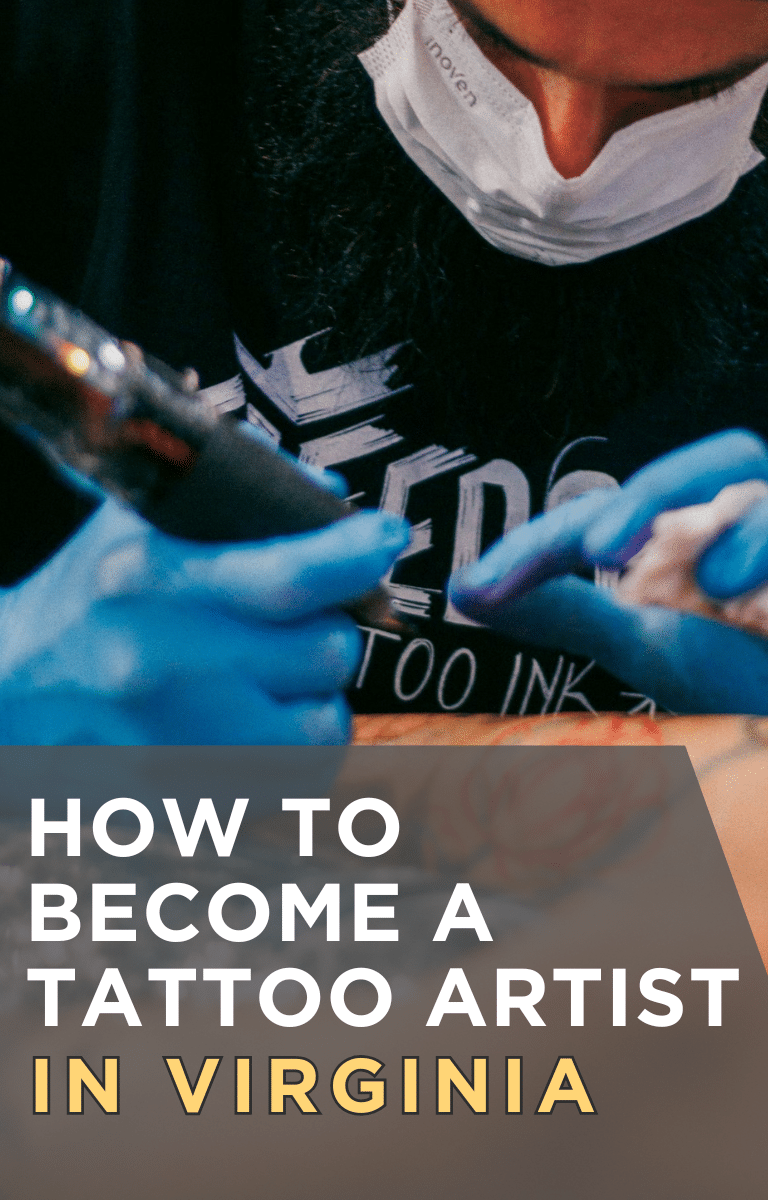
Becoming a Tattoo Artist in Virginia starts with one key fact. The state licenses tattooing through a formal government board, so you need proper training and a state credential before you work on skin.
A Virginia tattoo license is the state-issued credential from the Department of Professional and Occupational Regulation. It authorizes you to legally tattoo clients in Virginia.
This guide walks you through how to earn that license, what it costs, and how to build an AI-proof career with your hands.
Table of Contents
- Virginia Tattoo Licensing at a Glance
- How Does Virginia Regulate Tattooing?
- What Does That Mean for You as an Aspiring Tattoo Artist?
- How Do You Get a Tattoo License in Virginia Step by Step?
- What Does a Tattoo License in Virginia Cost?
- Can You Transfer an Out-of-State License to Virginia?
- What Mistakes Should You Avoid?
- How Do You Learn to Tattoo With Ink Different?
- Frequently Asked Questions
Key Takeaways
- Regulator: Virginia licenses Tattoo Artists through the DPOR Board for Barbers and Cosmetology.
- Training: Virginia requires a 1,500-hour tattoo apprenticeship before licensing.
- Exam and fee: You must pass a Board-approved exam and pay a $120 fee.
- Out-of-state artists: Virginia publishes a licensure-by-endorsement path for qualified applicants.
- Career upside: A Professional Tattoo Artist can earn over $106,000 a year according to ZipRecruiter.
Virginia Tattoo Licensing at a Glance
Virginia uses a state-license model, meaning you earn one credential recognized statewide rather than dealing with a patchwork of local permits. Here are the core facts drawn directly from the state’s requirements.
- Regulator: Department of Professional and Occupational Regulation (DPOR), Board for Barbers and Cosmetology
- Governing law: Va. Code § 54.1-700
- Licensing model: State license
- Training required: 1,500-hour tattoo apprenticeship
- Exam: Board-approved exam
- Fee: $120 (licensure by endorsement also available for qualified out-of-state artists)
Always confirm the latest details on the official DPOR website before you apply. Fees and forms can change, and the state source is the final word.
How Does Virginia Regulate Tattooing?
Virginia regulates tattooing at the state level through the DPOR Board for Barbers and Cosmetology under the authority of Va. Code § 54.1-700. This means tattooing is treated as a licensed profession, similar to how the state oversees barbers and cosmetologists.
The practical effect is that you cannot simply pick up a Tattoo Machine and start working on paying clients. The state wants proof that you have logged serious hands-on training and passed a Board-approved exam that tests your knowledge of safe practice, sanitation, and technique.
Because Virginia operates a single statewide license, your credential travels with you across the state once you earn it. That is a major advantage compared to systems where every county or city issues its own separate permit.
What Does That Mean for You as an Aspiring Tattoo Artist?
It means your path to a legal, professional tattoo career in Virginia runs through structured training and a state exam, not shortcuts. The 1,500-hour requirement is where the actual work happens.
Those hours are your foundation. Under a skilled Mentor, you learn machine control, needle depth, color theory, skin anatomy, sterilization, and client care. This is the difference between someone who owns equipment and a true Tattoo Artist who can build a reputation and a lasting income.
Tattooing is also one of the most AI-proof careers you can choose. A machine cannot sit with a client, read their body language, adapt a design to living skin, and execute it by hand. Demand for skilled artists remains strong, and a Professional Tattoo Artist can earn over $106,000 a year according to ZipRecruiter.
Think of your training as the college alternative. Instead of loading up on student debt for a degree, you invest in a craft that pays you to work with your hands for the rest of your life.
How Do You Get a Tattoo License in Virginia Step by Step?
To earn a tattoo license in Virginia, complete a 1,500-hour tattoo apprenticeship, pass a Board-approved exam, and submit your application with the $120 fee to DPOR. Here is how that breaks down.
- Learn the requirements. Read the current rules on the DPOR Board for Barbers and Cosmetology page so you know exactly what documentation the state expects.
- Enroll in a tattoo apprenticeship. Find a qualified Mentor or training path that lets you accumulate your 1,500 hours of supervised, hands-on instruction.
- Complete your 1,500 hours. Track your time carefully and keep records. These hours cover everything from bloodborne pathogen safety to advanced tattooing technique.
- Pass the Board-approved exam. Once your training is complete, sit for the exam that Virginia requires before licensure.
- Submit your application and $120 fee. File your paperwork with DPOR and pay the fee to receive your state tattoo license.
- Start working professionally. With your license in hand, you can legally tattoo clients in a licensed tattoo studio anywhere in Virginia.
The exact exam format and application steps are set by the state, so verify the current process on the official DPOR resource before you begin.
What Does a Tattoo License in Virginia Cost?
The Virginia tattoo license fee is $120, though your total investment also includes the cost of your 1,500-hour training and any exam-related expenses.
The $120 is the state’s fee for the license itself. Beyond that, your biggest investment is your education. A high-quality tattoo apprenticeship is where you gain the skill that actually earns you a living, so treat it as the core of your budget rather than an afterthought.
Compare this to a four-year college degree. A focused tattoo career path can put you into a high-earning, hands-on profession without the debt load that so many degrees carry. Always confirm the current fee amount on the DPOR website, since published amounts can be updated.
Can You Transfer an Out-of-State License to Virginia?
Yes, Virginia publishes an explicit licensure-by-endorsement path for qualified Tattoo Artists who already hold a license in another state.
Endorsement is designed for professionals who have already met comparable standards elsewhere. Rather than repeating an entire tattoo apprenticeship training, you may be able to demonstrate your existing credentials and experience to qualify for a Virginia license.
Virginia also recognizes guest artist arrangements, which matters if you plan to work conventions or short-term guest spots. Because endorsement rules involve specific documentation and eligibility criteria, review the requirements directly with DPOR and confirm what applies to your situation before you relocate or book work.
What Mistakes Should You Avoid?
The most common mistakes are tattooing before you are licensed, undercounting your training hours, and trusting unofficial sources over the state board.
- Skipping the license. Tattooing clients without a valid Virginia license puts your future career and any tattoo studio you work with at risk.
- Choosing weak training. Not all instruction is equal. Learn from a serious Mentor who prepares you for both the exam and hands-on client work.
- Guessing at the rules. Fees, forms, and exam details come from DPOR. Do not rely on rumors or outdated advice from forums.
- Ignoring endorsement options. If you already hold an out-of-state license, do not assume you must start over. Check the endorsement path first.
- Sloppy recordkeeping. Keep clean records of your hours so your application goes smoothly.
When in doubt, go straight to the source. The Virginia DPOR Board for Barbers and Cosmetology page is the authority on every licensing detail.
How Do You Learn to Tattoo With Ink Different?
Ink Different Tattoos trains aspiring Tattoo Artists through a Traditional Tattoo Apprenticeship built to prepare you for licensing and a lasting professional career. The Traditional Tattoo Apprenticeship runs 18 to 24 months across four phases and welcomes beginners.
Our approach pairs you with experienced Mentors who guide you through the fundamentals and the advanced skills that separate hobbyists from Professional Tattoo Artists. You learn safe practice, machine control, design, and the studio professionalism that clients trust.
We built this as a college alternative. Instead of accumulating debt for a degree with an uncertain payoff, you invest in an AI-proof craft that rewards skill and dedication, with licensing support along the way.
Ready to become a Tattoo Artist? Apply now to Ink Different’s Traditional Tattoo Apprenticeship and start building an AI-proof career, with licensing support along the way.
Frequently Asked Questions
Do you need a license to tattoo in Virginia?
Yes. Virginia regulates tattooing through the DPOR Board for Barbers and Cosmetology, so you must hold a state tattoo license before you can legally tattoo clients.
How many hours of training does Virginia require?
Virginia requires a 1,500-hour tattoo apprenticeship before you can qualify for your tattoo license.
How much does a tattoo license in Virginia cost?
The state license fee is $120. Your training costs are separate, so confirm the current fee and any additional charges on the official DPOR website.
Can I transfer my tattoo license from another state to Virginia?
Yes. Virginia publishes an explicit licensure-by-endorsement path for qualified out-of-state artists. Check the DPOR requirements to confirm your eligibility.
What exam do I need to pass in Virginia?
Virginia requires a Board-approved exam. The Board for Barbers and Cosmetology sets the current format, so verify the details with DPOR before you apply.
How much can a Tattoo Artist earn?
A Professional Tattoo Artist can earn over $106,000 a year according to ZipRecruiter, making tattooing a strong, AI-proof career choice.
Official Virginia Resource
For the most current and authoritative information, visit the state licensing authority directly.