How to Become a Tattoo Artist in Nevada
August 12, 2026
How to Become a Tattoo Artist in Mississippi
August 13, 2026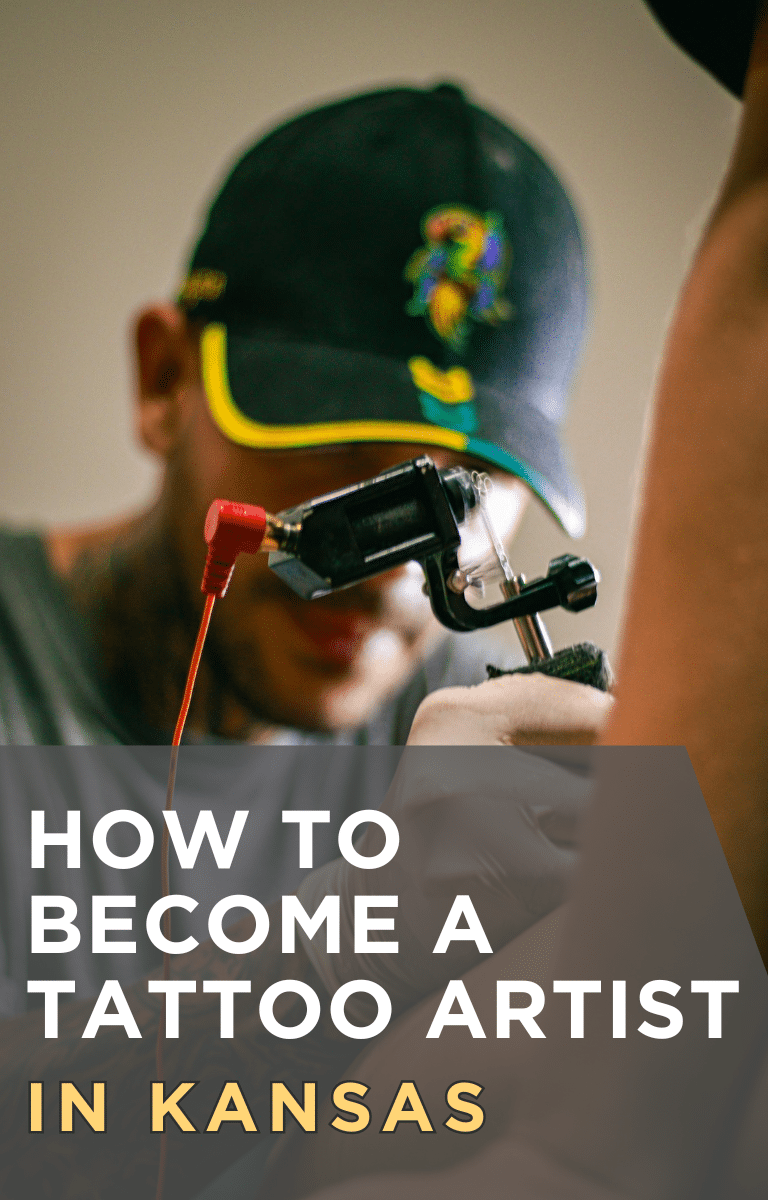
In Kansas, tattooing is regulated as “Body Art” under the cosmetology umbrella, which means the path to working professionally is structured and clearly defined. This guide walks you through how to become a Tattoo Artist in Kansas step by step, using only verified facts so you can plan your career with confidence.
Tattooing is a hands-on, AI-proof craft, and a Professional Tattoo Artist can earn over $106,000 a year according to ZipRecruiter.
Table of Contents
- How does Kansas regulate tattooing?
- What does state licensing mean for you?
- How do you get a tattoo license in Kansas?
- What does it cost to get licensed?
- What if you are moving to Kansas from another state?
- What mistakes should you avoid?
- How do you learn to tattoo with Ink Different?
- Frequently Asked Questions
Key Takeaways
- Regulator: The Kansas Board of Cosmetology (KBOC) oversees tattooing as “Body Art” in Kansas.
- Model: Kansas uses a state-license model, so you must earn a license before tattooing professionally.
- Training: Complete a 1,500-hour tattoo apprenticeship to qualify.
- Exam: Pass a written and practical exam administered by the board.
- Maintenance: Keep Bloodborne Pathogens (BBP) and First Aid certifications current at all times.
How does Kansas regulate tattooing?
Kansas regulates tattooing through the Kansas Board of Cosmetology, which treats tattooing as “Body Art” under its cosmetology authority. The governing law is found in the Kansas Statutes Annotated, specifically Kan. Stat. Ann. §§ 65-1940 to 65-1954.
This means tattooing in Kansas is a state-licensed profession, not something you can legally do on your own without meeting official requirements. The state also enforces rigorous facility licensing, so both artists and the studios they work in are held to defined standards.
Because the KBOC administers body art rules, the same board that handles cosmetology also handles your tattoo license. Kansas takes public health seriously in this space, which is why safety certifications remain a continuous requirement rather than a one-time box to check.
Tip: Always confirm the latest rules directly with the KBOC Body Art page before you begin. Regulations and details can change, and the board is your single source of truth.
What does state licensing mean for you?
A state-licensing model means you cannot tattoo professionally in Kansas until you complete the required training, pass the board exam, and hold current safety certifications. This is different from states that allow open practice or rely only on local health department rules.
For an aspiring Tattoo Artist, this structure is actually good news. A clear, regulated pathway gives your career legitimacy and shows clients and studio owners that you meet professional standards.
It also means you should treat your training as an investment. The 1,500-hour requirement and the written and practical exam are meaningful milestones, and preparing well for them positions you to work confidently and legally from day one.
How do you get a tattoo license in Kansas?
To get a tattoo license in Kansas, complete a 1,500-hour tattoo apprenticeship, pass the board’s written and practical exam, and maintain BBP and First Aid certifications continuously. Here is the path broken down step by step.
Step 1: Complete your training hours
Kansas requires a 1,500-hour tattoo apprenticeship. This is where you build the technical foundation, learn safe practice, and develop the skills a Tattoo Artist relies on every day. A strong tattoo apprenticeship pairs you with an experienced Mentor who guides your growth.
Step 2: Pass the board exam
After your training, you must pass a written and practical exam administered by the Kansas Board of Cosmetology. The written portion tests your knowledge, while the practical portion demonstrates your hands-on ability and safe technique.
Step 3: Secure and maintain your certifications
Kansas requires you to maintain Bloodborne Pathogens (BBP) and First Aid certifications continuously. These are not one-time steps. You must keep them active for as long as you practice, so plan to renew them on schedule.
Step 4: Work in a licensed facility
Kansas enforces rigorous facility licensing, so the Tattoo Studio you work in must also meet state standards. Confirm that any studio you join holds proper licensing before you begin tattooing there.
Warning: Do not attempt to tattoo clients before you are fully licensed. Because Kansas uses a state-license model, working without a license can put your future career at risk. Always verify each requirement with the KBOC.
What does it cost to get licensed?
Specific licensing fees are set by the Kansas Board of Cosmetology and are not listed in this guide, so you should confirm current amounts directly on the official KBOC Body Art page. We never guess at fees, because they can change and vary by application type.
When you budget, plan for more than just the license fee itself. Your actual costs typically include your 1,500-hour training, your written and practical exam, and your BBP and First Aid certifications, which you must renew over time.
Compared to a traditional four-year college degree, learning a licensed trade like tattooing is often a far more direct route to earning a living. With a Professional Tattoo Artist able to earn over $106,000 a year per ZipRecruiter, the investment in proper training can pay off well.
What if you are moving to Kansas from another state?
Kansas handles out-of-state artists through documentation, meaning you provide records of your training and credentials to the Kansas Board of Cosmetology rather than assuming automatic reciprocity. Your existing license does not simply carry over.
If you already tattoo in another state, gather proof of your training hours, your exam history, and your current certifications before you apply. The board will review your documentation to determine how your background aligns with Kansas requirements.
Because the exact process depends on your individual records and the board’s review, contact the KBOC early. They can tell you precisely what documentation to submit and whether any additional steps apply to your situation.
What mistakes should you avoid?
The most common mistakes are skipping required training hours, letting safety certifications lapse, and assuming an out-of-state license transfers automatically. Each of these can delay or derail your ability to work legally in Kansas.
Letting BBP or First Aid certifications expire
Kansas requires these certifications to be maintained continuously. Set reminders well before each expiration date so you never have a gap that jeopardizes your standing.
Choosing training that does not meet the hour requirement
Make sure your tattoo apprenticeship clearly satisfies the 1,500-hour requirement. Confirm this in writing and keep detailed records of your hours.
Working in an unlicensed studio
Kansas enforces rigorous facility licensing. Even a skilled artist can run into trouble by working in a facility that does not meet state standards, so verify a studio’s licensing before you commit.
Guessing instead of verifying
Rules and fees can change. When in doubt, go straight to the KBOC Body Art page rather than relying on rumor or outdated advice.
How do you learn to tattoo with Ink Different?
Ink Different offers a Traditional Tattoo Apprenticeship built to develop serious artists through mentorship and hands-on craft. It is a smart college alternative for people who want a skilled, AI-proof career. The Traditional Tattoo Apprenticeship runs 18 to 24 months across four phases, starts remote, and welcomes beginners.
Our Traditional Tattoo Apprenticeship pairs you with an experienced Mentor who guides your technique, your safety practices, and your creative voice. Instead of sitting in lectures for a degree that may not lead to work, you build a portfolio and job-ready skills that clients and studios value.
We also provide licensing support along the way, helping you understand what Kansas expects so you can move toward your tattoo license with clarity. Tattooing is a craft that rewards human skill and creativity, which is exactly why it holds up in an automated world.
Ready to become a Tattoo Artist? Apply now to Ink Different’s Traditional Tattoo Apprenticeship and start building an AI-proof career, with licensing support along the way.
Frequently Asked Questions
Do I need a license to tattoo in Kansas?
Yes. Kansas uses a state-license model, so you must complete training, pass the board exam, and hold current safety certifications before tattooing professionally.
Who regulates tattooing in Kansas?
The Kansas Board of Cosmetology (KBOC) regulates tattooing as “Body Art,” under Kan. Stat. Ann. §§ 65-1940 to 65-1954.
How many hours of training do I need?
Kansas requires a 1,500-hour tattoo apprenticeship before you can qualify for licensure.
What exam do I have to pass?
You must pass a written and practical exam administered by the Kansas Board of Cosmetology to demonstrate both knowledge and hands-on skill.
Can I transfer my license from another state?
Kansas handles out-of-state artists through documentation. You submit records of your training and credentials to the KBOC for review rather than relying on automatic reciprocity.
How much can a Tattoo Artist earn?
A Professional Tattoo Artist can earn over $106,000 a year according to ZipRecruiter, making it a strong AI-proof career and a smart college alternative.