Tattoo Apprentice Kit: What You Actually Need on Day One
September 9, 2026
From Warehouse to Tattoo Artist: How Career Changers Make the Switch
September 9, 2026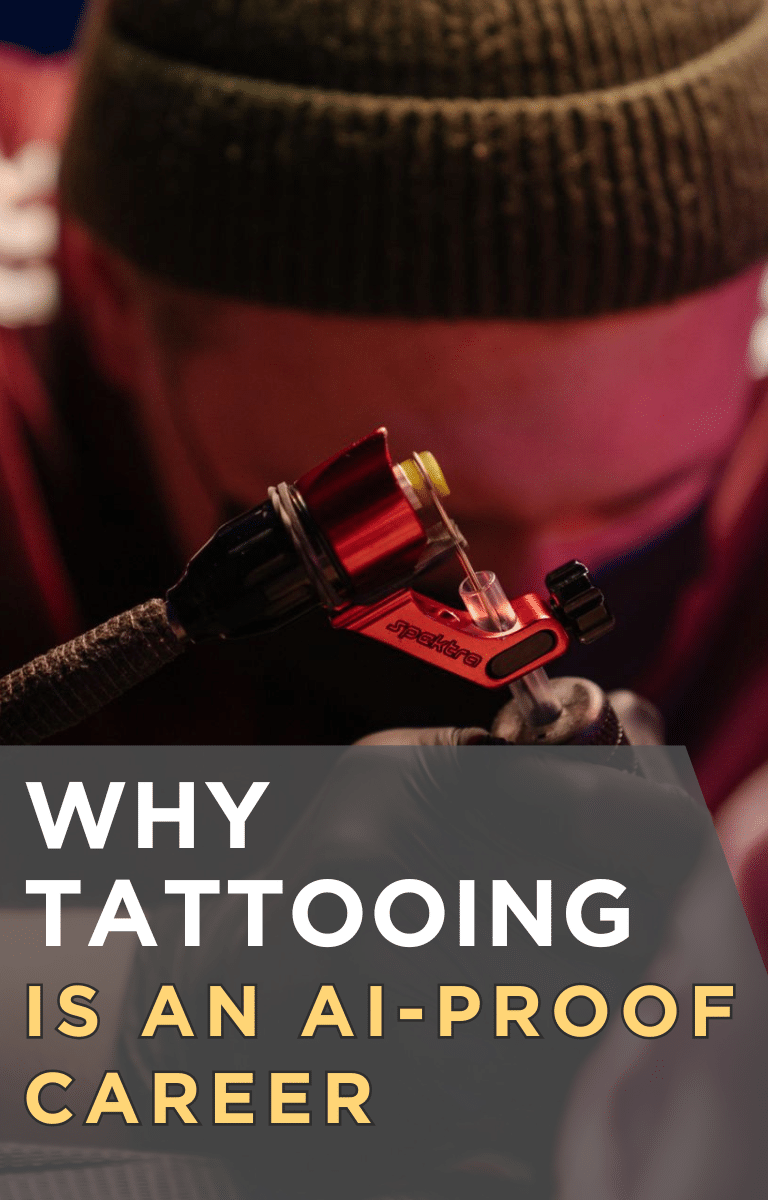
In This Article
- Key Takeaways
- What Is an AI-Proof Career?
- Why Can’t AI Replace a Tattoo Artist?
- Why Does Human Connection Matter in Tattooing?
- What Skills Can Machines Never Copy?
- How Do You Build an AI-Proof Career, Step by Step?
- How Does Ink Different Prepare You for This Career?
- What Is the Master Mentorship Program?
- How Is Ink Different Making Training Accessible?
- Ready to Become a Tattoo Artist?
- FAQ
You feel it every time another headline announces a job wiped out by automation, that quiet dread of building a career on ground that could vanish overnight. Here is the good news: some work simply cannot be handed to a machine, and tattooing is one of them.
An AI-proof career is a profession rooted in human skill, trust, and physical craft that artificial intelligence cannot replicate or replace. At Ink Different Tattoos, we have spent fifteen years training aspiring Tattoo Artists to build exactly this kind of future.
Key Takeaways
- Definition: An AI-proof career resists automation because it relies on human trust, physical skill, and one-on-one connection.
- Why tattooing wins: Tattooing combines hand-eye craft, live skin work, and client trust that AI cannot copy.
- Training length: Ink Different’s Traditional Tattoo Apprenticeship runs 18 to 24 months across four phases.
- Beginner-friendly: No prior art experience is required to start your Tattoo Artist Training.
- Support: Graduates receive licensing support and job-ready skills, guided by award-winning Mentors.
What Is an AI-Proof Career?
An AI-proof career is a line of work that depends on human judgment, physical craftsmanship, and personal trust, making it nearly impossible for artificial intelligence to automate away.
Think about the jobs falling to automation: data entry, basic writing, routine analysis. They share one trait. They live entirely on a screen, moving information from one box to another. A machine handles that kind of work well.
Now picture a craft that happens on living skin, in a room with a nervous first-timer, where every line is permanent and every decision is personal. That is a different world. Fine and craft artists are workers whose value comes from original, hand-made creation, the exact quality that keeps a career grounded when the automation wave rolls in.
Why Can’t AI Replace a Tattoo Artist?
AI cannot replace a Tattoo Artist because tattooing requires real-time hand-eye skill on unpredictable human skin, plus the trust and communication a client places in a person, not a program.
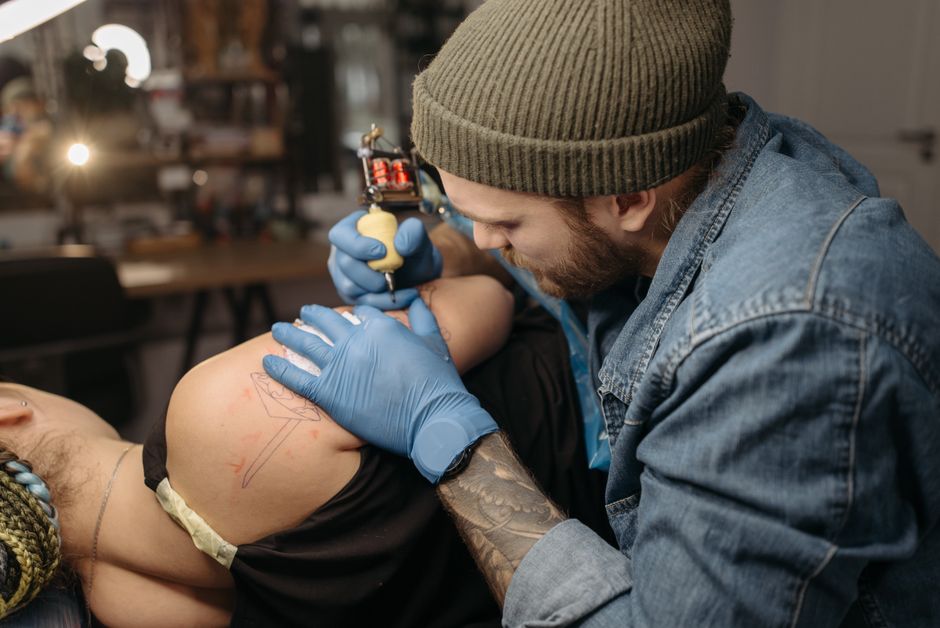
An AI can generate a design on a flat screen in seconds. It cannot stretch skin, read how a client’s body flinches, adjust pressure mid-line, or account for the way ink settles into a living, breathing canvas. Those thousands of micro-decisions happen in your hands, not in code.
We explored this exact question in depth in our post on why Tattoo Artists are still essential. The short version: a robot arm might trace a shape, but it cannot own the responsibility of a permanent mark on a human being, and it cannot earn the trust that gets someone into your chair.
Why Does Human Connection Matter in Tattooing?
Human connection matters in tattooing because clients are trusting you with permanent art on their body, and that emotional trust can only be built between two people.
A tattoo is rarely just decoration. It is a memory of a lost parent, a marker of survival, a symbol someone will carry for the rest of their life. People bring their stories into your tattoo studio, and they want a human to understand them.
No chatbot can sit with someone through that moment. When a client tears up describing what a piece means, you are not just applying ink. You are witnessing them. That relationship is the heartbeat of the craft, and it is the reason clients return to a person, year after year.
What Skills Can Machines Never Copy?
Machines cannot copy a Tattoo Artist’s live adaptability, safe hygiene practices, client communication, and the physical muscle memory built over thousands of hours of hands-on work.
Tattooing is a stack of skills that only sharpen through real repetition on real skin. Here are the ones that keep this career firmly in human hands:
- Hand-eye control: Steady, adaptive line work that responds to changing skin in real time.
- Sterile safety: Following OSHA bloodborne pathogen standards to protect every client, every session.
- Aftercare guidance: Coaching clients through healing using proven American Academy of Dermatology tattoo care guidelines.
- Design collaboration: Translating a vague idea into a piece that fits a specific body.
- Business instinct: Building a brand, a client base, and a reputation people trust.
These are muscles you grow, not files you download. And once you have them, you own an income source that travels with you for life.
How Do You Build an AI-Proof Career, Step by Step?
You build an AI-proof career in tattooing by learning fundamentals, training on skin, working with clients under supervision, and earning your license through a structured tattoo apprenticeship.
Here is the path, laid out plainly.
- Step 1: Master the fundamentals. Start remote with drawing, line theory, and Tattoo Machine handling so your foundation is solid before skin.
- Step 2: Practice on synthetic skin. Build muscle memory and confidence in a low-pressure setting under a Mentor’s eye.
- Step 3: Work with live clients under supervision. Move into a Tattoo Studio and apply your skills on real people with direct guidance.
- Step 4: Prepare for licensing and independence. Complete your training, satisfy state requirements, and step into the industry job-ready.
Curious how licensing timelines work in your state? Our guides on how to get your tattoo license in Texas and how long a tattoo license takes in Colorado break down the specifics.
Pro Tip: The biggest risk is not choosing tattooing. It is staying in a role automation is quietly circling while your creative potential gathers dust. Read up on the mistakes aspiring Tattoo Apprentices should avoid before you begin.

How Does Ink Different Prepare You for This Career?
Ink Different Tattoos prepares you through a four-phase Traditional Tattoo Apprenticeship that combines personalized, hands-on training with licensing support and job-ready skills, no prior art experience required.
We are a college alternative for aspiring professional Tattoo Artists who pursue excellence. For fifteen years, since 2011, we have guided beginners from their very first shaky line to confident, working professionals. This is not a course you watch alone. It is live, in-person mentorship with people who have done the work.
Here is what you can expect from our Traditional Tattoo Apprenticeship:
- Length: 18 to 24 months across four progressive phases.
- Start remote, finish in studios: Build fundamentals first, then move into real Tattoo Shops.
- Beginner-friendly: No experience needed. We teach you from the ground up.
- Job-ready outcome: Licensing support and the real skills to work professionally.
This is a career that comes with confidence. You will not leave wondering if you are ready. You will leave knowing you built something with your own two hands that a machine can never take. If you are weighing your options, our breakdown of tattoo apprenticeships as a college alternative is worth your time. You can also explore making a career change with a tattoo apprenticeship if you are transitioning from another field.
What Is the Master Mentorship Program?
The Master Mentorship is a one-year, in-person program that trains beginner and experienced artists alongside celebrity and award-winning Mentors to master a style, explode a career, or launch a business.
If you want to go further faster, this is your path. You train directly with names the industry respects: Al Fliction, Liz Cook, Kyle Dunbar, Boneface, and Jordi Pla. This program is intensive skill development aimed at mastery, brand building, and studio ownership.
Once you are ready to grow your name, our guide to platforms that help Tattoo Artists build their brand pairs perfectly with the Master Mentorship experience.
How Is Ink Different Making Training Accessible?
Ink Different offers Spanish-speaking Tattoo Artist Training at locations near Denver, Orange County, NYC, Miami, San Antonio, and San Diego so more aspiring artists can start their careers.
Talent does not speak only one language, and neither do we. Our Good Humans culture is built on a supportive, family-like community where you are never left to figure it out alone. Whether you are near Miami or San Antonio, you will find Mentors who invest in you as a person, not a number.
Ready to Become a Tattoo Artist?
The automation wave is not slowing down, but you do not have to stand in its path. You can plant your feet in a craft that grows more valuable the more human it stays.
Seats in our tattoo apprenticeship are limited, because real mentorship cannot be mass-produced.
Ready to become a Tattoo Artist? Apply now to Ink Different’s Traditional Tattoo Apprenticeship and start building an AI-proof career, with licensing support along the way. Want to know if it is the right fit? Fill out our quick questionnaire and get personalized support from our team.
Frequently Asked Questions
Is tattooing really an AI-proof career?
Yes. Tattooing depends on live hand-eye skill on human skin, sterile safety practices, and personal client trust, all things artificial intelligence cannot replicate or automate.
Do I need art experience to start a tattoo apprenticeship?
No. Ink Different’s Traditional Tattoo Apprenticeship is built for beginners and teaches drawing and Tattoo Machine fundamentals from day one, no prior experience required.
How long does the Traditional Tattoo Apprenticeship take?
The Traditional Tattoo Apprenticeship runs 18 to 24 months across four phases. Timing depends on how quickly you master each stage of your training.
What makes Ink Different different from other options?
Ink Different offers live, in-person mentorship with award-winning Mentors, 15 years of experience, and a supportive Good Humans community, all as a college alternative.
Will a machine ever replace tattoo shops?
No. Tattooing requires permanent decisions on living skin and emotional client trust, both of which keep human Tattoo Artists essential and irreplaceable.
Can I train in Spanish?
Yes. Ink Different offers Spanish-speaking Tattoo Artist Training near Denver, Orange County, NYC, Miami, San Antonio, and San Diego.