What Skills You Actually Need Before You Pick Up a Machine
September 8, 2026
Why Tattooing Is an AI-Proof Career
September 9, 2026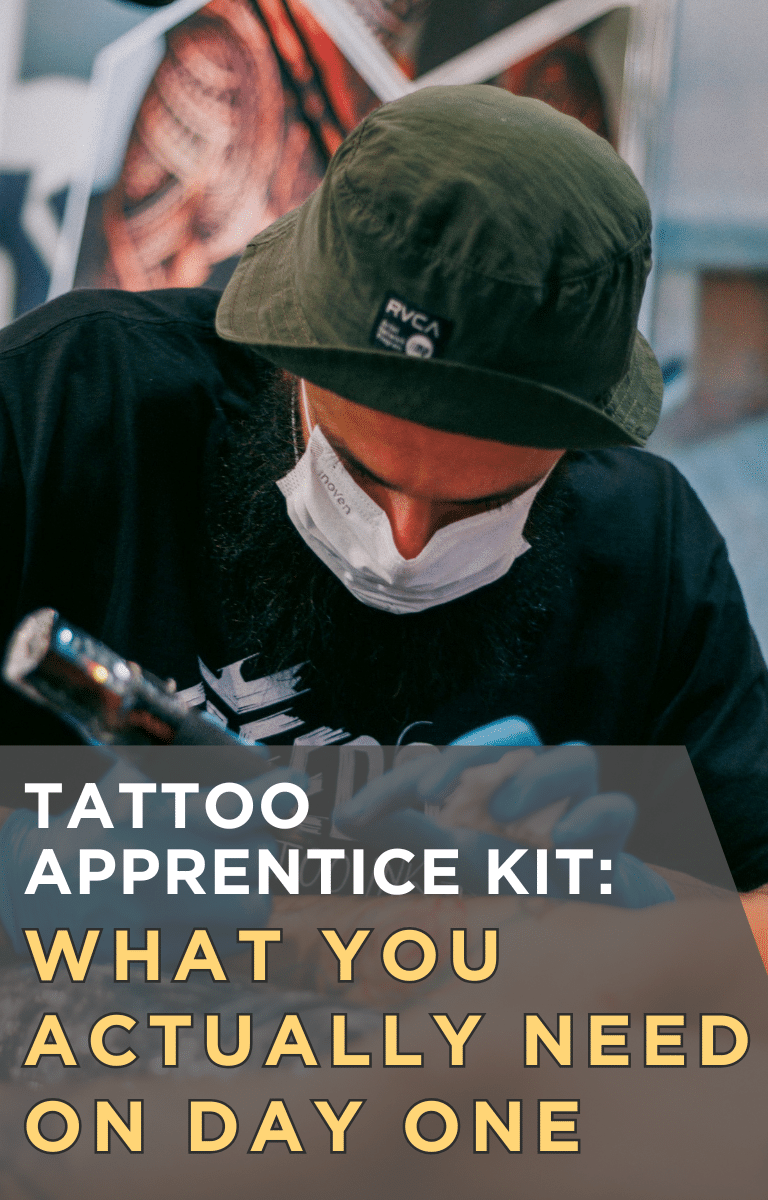
In This Article
- Key Takeaways
- What is a tattoo apprentice kit?
- What do you actually need on day one?
- Which tools belong in a beginner tattoo kit?
- What should you skip when starting out?
- Why does safety gear come before machines?
- How do you build your kit step by step?
- What does a real mentorship provide that a kit can’t?
- Get serious about your training with Become A Tattoo Artist
- FAQ
You’ve been staring at that shopping cart for a week now. Rotary or coil? Which needles? What ink? The panic of not knowing what belongs in your first kit is often the very thing that keeps talented people stuck in jobs that drain them.
A tattoo apprentice kit is the starter collection of drawing tools, safety gear, and practice materials an aspiring Tattoo Artist uses to begin learning the craft under a Mentor, prioritizing fundamentals over expensive equipment. Let’s clear the fog so you can stop guessing and start growing.
Key Takeaways
- Day one essentials: A sketchbook, pencils, tracing paper, and practice skin matter more than an expensive machine.
- Safety first: Nitrile gloves and bloodborne pathogen knowledge come before any needle touches skin.
- Skip the temptation: Beginners rarely need premium machines or full ink sets before mastering fundamentals.
- The real tool: A live, in-person mentor teaches what no kit can package or ship.
- Start remote: Ink Different’s Traditional Tattoo Apprenticeship begins with drawing skills you can build anywhere.
What is a tattoo apprentice kit?
A tattoo apprentice kit is the starter set of drawing tools, practice materials, and basic safety gear a beginner uses to learn the fundamentals of tattooing before ever working on live skin.
The mistake most beginners make is treating the kit like the destination, spending hundreds on gear before they can draw a clean, confident line.
Your earliest days are about art fundamentals, not equipment. The best kit in the world can’t tattoo for you, and the most basic kit in the world won’t hold back someone who trains with discipline and a great Mentor.
What do you actually need on day one?
On day one you need drawing tools and practice materials: a sketchbook, quality pencils, tracing and transfer paper, and synthetic practice skin, not an expensive machine.
You will spend your first weeks drawing, not tattooing. Line work, shading, and composition are built on paper long before they’re built on skin. If you can’t render a clean design with a pencil, a machine won’t rescue you.
Your day-one starter list is short:
- Sketchbook: Your daily practice space for the hands and the eye.
- Pencils and pens: A range of graphite plus fine-liner pens for line control.
- Tracing and transfer paper: To learn how stencils actually work.
- Practice skin: Synthetic skin to translate paper skills to a needle later.
Notice what’s missing? The machine. That comes later, once your foundation is set.
Which tools belong in a beginner tattoo kit?
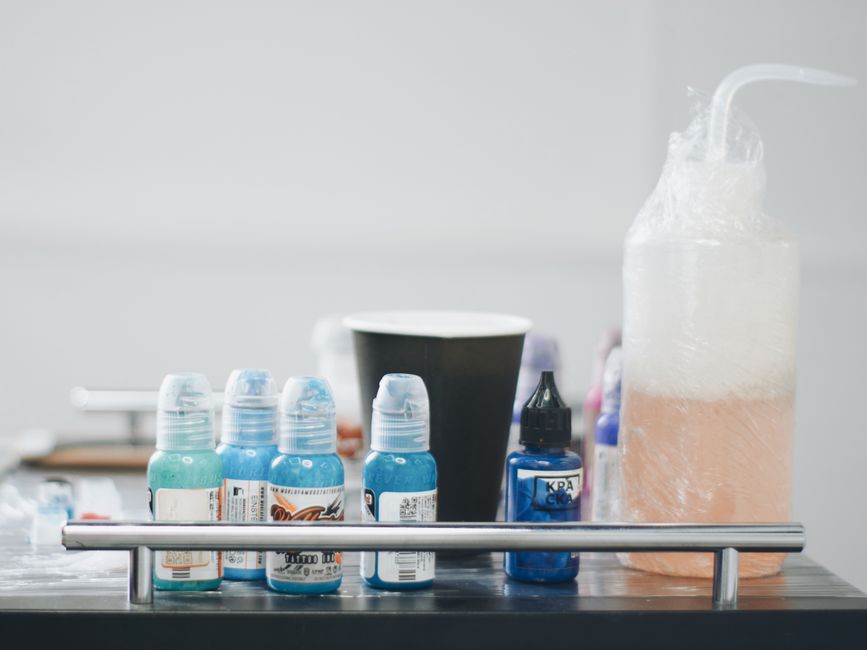
A beginner tattoo kit should include a reliable rotary tattoo machine, sterile single-use needle cartridges, quality black ink, ink caps, a power supply, nitrile gloves, and disinfectant, but only once fundamentals are solid.
When your mentor gives the green light to move toward equipment, here’s what genuinely earns a spot. If you want a deeper breakdown, our guide on the tools every beginner tattoo artist should know walks through each piece in detail.
- Rotary tattoo machine: Forgiving and beginner-friendly compared to coil setups.
- Sterile needle cartridges: Single-use, always. Never reuse.
- Black ink: Master one color before you chase a full palette.
- Ink caps and stand: Clean, organized workflow from the start.
- Power supply: A stable, reliable unit you understand.
- Green soap and disinfectant: The unglamorous heroes of every session.
Pro Tip: Buy one quality machine you’ll actually learn on rather than three cheap ones you’ll fight against. Your hands learn the tool, so let them learn a good one.
What should you skip when starting out?
Skip premium machines, full-color ink sets, expensive lighting rigs, and gimmick accessories when you start, because none of them fix weak fundamentals, and they drain the budget you should invest in training.
The industry is full of shiny objects marketed to beginners who feel unsure. That uncertainty is exactly what gets exploited. Overspending on gear is one of the most common early errors, which is why we cover it in our post on mistakes aspiring tattoo apprentices should avoid.
Hold off on these until you’ve earned them:
- Top-tier machines: A pro machine won’t teach a beginner hand.
- Full-color ink collections: You won’t touch most of them for months.
- Elaborate lighting and furniture: Nice, but not skill-building.
- Novelty gadgets: If a mentor doesn’t use it, you don’t need it yet.
Every dollar you save on unnecessary gear is a dollar you can put toward the one thing that actually changes your trajectory: real mentorship.
Why does safety gear come before machines?
Safety gear comes first because tattooing involves broken skin and blood exposure, so bloodborne pathogen training, nitrile gloves, and proper sterilization protect both you and your future clients from serious health risks.
This is the part beginners love to rush past, and it’s the part that ends careers when ignored. Before you ever pick up a machine, you need to understand cross-contamination and safe handling. The OSHA bloodborne pathogen standards are the baseline every professional studio follows, not optional reading.
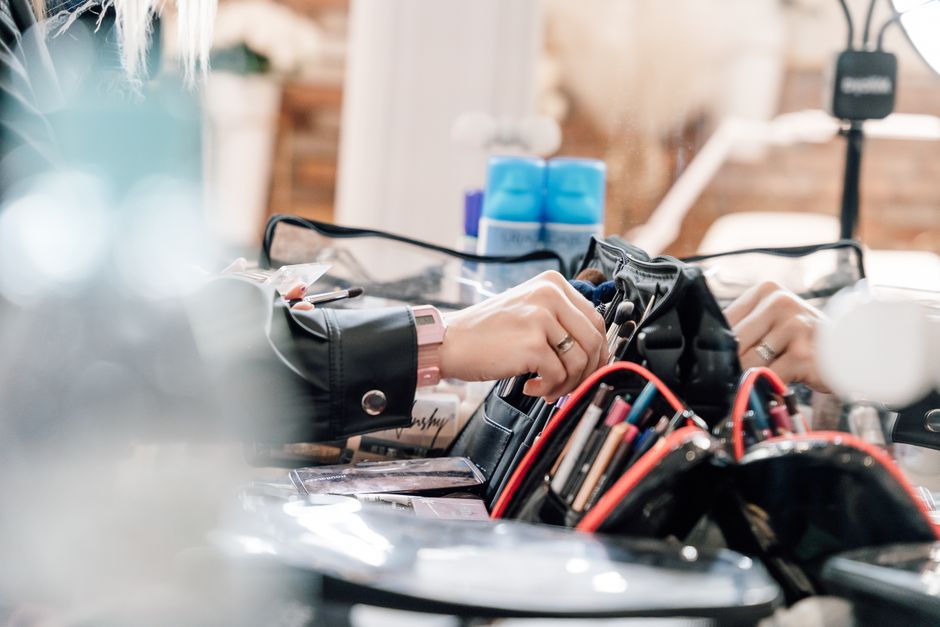
Aftercare knowledge matters just as much. Your client’s healing is your reputation, so the American Academy of Dermatology tattoo care guidelines are worth studying early. Your safety kit should include:
- Nitrile gloves: Latex-free, single-use, always fresh.
- Barrier film and covers: To keep your station contaminant-free.
- Sharps disposal container: For safe needle disposal.
- Hospital-grade disinfectant: For surfaces between every client.
How do you build your kit step by step?
Build your tattoo apprentice kit in stages: start with drawing tools, add safety knowledge, then introduce practice skin, and only invest in a machine once your mentor confirms your fundamentals are ready.
Rushing this order is like framing a house before pouring the foundation. Follow the sequence and you’ll save money while building real skill.
- Step 1: Master paper. Fill sketchbooks. Draw lines, shapes, and shading until your hand obeys you.
- Step 2: Learn safety. Study bloodborne pathogens and sterilization before touching any needle.
- Step 3: Practice on synthetic skin. Translate your paper skills to fake skin under guidance.
- Step 4: Acquire your first machine. Choose one reliable rotary and learn it deeply.
- Step 5: Work under a mentor. Move toward supervised live work when your foundation is solid.
This is also where timing matters. If you’re wondering when to plant this seed, our take on why spring is the best time to become a tattoo artist is worth a read.
What does a real mentorship provide that a kit can’t?
A live, in-person mentor provides feedback, correction, and hands-on guidance in real time, teaching judgment and technique that no kit, video, or shopping list can ever deliver on its own.
Here’s the part the gear companies won’t tell you. You can own every tool on this page and still not know how to hold your machine, angle your needle, or read a client’s skin. Those answers live inside experience, and experience is transferred person to person.
Tattooing is one of the few careers a robot genuinely cannot replace, which is exactly why it’s worth building. We break down that future in why tattoo artists are still essential. The Bureau of Labor Statistics tracks the broader field of craft and fine artists as a real, working profession, not a hobby.
A kit is a set of objects. A mentorship is a relationship. One of these changes your life.
Get serious about your training with Become A Tattoo Artist
Ink Different Tattoos offers a nationwide tattoo apprenticeship that serves as a college alternative, pairing you with award-winning Mentors and giving your kit a purpose beyond a shopping cart.
For over 15 years, we’ve trained aspiring Tattoo Artists who were exactly where you are right now. A tattoo apprenticeship is a structured path, not a leap into the dark. Consider exploring our article on tattoo apprenticeships as a college alternative to see how this career path compares to traditional education.
What you can expect from our Traditional Tattoo Apprenticeship
Our Traditional Tattoo Apprenticeship runs 18 to 24 months across four phases of personalized, hands-on Tattoo Artist training in real tattoo studios where the craft comes alive.
- Beginner-friendly: No prior art experience required.
- Four-phase structure: From fundamentals to supervised client work.
- Licensing support: Job-ready skills and help navigating your state’s requirements.
Curious how licensing works where you live? See our guides on how to get your tattoo license in Texas and how long a tattoo license takes in Colorado, or explore transferring a tattoo license to California.
A career that comes with confidence
We don’t promise magic. We build competence. When you finish, you leave with job-ready skills, licensing support, and the confidence that comes from thousands of reps under a real mentor. This is an AI-proof career you build with your own hands.
Mentorship that pushes your brand and skills further
Our Master Mentorship is a one-year, in-person track for beginners and experienced artists alike, training alongside celebrity and award-winning mentors like Al Fliction, Liz Cook, Kyle Dunbar, Boneface, and Jordi Pla. It’s built for mastering a style, exploding your career, and owning your business.
Making tattoo training accessible for everyone
We offer Spanish-speaking locations near Denver, Orange County, NYC, Miami, San Antonio, and San Diego, so language never stands between you and the craft. Our Good Humans culture means you join a supportive, family-like community, not a factory. Seats in each cohort are limited because real mentorship can’t be mass-produced.
Ready to become a tattoo artist?
The right kit is the easy part. The hard part, and the part that actually changes everything, is choosing to stop waiting and start training.
Ready to become a tattoo artist? Apply now to Ink Different’s Traditional Tattoo Apprenticeship and start building an AI-proof career with licensing support along the way. Not sure yet? Fill out our quick questionnaire to get personalized support and find out if our Tattoo Apprenticeship Program is right for you.
Frequently Asked Questions
What do I need in my tattoo apprentice kit on day one?
On day one, you need drawing tools: a sketchbook, pencils, fine-liner pens, tracing and transfer paper, and synthetic practice skin. A machine and ink come later, once your fundamentals are solid.
Do I need to buy an expensive tattoo machine to start?
No. Beginners should skip premium machines. One reliable rotary machine is plenty once your mentor confirms your drawing fundamentals are ready. Invest your budget in training instead.
Do I need art experience before starting a tattoo apprenticeship?
No. Ink Different’s Traditional Tattoo Apprenticeship is built for beginners and teaches drawing fundamentals from day one, so you can start with no prior formal art experience.
How long does the Traditional Tattoo Apprenticeship take?
The Traditional Tattoo Apprenticeship at Ink Different Tattoos runs 18 to 24 months across four phases. You start remotely building art skills, then finish hands-on in working tattoo studios.
Why does safety gear matter more than a machine?
Tattooing involves broken skin and blood exposure. Bloodborne pathogen training, nitrile gloves, and proper sterilization, following OSHA standards, protect you and your clients before any needle is used.
Is there a tattoo apprenticeship near me in Spanish?
Yes. Ink Different offers Spanish-speaking locations near Denver, Orange County, NYC, Miami, San Antonio, and San Diego, making tattoo artist training accessible in your language.