Why Tattoo Apprenticeships Are Like Juilliard for Tattoo Artists
May 27, 2026
Why a Tattoo Apprenticeship Is Ideal for a Career Reset
May 29, 2026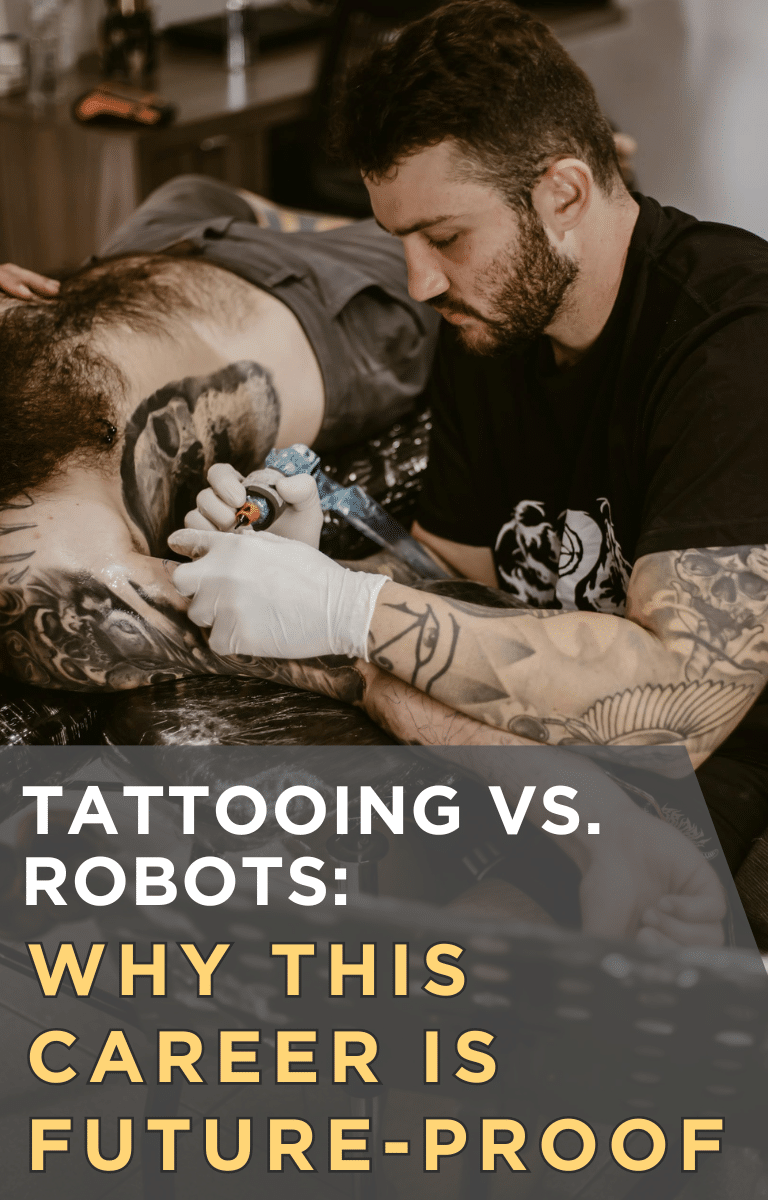
In This Article
- Key Takeaways
- Why does human craftsmanship matter in an age of automation?
- What parts of the tattoo process could robots theoretically replace?
- How can you future-proof your tattoo career against technological shifts?
- Where is robot tattooing actually headed right now?
- Why does “instant gratification” fail in the tattoo industry?
- How do you start your journey toward a human-centric tattoo career?
- Ready to Become a Tattoo Artist?
- Frequently Asked Questions
Imagine waking up thirty years from now, walking into a sterile studio, and having a cold, mechanical arm bolt a design onto your skin with mathematical precision. There’s no conversation, no connection, no soul. That vision might sound like a scene from a sci-fi movie, but the whispers of automation are getting louder in every creative industry. This leaves you wondering if your aspirations of becoming a Tattoo Artist will be rendered obsolete by a circuit board. We are here to tell you that the opposite is true. Artificial intelligence in tattooing is a tool, but it can never replace the intuitive, empathetic, and deeply human art of permanently marking skin. At Ink Different Tattoos, we believe that the “human touch” is the only thing that creates value in this industry, and we have spent 14 years proving it.
Key Takeaways
- Robots cannot replicate the human connection and empathy required for a meaningful tattoo experience.
- Creativity is safe from automation because AI cannot invent new styles from life experience.
- Licensing and health regulations require a licensed human to operate tattoo equipment safely.
- A structured 18–24-month tattoo apprenticeship builds the adaptability and skill robots lack.
Why does human craftsmanship matter in an age of automation?
Human craftsmanship matters because it combines technical skill with emotional intelligence, which robots cannot simulate. When a client sits in your chair, they aren’t just buying a service. They are buying a story, a memory, and a piece of art that grows with them.
Robots operate on code and repetition. They can follow a vector file perfectly, but they cannot read the subtle tension in a client’s shoulder or adjust their pressure based on the texture of the skin in real-time. A robot doesn’t care about your story, but a human Tattoo Artist listens and weaves that narrative into the lines they draw. This is the essence of the future-proof creative career. It is rooted in connection, not just execution.

Think of the tattoo industry as a garden. A robot can water the plants on a schedule, but it cannot decide which flower needs more sunlight or prune the branches to encourage new growth. That requires a gardener, someone with intuition and care. By cultivating your skills through a structured tattoo apprenticeship, you become that gardener.
What parts of the tattoo process could robots theoretically replace?
Robots could theoretically assist with stencil application or repetitive shading, but they cannot replace the artistic design or the actual tattooing process on living skin. While automated machines exist for “stick and poke” styles or geometric patterns, the variability of human anatomy makes full automation impractical.
Current experiments in robotic tattooing involve rigid frames that hold the machine steady for hyper-precise geometric work. However, skin is not a canvas that stays perfectly still. It moves, swells, and reacts. A human Tattoo Artist instinctively compensates for these shifts, a nuance that code cannot yet predict.
Pro Tip: Don’t fear the machine; learn to master it. The most successful Tattoo Artists use technology as a tool, not a replacement for their creativity.
Moreover, the OSHA bloodborne pathogen standards require a licensed professional to handle biohazards and ensure safety. A robot cannot hold a license or assume legal responsibility for a client’s health. This regulatory barrier alone keeps the career safe from full automation.
- Design: AI can generate images, but it lacks the intent behind the art.
- Placement: A robot cannot argue anatomy with a client or suggest a better flow.
- Aftercare: Only a human can give personalized healing advice, following the American Academy of Dermatology tattoo care guidelines.
How can you future-proof your tattoo career against technological shifts?
You future-proof your career by mastering the fundamentals through a structured tattoo apprenticeship and developing a unique artistic voice that AI cannot replicate. The goal isn’t to compete with robots on precision. It’s to outshine them on originality and connection.
To build a career that lasts, you must focus on the human elements of tattooing. This means building trust, curating a distinct style, and understanding the business of art. Machines can pump out generic designs, but they cannot build a loyal following of clients who return for years because they trust your hands.
Step 1: Build a Foundation of Human Skill
Start by honing your hand-eye coordination and drawing ability. Unlike a robot that downloads a font, you must learn to translate ideas onto skin fluidly. Master the tools every beginner Tattoo Artist should know to build this foundation.
Step 2: Cultivate Emotional Intelligence
Learn to read your client. Are they nervous? Excited? In pain? Your ability to manage the human experience is a competitive advantage robots will never have.
Step 3: Embrace Continuous Learning
The technology will change, but the fundamentals of art remain. By staying curious and adaptable, you ensure you are never left behind.
We guide you through these steps in our Traditional Tattoo Apprenticeship, ensuring you are not just technically proficient but emotionally intelligent.
Where is robot tattooing actually headed right now?
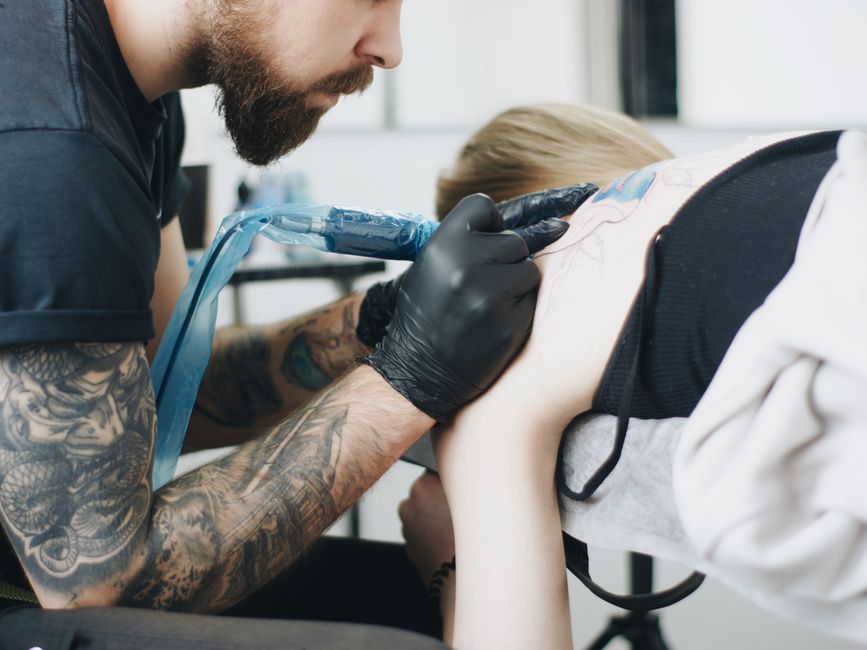
Robot tattooing is currently in the experimental phase, focusing on precise geometric patterns on rigid surfaces, not the lively environment of human skin. While media headlines hype “robot Tattoo Artists,” the practical application remains limited to specific, controlled scenarios.
Most robotic tattoo prototypes are essentially CNC machines adapted for skin. They require a human to set up the stencil, adjust the tension, and monitor the process closely. This creates a hybrid workflow where the Tattoo Artist acts as a director and the robot as a tool. This shift actually creates more demand for skilled operators who understand both art and engineering.
However, the Bureau of Labor Statistics on craft and fine artists notes that demand for craft and fine artists remains steady, driven by the desire for custom, hand-made goods. As mass production becomes ubiquitous, the value of “handmade” skyrockets. This is the “artisanship renaissance” that protects tattooing.
Why does “instant gratification” fail in the tattoo industry?
Instant gratification fails because tattooing is a slow, deliberate process that requires healing time, consultation, and artistic evolution. A robot might offer speed, but the value of a tattoo lies in the wait, the anticipation, and the permanent commitment.
Clients do not come to us for a quick transaction; they come for a transformation. The process involves weeks of consultation, design refinement, and healing. A robot cannot speed up the emotional resonance of a piece.
Warning: Beware of “instant” tattoo apprenticeships, tattooing crash courses, or shortcuts. Just as a robot lacks soul, a rushed education lacks the depth needed for a lasting career.
At Ink Different’s tattoo apprenticeship, we emphasize that patience is a professional skill. You learn to respect the skin, the healing process, and the timeline of art. This slow, steady approach is what builds a reputation that lasts decades.
How do you start your journey toward a human-centric tattoo career?
You start your journey today through a structured, live tattoo apprenticeship that prioritizes hands-on mentorship over digital isolation. Waiting for the “perfect time” is a trap. The industry values those who act with intention.
The path to becoming a professional Tattoo Artist is a journey of growth, much like a tree establishing its roots before reaching for the sky. We have designed a roadmap that honors that growth, ensuring you are grounded in skill before you fly.
Here is how we guide you at Ink Different Tattoos:
Our Traditional Tattoo Apprenticeship
Our Traditional Tattoo Apprenticeship is designed for beginners and career-changers. It is an 18–24-month journey that moves from remote learning to in-studio mastery.
- Phase 1: Foundations in drawing and machine handling.
- Phase 2: Practice on synthetic skin and volunteer canvases.
- Phase 3: Live client work under direct supervision.
- Phase 4: Licensing prep and independent roster building.
Upon completion, you receive a Guaranteed Job Offer at one of our tattoo studios. This is the “offer you cannot refuse” because it removes the uncertainty of breaking into the industry.
We also offer Master Mentorship for those looking to explode their career or master a specific style. This 1-year intensive program connects you with celebrity mentors like Jordi Pla, Liz Cook, and Kyle Dunbar.
Accessibility and Culture
We believe art is universal, which is why we offer Spanish-speaking locations in Denver, Orange County, Brooklyn/NYC, Miami-Fort Lauderdale, Naples, Oklahoma City, and San Diego. Our culture is built on “Good Humans”, a supportive, family-like community that lifts each other up.
We have 14 years of experience training professional Tattoo Artists. We know that the future belongs to those who can connect, create, and care.
As you prepare for this journey, explore these resources to deepen your understanding:
- Why Tattoo Artists Are Still Essential
- Tattoo Apprenticeships as a College Alternative
- Why Spring Is the Best Time to Become a Tattoo Artist
- Platforms to Help Tattoo Artists Build Their Brand
Ready to Become a Tattoo Artist?
The robots are coming, but they are only coming for the repetitive, soulless tasks. They are not coming for the art, the connection, or the soul of tattooing. That belongs to you.
Get Serious About Your Future With Become A Tattoo Artist. We are the wise guide on your path, but you are the hero of this story. It is time to stop watching from the sidelines and step into the studio.
Ready to become a Tattoo Artist? Apply to Ink Different’s Traditional Tattoo Apprenticeship today and secure your spot. With only 2 seats available per month per location, the time to act is now. Do not let another year go to waste in a job that doesn’t fulfill you.
Frequently Asked Questions
Will robots replace Tattoo Artists?
No. While robots can assist with precision tasks, they cannot replicate the human connection, artistic intuition, or emotional intelligence required for tattooing.
Is tattooing a future-proof career?
Yes. The demand for custom, hand-made art is growing as automation increases, making skilled human Tattoo Artists more valuable than ever.
How long does it take to become a Tattoo Artist?
Most structured tattoo apprenticeships, like Ink Different’s Traditional Apprenticeship, take 18 to 24 months to complete.
Do I need art experience to start?
No. Our programs are designed for beginners with no prior experience, teaching drawing fundamentals from day one.
What makes Ink Different unique?
We offer a guaranteed job offer upon completion, live in-person mentorship, and a “Good Humans” culture that supports your growth.
Where are your Spanish-speaking locations?
We have studios in Denver, Orange County, Brooklyn/NYC, Miami-Fort Lauderdale, Naples, Oklahoma City, and San Diego.