
Best Tattoo Styles for Artists With Shaky Hands Starting Out
September 25, 2026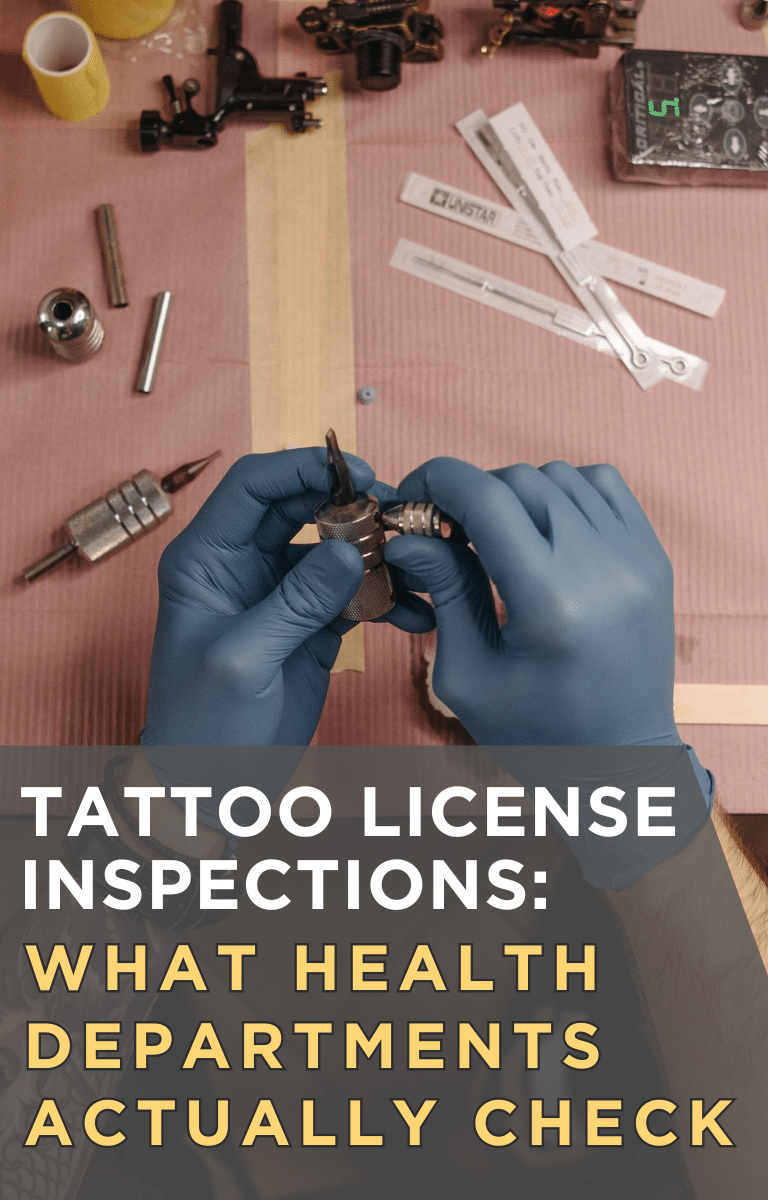
In This Article
- Key Takeaways
- What is a tattoo license inspection?
- Who conducts tattoo studio inspections?
- What do health departments actually check?
- Why do inspectors focus on bloodborne pathogens?
- How can you prepare for a health inspection?
- What happens if you fail an inspection?
- Where do you learn all of this the right way?
- What to expect from our Traditional Tattoo Apprenticeship
- Ready to become a Tattoo Artist?
- FAQ
A health inspector walks into your tattoo studio with a clipboard. In that moment, everything you know about being a Tattoo Artist gets tested, not by talent, but by preparation. A tattoo license inspection is a formal review conducted by a local or state health department to confirm that a tattoo studio and its Tattoo Artists meet legal sanitation, safety, and licensing standards before and during operation. At Ink Different Tattoos, we train aspiring artists to treat these inspections not as threats, but as a normal part of a professional career.
Your ability to pass an inspection is just as important as your ability to pull a clean line. Let’s walk through exactly what inspectors look for, so you can build your foundation on solid ground instead of guesswork.
Key Takeaways
- Who checks: Local and state health departments conduct tattoo license inspections, often unannounced.
- Main focus: Inspectors prioritize sanitation, sterilization, cross-contamination prevention, and proper waste disposal.
- Documents matter: Valid licenses, bloodborne pathogen certification, and sterilization logs are checked every time.
- Failing risks: A failed inspection can mean fines, closure, or license suspension until issues are fixed.
- Learn it right: A structured tattoo apprenticeship teaches inspection-ready standards from day one.
What is a tattoo license inspection?
A tattoo license inspection is an official evaluation by a health department that verifies a studio and its Tattoo Artists follow required sanitation, sterilization, and safety regulations to legally operate.
Think of it like a mechanic checking your car before a long road trip. The inspector isn’t there to admire the paint job; they’re there to confirm the engine won’t fail and put people at risk. Tattooing breaks the skin barrier, so public health agencies treat tattoo studios with the same seriousness as clinics.
Inspections happen at different moments: before a new studio opens, at license renewal, and sometimes randomly throughout the year. Passing one isn’t a one-time achievement. It’s an ongoing habit that separates true professionals from hobbyists who cut corners.
Who conducts tattoo studio inspections?
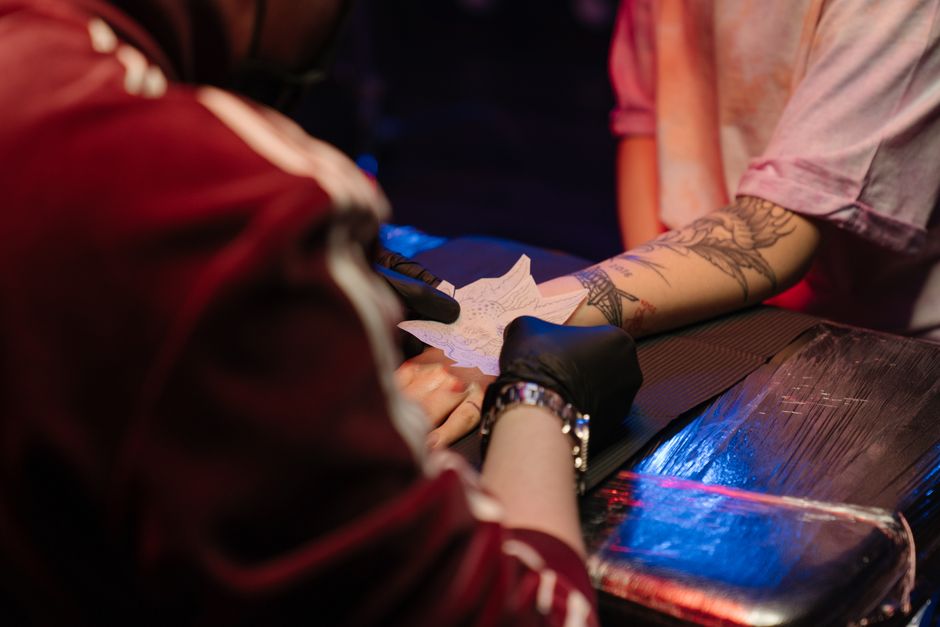
Local county health departments and state regulatory agencies conduct tattoo studio inspections, and the exact authority depends on your location and state regulations.
In some states, tattoo licensing is handled at the county level. In others, a state board oversees the entire process. For example, Texas regulates body art through its Department of State Health Services, while Colorado and California each have their own timelines and transfer rules for practitioners.
Because requirements vary so widely, knowing your local rules is non-negotiable.
What do health departments actually check?
Health departments check sanitation practices, sterilization equipment, single-use supplies, waste disposal, water and hand-washing access, artist licensing, and required certifications during a tattoo studio inspection.
Inspectors work from a checklist, and while every jurisdiction differs, the core categories stay remarkably consistent. Here’s what typically comes under the microscope:
- Sterilization: Autoclaves must be functioning and regularly tested with spore checks.
- Single-use items: Needles, tubes, and razors must be disposable and opened in front of the client.
- Surface disinfection: Work stations, chairs, and armrests must be barrier-covered and cleaned between clients.
- Sharps disposal: Proper puncture-proof containers for used needles are mandatory.
- Hand hygiene: Accessible sinks, soap, and gloves for every procedure.
- Documentation: Current licenses, client consent forms, and sterilization logs.
Notice a theme? Nearly every checkpoint exists to prevent one thing: the spread of infection. That’s the seed everything else grows from.
Why do inspectors focus on bloodborne pathogens?
Inspectors focus on bloodborne pathogens because tattooing punctures the skin, creating a direct route for diseases like hepatitis B, hepatitis C, and HIV to spread if standards slip.
The federal foundation for these rules comes from OSHA’s bloodborne pathogen standards, which require training, protective equipment, and exposure control plans. Most states fold these requirements directly into their tattoo licensing laws.
This is also why aftercare knowledge matters. Guidance from the American Academy of Dermatology on tattoo care isn’t just for clients; it reflects the same hygiene philosophy inspectors expect you to live by. When you understand the “why” behind each rule, compliance stops feeling like a burden and starts feeling like craftsmanship.
Pro Tip: Keep your bloodborne pathogen certification current and visible. Many inspections fail on paperwork, not technique.
How can you prepare for a health inspection?
You prepare for a health inspection by keeping documentation current, maintaining sterilization records, stocking single-use supplies, and running a self-audit before the inspector arrives.
Preparation is a routine, not a panic. Follow these steps to stay inspection-ready year-round:
- Step 1 – Organize your paperwork: Keep your tattoo license, bloodborne pathogen certificate, and consent forms filed and instantly accessible.
- Step 2 – Log your sterilization: Record every autoclave cycle and spore test. Inspectors love clean logs.
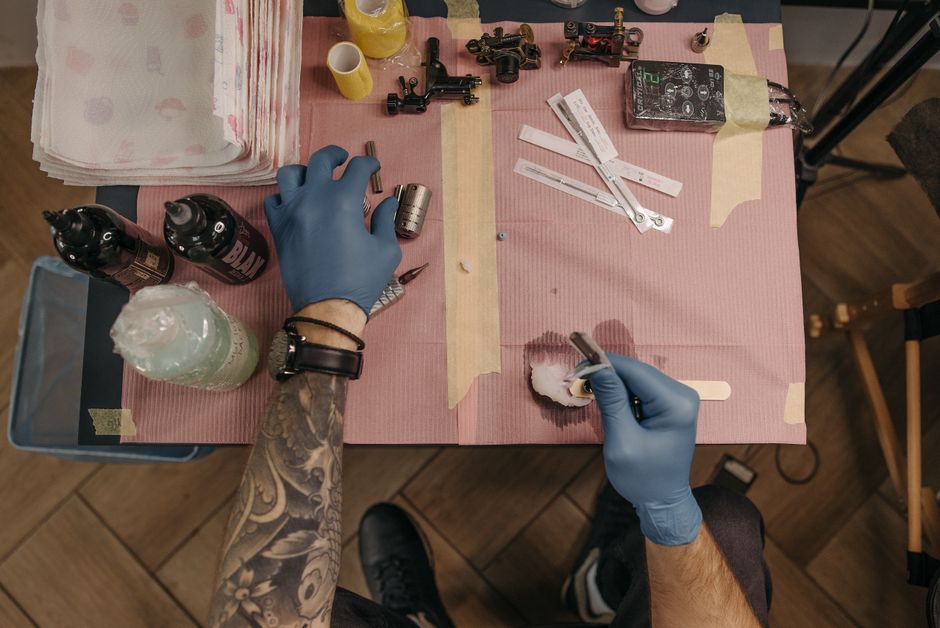
- Step 3 – Stock single-use supplies: Confirm you have sealed, disposable needles, tubes, and barriers ready to open in front of clients.
- Step 4 – Set up sharps and waste stations: Place puncture-proof containers and biohazard bags where they belong.
- Step 5 – Run a self-audit: Walk your station as if you were the inspector. Fix small issues before they become violations.
- Step 6 – Train consistently: Make hygiene second nature so it holds up under a surprise visit.
When these habits become muscle memory, inspection day feels like any other day. That’s the goal. If you’re just starting out, don’t let this list overwhelm you; learning these systems is exactly what a structured tattoo apprenticeship is built for. Just be sure to sidestep the mistakes aspiring tattoo apprentices should avoid along the way.
What happens if you fail a tattoo inspection?
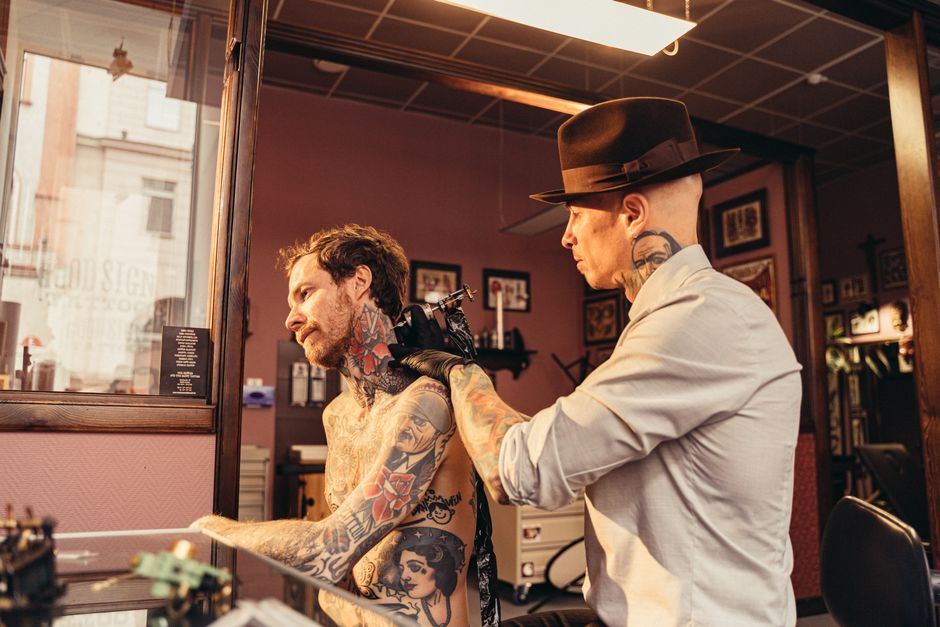
Failing a tattoo inspection can result in fines, a required re-inspection, temporary closure, or suspension of your license until you correct every documented violation.
The severity depends on the violation. A missing sign might earn a warning. Reusing a needle or lacking sterilization could shut you down immediately. Health departments protect the public, and repeated failures can end a career before it truly begins.
Here’s the encouraging part: almost every failure is preventable. The artists who struggle are usually the ones who taught themselves in isolation, never learning the professional standards that make inspections routine. Building that foundation properly is why so many people choose an apprenticeship over trial and error. The Bureau of Labor Statistics tracks craft and fine artists as a real, working profession, and treating it like one starts with respecting the rules.
Where do you learn all of this the right way?
You learn inspection-ready standards through a hands-on tattoo apprenticeship where licensed mentors teach sanitation, safety, and technique in a real working studio.
You can read every regulation online and still freeze the first time an inspector asks to see your spore test logs. Knowledge sticks when you practice it under someone who has passed hundreds of inspections. That’s the difference between watching a video and actually growing your skills.
This is where we come in as your guide. For more than 15 years, Ink Different Tattoos has trained aspiring artists to build careers that stand up to real-world scrutiny. We’re a college alternative for people who are done wasting time in dead-end jobs and ready to pour their creative energy into something that lasts.
Tattooing is also an AI-proof career: a robot can’t earn a client’s trust or pass a health inspection with a steady, human hand. If you want more on that, see why tattoo artists are still essential.
What to expect from our Traditional Tattoo Apprenticeship?
Our Traditional Tattoo Apprenticeship is an 18 to 24 month, four-phase tattoo apprenticeship where beginners learn everything from line work to inspection-ready sanitation with personalized mentorship.
You train inside real tattoo studios where the standards we’ve discussed become second nature. No prior experience needed. We meet you where you are and grow your skills phase by phase.
A career that comes with confidence
By the time you finish, you’ll have a guaranteed job offer, job-ready skills, and licensing support, so you walk into your first inspection knowing you belong there. We prepare you to earn your career on your own.
Mentorship that pushes your brand and skills further
For those ready to level up, our one-year in-person Master Mentorship puts you alongside celebrity and award-winning Mentors like Al Fliction, Liz Cook, Kyle Dunbar, Boneface, and Jordi Pla. It’s built for mastering a specific style, growing your career, and stepping into studio ownership.
Making tattoo training accessible for everyone
We believe great mentorship shouldn’t be limited by language. Ink Different offers Spanish-speaking locations near Denver, in Orange County, near New York City, in Miami, in San Antonio, and in San Diego, so more aspiring artists can join our “Good Humans” community and feel at home from day one.
Ready to become a Tattoo Artist?
If you’re tired of watching your creative energy go to waste in a job that drains you, this is your moment to change direction.
Ready to become a tattoo artist? Apply now to Ink Different’s Traditional Tattoo Apprenticeship and start building an AI-proof career with licensing support along the way. Want to know if it’s the right fit? Fill out our quick questionnaire for personalized guidance.
Frequently Asked Questions
How often do health departments inspect tattoo studios?
Most tattoo studios are inspected at least once yearly, plus before opening and at license renewal. Some health departments also perform random, unannounced visits throughout the year.
What documents do inspectors ask to see?
Inspectors typically request current tattoo licenses, bloodborne pathogen certification, client consent forms, and sterilization or autoclave logs. Keeping these organized and accessible is essential to passing.
Do I need prior experience to learn inspection standards?
No. Ink Different’s Traditional Tattoo Apprenticeship is built for beginners and teaches sanitation, safety, and technique from day one, so you graduate inspection-ready.
How long is the Ink Different tattoo apprenticeship?
The Traditional Tattoo Apprenticeship runs 18 to 24 months across four phases. You start remote to build foundations, then finish inside real tattoo studios with hands-on mentorship.
What makes Ink Different different from teaching myself?
Ink Different offers live, in-person mentorship from award-winning artists, licensing support, and 15 years of experience. Self-teaching skips the professional standards inspectors require.
Can a failed inspection end my tattoo career?
A single failure rarely ends a career, but serious or repeated violations can lead to fines, closure, or license suspension. Proper training makes these failures almost entirely preventable.