Why Tattooing Is AI-Proof: The Big Reasons
Tattooing does not follow a pattern. It does not run on a script. Every session is different, every client is different, and every piece of skin a Tattoo Artist works on tells its own story. That is exactly why AI cannot touch this career.
Here is a breakdown of the reasons why.
Human Skin Is Not a Flat Canvas
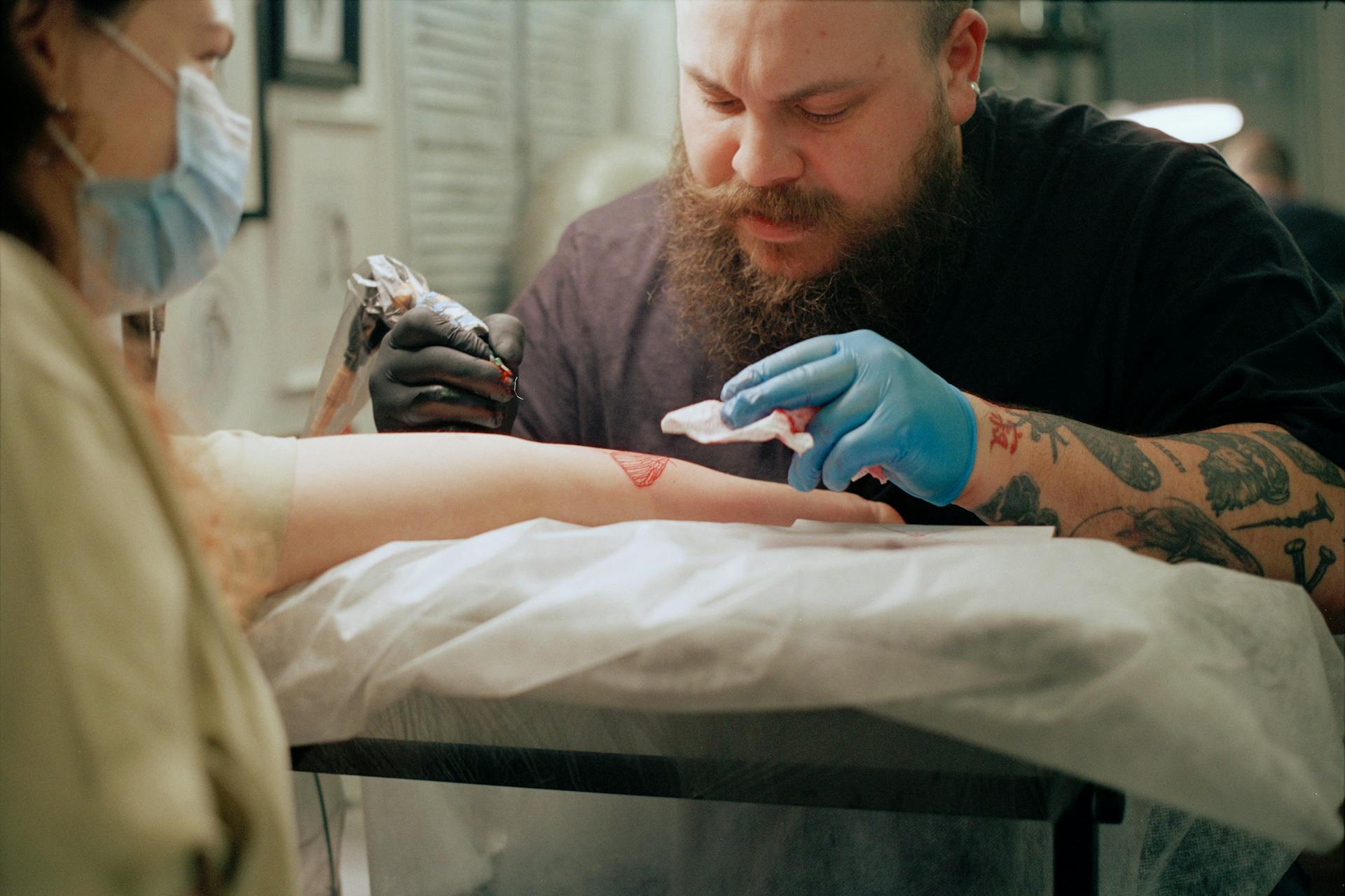
No two people have the same skin. Tone, texture, elasticity, scarring, sun damage, stretch marks, underlying fat distribution, and how a specific body part moves all affect how ink sits and heals. A Tattoo Artist reads all of that in real-time and adjusts their technique accordingly.
A robot working from a pre-programmed design cannot feel how the skin is responding. It cannot detect resistance, unexpected texture changes, or early signs of irritation. The complexity of working on a living, breathing human body makes tattooing fundamentally incompatible with full automation.
Tattooing Is an Emotional Experience
People do not get tattoos the way they buy office supplies. They come in carrying stories. A tribute to a parent who passed away, a symbol of surviving something hard, a milestone they want to wear permanently. The conversation that happens before, during, and after a tattoo session is a huge part of the experience.
Clients need to feel heard, safe, and understood. A human Tattoo Artist picks up on nervousness. They know when to talk and when to be quiet, and create an environment where people feel comfortable enough to sit through discomfort. No AI can hold that kind of space.
Custom Design Requires Human Creativity and Collaboration
Most clients walk in with a vague idea, not a final design. "Something floral but not too feminine." "A wolf, but I want it to feel personal, not generic." A Tattoo Artist draws out what the client actually wants through conversation, sketching, and back-and-forth collaboration.
AI tools can generate reference images, sure. But they cannot sit across from a nervous person and translate their emotions into a design that will live on their skin forever. That requires human intuition, creativity, and the ability to interpret something deeply personal in real time.
The Physical Skill Cannot Be Replicated by a Machine
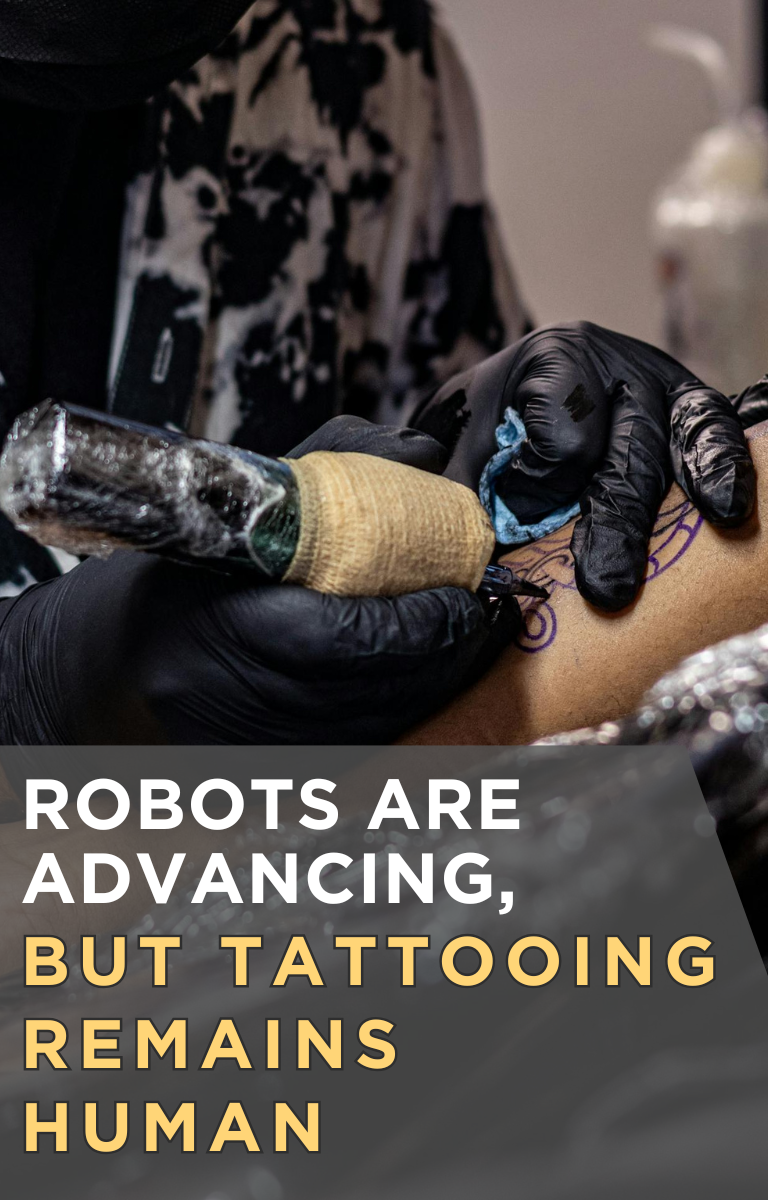
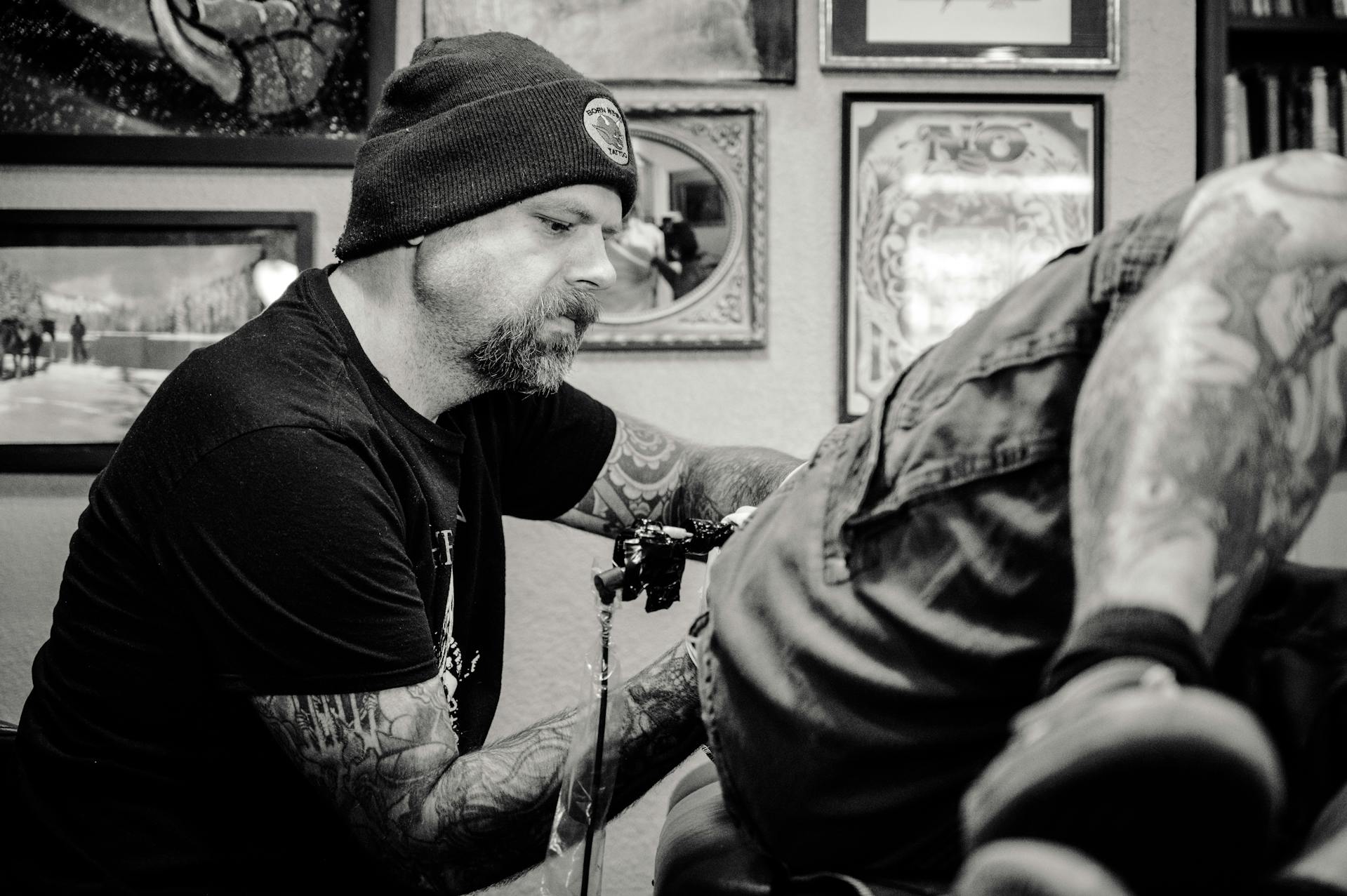
Tattooing is a hands-on craft that takes years to develop. It requires fine motor control, consistent hand pressure, depth awareness, and the coordination to produce clean linework on a surface that moves, breathes, and reacts. Tattoo Artists are constantly adjusting based on feedback from the skin.
Meanwhile, robotic tattooing has shown that machines can execute pre-programmed patterns on flat, static surfaces under highly controlled conditions. But a real client is not a flat surface. They breathe, flinch, shift, and have curves. The gap between a controlled lab demo and an actual tattoo session is enormous, and no machine has come close to bridging it.
Licensing, Regulation, and Legal Accountability
Tattooing is a licensed and regulated profession in most U.S. states and many countries worldwide. That regulation exists because tattooing carries health risks, including bloodborne pathogen exposure and infection. The legal and liability frameworks around tattooing are built specifically around human practitioners.
A Tattoo Artist can be held accountable, can carry liability insurance, and can be licensed and inspected. A robot cannot hold a license. It cannot be personally liable for an adverse outcome. And no regulatory body is currently equipped or motivated to approve robotic tattooing for public use. The career is protected not just by its craft, but by its entire professional and legal structure.