How to Become a Tattoo Artist in Washington
August 3, 2026
How to Become a Tattoo Artist in Arizona
August 4, 2026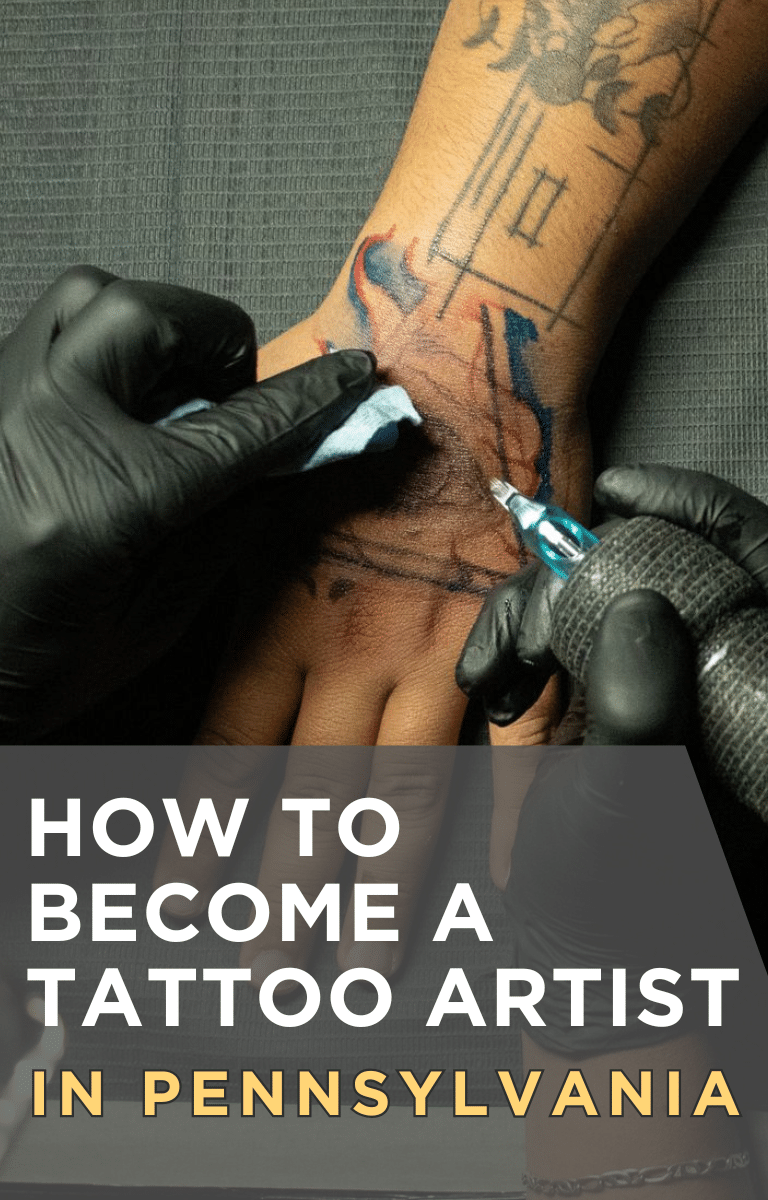
Your obligations depend almost entirely on which county or city you plan to work in. This guide covers how Pennsylvania regulates tattooing, what it means for your career, and how to build professional tattooing skill through a tattoo apprenticeship.
Table of Contents
- How does Pennsylvania regulate tattooing?
- What does local regulation mean for you?
- How do you become a Tattoo Artist in Pennsylvania step by step?
- What does a Philadelphia tattoo license require?
- What does a tattoo license in Pennsylvania cost?
- What if you are moving to Pennsylvania from another state?
- What mistakes should you avoid?
- How do you learn to tattoo with Ink Different?
- Frequently Asked Questions
Key Takeaways
- No statewide license: Pennsylvania has no statewide tattoo mandate. Counties and cities set their own rules, with Philadelphia being the strictest.
- Philadelphia specifics: A Philadelphia body art license requires an apprenticeship letter from a certified Tattoo Artist plus a $40 fee.
- Varies by county: Some Pennsylvania counties may impose no health oversight at all, so requirements differ dramatically by location.
- Skill is the actual credential: A strong tattoo apprenticeship builds the portfolio and safety knowledge that matter no matter where you work.
- Earning potential: A Professional Tattoo Artist can earn over $106,000 a year according to ZipRecruiter.
How does Pennsylvania regulate tattooing?
Pennsylvania regulates tattooing through local counties and cities rather than through a single statewide agency, so there is no uniform tattoo license Pennsylvania standard. The governing authority is local ordinance, and Philadelphia enforces the strictest rules in the state.
This decentralized model means your legal responsibilities are defined by the jurisdiction where your tattoo studio sits. In one county you may face detailed health oversight, and in a neighboring county there may be little or none.
Because exposure varies so widely, confirming local rules is the single most important step. Do this for the specific city or county where you plan to work before you ink your first client.
Always verify local requirements directly with your county health office or municipal licensing department. A rule that applies in Philadelphia may not apply one county over.
What does local regulation mean for you?
Local regulation means your path to legally tattooing in Pennsylvania depends on your exact location. You must research your county or city rather than rely on a statewide checklist.
If you plan to work in Philadelphia, you will follow a defined body art licensing process. If you plan to work in a smaller county, you may find that no formal health oversight exists at all.
That freedom can be tempting, but it also raises the stakes. Where the government does not require training, your clients and your reputation still demand it. The absence of a rule is not a reason to skip proper bloodborne pathogen practices or hands-on mentorship.
The practical takeaway is simple: treat professional training and sanitation as mandatory for yourself, even when your county does not. Your career longevity depends on trust and safety.
How do you become a Tattoo Artist in Pennsylvania step by step?
To become a Tattoo Artist in Pennsylvania, you complete a tattoo apprenticeship, build a portfolio, and learn sanitation. Then you meet the local licensing requirements for your specific county or city.
- Learn the craft through a tattoo apprenticeship. Study under an experienced Mentor who can teach you drawing fundamentals, Tattoo Machine control, and safe practice.
- Master safety and sanitation. Understand OSHA bloodborne pathogen standards and cross-contamination prevention, which matter regardless of local rules.
- Build a professional portfolio. Document your best work so studios and clients can evaluate your skill.
- Identify your jurisdiction. Confirm whether your county or city requires a license and what documentation it expects.
- Complete local licensing. If you work in Philadelphia, secure the required apprenticeship letter and pay the applicable fee.
- Start working professionally. Join a reputable Tattoo Studio and keep refining your style.
Notice that formal training sits at the front of this list. Even in counties with no health oversight, the market rewards Tattoo Artists who can actually deliver clean, lasting, quality work.
What does a Philadelphia tattoo license require?
A Philadelphia body art license requires an apprenticeship letter from a certified Tattoo Artist and a $40 fee, making Philadelphia the strictest jurisdiction in Pennsylvania.
The apprenticeship letter is the crucial piece. It demonstrates that a certified Tattoo Artist has trained and vouched for you, which reinforces why a structured tattoo apprenticeship is so valuable. Without that documented mentorship, you cannot satisfy the Philadelphia requirement.
Because rules and procedures can change, always confirm the current process and forms. Check any additional steps directly through the official City of Philadelphia body art licensing page before you apply.
For every other Pennsylvania jurisdiction, do not assume the Philadelphia process applies. Check your local ordinance, since some counties may impose no health oversight at all.
What does a tattoo license in Pennsylvania cost?
The only verified licensing cost in Pennsylvania is Philadelphia’s $40 body art license fee. Other counties set their own fees or may require nothing at all.
Because the state has no unified fee schedule, there is no single number that applies everywhere. In Philadelphia you know the license fee is $40, alongside the apprenticeship letter requirement.
Outside Philadelphia, costs depend entirely on your local ordinance. Some counties may charge nothing because they impose no health oversight, while others may have fees not listed here. Verify with your county or municipal office rather than guessing.
Keep in mind that licensing fees are only a small part of your total investment. The larger cost is the time and dedication required to complete a quality tattoo apprenticeship and develop genuine skill.
What if you are moving to Pennsylvania from another state?
Tattoo licenses are not transferable into Pennsylvania, so a credential from another state does not carry over. You must meet the local requirements of your new jurisdiction.
If you relocate to Philadelphia, plan to satisfy the city’s body art licensing process, including the apprenticeship letter and fee. Do this even if you were already licensed elsewhere. If you settle in a county with no health oversight, confirm that with the local office directly.
Your out-of-state experience still matters. While a license does not transfer, a strong portfolio and proven skill travel with you. That makes it far easier to join a respected tattoo studio in your new home.
What mistakes should you avoid?
The most common mistake in Pennsylvania is assuming a statewide rule exists, then either over-preparing for the wrong requirements or skipping local licensing entirely.
- Assuming uniformity. Do not apply Philadelphia’s rules to another county or vice versa. Confirm your specific jurisdiction.
- Skipping training because no rule requires it. A county with no health oversight still has clients who expect clean, professional work.
- Believing a license transfers. Out-of-state licenses are ineligible for transfer, so verify local steps when you arrive.
- Guessing at fees or forms. Always check the official Philadelphia page or your county office for current details.
- Choosing a shortcut over a structured tattoo apprenticeship. The apprenticeship letter Philadelphia requires only comes from documented, mentored training.
How do you learn to tattoo with Ink Different?
Ink Different runs a Traditional Tattoo Apprenticeship built like the Juilliard of tattoo training, offering a serious college alternative with licensing support along the way.
Tattooing is an AI-proof career. A machine cannot hold a client’s trust, adapt a design to living skin, or build a genuine relationship with a client. That is why hands-on mentorship remains the true credential in this craft.
Through our Traditional Tattoo Apprenticeship you learn under an experienced Mentor who teaches design, Tattoo Machine control, sanitation, and the professional habits that make a lasting career. The tattoo apprenticeship runs 18 to 24 months across four phases and welcomes beginners. This is the kind of documented training that supports requirements like Philadelphia’s certified Tattoo Artist apprenticeship letter.
Instead of a lecture hall, you get hands-on studio experience, direct feedback, and a solid portfolio. A Professional Tattoo Artist can earn over $106,000 a year according to ZipRecruiter, and skill is what unlocks that potential.
Ready to become a Tattoo Artist? Apply now to Ink Different’s Traditional Tattoo Apprenticeship and start building an AI-proof career, with licensing support along the way.
Frequently Asked Questions
Do you need a license to tattoo in Pennsylvania?
It depends on your location. Pennsylvania has no statewide license, so requirements are set locally. Philadelphia requires a body art license, while some counties may impose no health oversight at all.
How much does a tattoo license cost in Philadelphia?
Philadelphia charges a $40 fee for its body art license, and applicants must also provide an apprenticeship letter from a certified Tattoo Artist. Confirm current details on the official City of Philadelphia licensing page.
Can I transfer my tattoo license into Pennsylvania?
No. Tattoo licenses are ineligible for transfer into Pennsylvania. You must meet the requirements of your specific county or city, such as Philadelphia’s body art license process.
Does every Pennsylvania county require a tattoo license?
No. Requirements vary widely by jurisdiction. Philadelphia is the strictest, while other counties may impose no health oversight, so always verify with your local office before working.
Do I need an apprenticeship to get licensed in Philadelphia?
Yes. Philadelphia requires an apprenticeship letter from a certified Tattoo Artist as part of its body art license, which is why documented tattoo apprenticeship training is essential.
How much can a Tattoo Artist earn in Pennsylvania?
Earnings depend on skill, location, and clientele. A Professional Tattoo Artist can earn over $106,000 a year, according to ZipRecruiter, and strong training drives that potential.