
This Back-to-School Season, Skip College for a Tattoo Apprenticeship
August 5, 2026
How to Become a Tattoo Artist in Missouri
August 6, 2026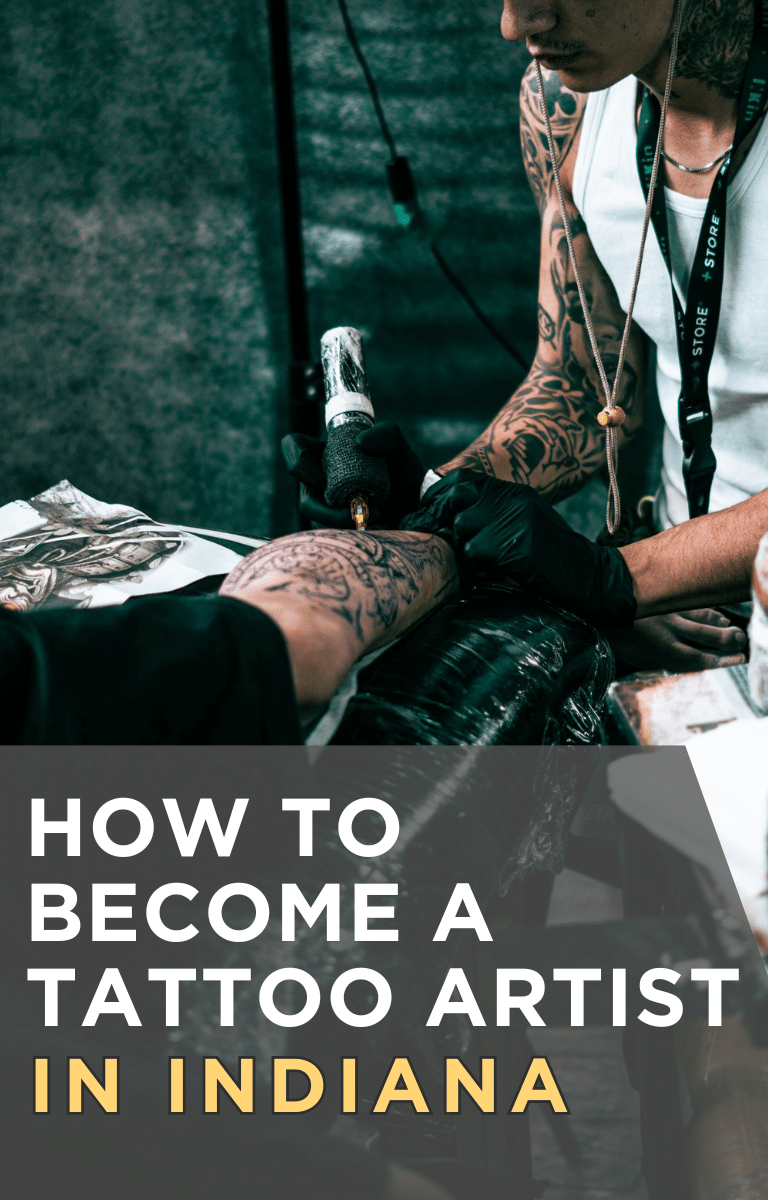
Becoming a Tattoo Artist in Indiana is more accessible than in many other states because the rules focus on where you work, not on a personal license. A tattoo license in Indiana is best understood as a facility and safety standard, enforced through the Indiana Department of Health and local county rules. It is not a single credential you personally earn and carry with you. If you want a hands-on, AI-proof career built on valuable craft, understanding this framework is your first step in the Hoosier State.
This guide covers how to become a Tattoo Artist in Indiana. You will learn how the state regulates the trade, the practical path, the costs to research, and the training that separates hobbyists from professionals.
Key Takeaways
- No state artist license: Indiana does not issue an individual tattoo license at the state level, per 410 IAC 1-5.
- Regulator: The Indiana Department of Health oversees sanitary operations for tattoo and body piercing facilities.
- Facility focus: Operators must ensure every artist completes annual OSHA-compliant bloodborne pathogen training with records maintained.
- Local rules matter: Counties such as Marion and Johnson add their own permit and inspection regimes.
- Career upside: A Professional Tattoo Artist can earn over $106,000 a year, according to ZipRecruiter.
Indiana tattoo licensing at a glance
Indiana uses a shop-only regulatory model, meaning the state licenses facilities and safety practices rather than individual Tattoo Artists. Here are the core verified facts to keep in mind as you plan your path.
- Regulator: Indiana Department of Health (IDOH)
- Governing law: 410 IAC 1-5
- Licensing model: Shop-only (no individual artist license at the state level)
- License transfer: Ineligible
- Fees: Not specified in the state facts here. Confirm current fees directly with the Indiana Department of Health and your county.
Always verify the latest requirements through the official IDOH Sanitary Operations page before you commit money or time to any specific credential.
How does Indiana regulate tattooing?
Indiana regulates tattooing through the Indiana Department of Health under administrative rule 410 IAC 1-5, focusing on sanitary operations at the facility level. The emphasis is on public health and safe practice inside the Tattoo Studio, not on testing or licensing each artist as an individual.
Under this framework, the operator of the facility carries the core compliance duties. The operator must ensure that every artist completes annual OSHA-compliant bloodborne pathogen training and that those training records are kept and available. Universal precautions must be applied to all procedures, which means treating every client and every setup as if infectious material could be present.
Because Indiana is a shop-only state, the studio is the unit that gets inspected and held accountable. That structure puts a premium on working in a clean, well-run Tattoo Studio where compliance is taken seriously.
What does the shop-only model mean for you?
The shop-only model means there is no individual tattoo license in Indiana for you to earn, so your credibility comes from your training, your portfolio, and the compliant studio you work in. This is a meaningful difference from states that require documented supervised hours and a state exam.
In practice, this shifts responsibility onto the environment you choose and the standards you hold yourself to. Since the state does not certify your skill, the market does. Clients, studio owners, and fellow artists judge you on the quality and safety of your work, which is exactly why serious training matters so much here.
It also means your compliance obligations are real even without a personal license. You will be expected to complete annual bloodborne pathogen training and follow universal precautions on every single procedure, because the operator’s compliance depends on you doing so.
Tip: The absence of a state artist license is not a shortcut. It raises the bar on professionalism, because nothing external vouches for you except your craft and your safety record.
How do you become a Tattoo Artist in Indiana step by step?
To become a Tattoo Artist in Indiana, you train through a structured tattoo apprenticeship, complete required bloodborne pathogen training, and work inside a facility that meets Indiana Department of Health and local county standards. Here is a clear sequence to follow.
- Build fundamental art skills. Drawing, composition, and color theory are the foundation of every strong tattoo. This is the work that makes you competitive in a market that judges you by results.
- Enroll in a tattoo apprenticeship. A structured tattoo apprenticeship under an experienced Mentor is how you learn machine handling, sterilization, skin behavior, and studio operations the right way.
- Complete OSHA-compliant bloodborne pathogen training. Indiana requires this annually for artists, with records maintained by the operator. Treat it as a recurring, non-negotiable part of your practice.
- Master universal precautions. Learn to apply them on all procedures until they are second nature. This is a legal expectation and a professional standard.
- Confirm local county requirements. Counties like Marion and Johnson add their own permit and inspection regimes, so check the rules where you plan to work.
- Work in a compliant Tattoo Studio. Since regulation is shop-based, join a studio that maintains proper records, passes inspections, and follows 410 IAC 1-5.
- Grow your portfolio and reputation. With no state exam gating your career, your body of work becomes your true license in the eyes of clients and studios.
What does a tattoo license in Indiana cost?
Indiana does not publish a single artist license fee here because there is no individual state license, so your costs are facility permits, local county fees, annual training, and your education. Because exact amounts vary and change, confirm every figure with the official source.
Expect your budget to include several categories rather than one flat state fee:
- Facility and local permits: County regimes such as those in Marion and Johnson may charge for permits and inspections. Amounts are set locally, so verify with the county.
- Annual bloodborne pathogen training: An OSHA-compliant course must be completed each year. Providers set their own pricing.
- Equipment and supplies: Machines, needles, inks, and single-use materials are ongoing costs of the trade.
- Education: A serious tattoo apprenticeship is an investment in the skill that actually determines your earning power.
Do not guess at fees. The Indiana Department of Health and your county health department are the only reliable sources for current amounts.
Weigh these costs against the upside. A Professional Tattoo Artist can earn over $106,000 a year according to ZipRecruiter, and unlike many desk jobs, hands-on tattooing is an AI-proof career built on human skill and trust.
What if you are moving to Indiana from another state?
If you are relocating to Indiana, know that license transfer is ineligible, so a credential from another state does not carry over into an Indiana artist license. This is straightforward once you remember Indiana’s shop-only model.
Because Indiana does not issue an individual artist license in the first place, there is nothing at the state level to transfer into. Instead, your focus shifts to meeting facility and local requirements where you land. You will need to complete Indiana’s annual OSHA-compliant bloodborne pathogen training and align with the county permit and inspection rules that apply to your studio.
Your out-of-state experience and portfolio still matter enormously. They help you land a role in a reputable Tattoo Studio, which is where your practical eligibility to work actually lives in Indiana.
What mistakes should you avoid?
The most common mistake in Indiana is assuming that because there is no state artist license, the rules are loose, when in reality local rules are often more demanding. Avoid these pitfalls as you build your career.
- Ignoring county rules. Counties like Marion and Johnson add permits and inspections. Skipping this research can stop you before you start.
- Skipping annual training. Bloodborne pathogen training is required every year, and the operator must keep records. Lapsing puts the whole studio at risk.
- Treating universal precautions as optional. They apply to all procedures, always. There are no exceptions for busy days or trusted clients.
- Learning from unqualified sources. A structured tattoo apprenticeship under a professional Mentor beats piecing it together from videos. Never confuse a Tattoo Machine with a toy or a hobby kit with professional training.
- Guessing at fees or rules. Verify everything with the Indiana Department of Health and your county before you rely on it.
How do you learn to tattoo with Ink Different?
Ink Different Tattoos offers a Traditional Tattoo Apprenticeship that trains you to a professional standard. It builds a structured path to working in a compliant Indiana tattoo studio. It is a serious alternative to a four-year degree for Tattoo Artists who want a hands-on, AI-proof career.
Because Indiana judges you by your craft rather than a state exam, the quality of your training matters most. Our Traditional Tattoo Apprenticeship pairs you with an experienced Mentor. Together, you build the fundamentals that clients and tattoo studio owners recognize immediately: clean technique, safe practice, and strong craft.
We also help you understand the compliance landscape. This means you are ready to complete annual bloodborne pathogen training, apply universal precautions, and meet local county expectations. This is structured, professional mentorship built to make you employable and respected.
Ready to become a Tattoo Artist? Apply now to Ink Different’s Traditional Tattoo Apprenticeship and start building an AI-proof career, with licensing support along the way.
Frequently Asked Questions
Do I need a tattoo license in Indiana to work as an artist?
No. Indiana does not issue an individual artist license at the state level. Under 410 IAC 1-5, regulation is shop-based, so you work inside a facility that meets Indiana Department of Health standards.
Who regulates tattooing in Indiana?
The Indiana Department of Health regulates tattooing through its sanitary operations rules for tattoo and body piercing facilities under administrative code 410 IAC 1-5.
What training is required to tattoo in Indiana?
The operator must ensure every artist completes annual OSHA-compliant bloodborne pathogen training, with records maintained. Universal precautions must be applied on all procedures.
Can I transfer a tattoo license from another state to Indiana?
License transfer is ineligible in Indiana. Since the state has no individual artist license, you instead meet facility and local county requirements where you plan to work.
Are there local tattoo rules in Indiana counties?
Yes. Counties such as Marion and Johnson have additional permit and inspection regimes, and local rules are often more demanding than the state baseline. Confirm requirements with your county.
How much can a Tattoo Artist earn in Indiana?
A Professional Tattoo Artist can earn over $106,000 a year, according to ZipRecruiter. Actual income depends on your skill, reputation, and the studio where you work.