
Can You Become a Tattoo Artist at 30, 40 or 50?
September 8, 2026
What Skills You Actually Need Before You Pick Up a Machine
September 8, 2026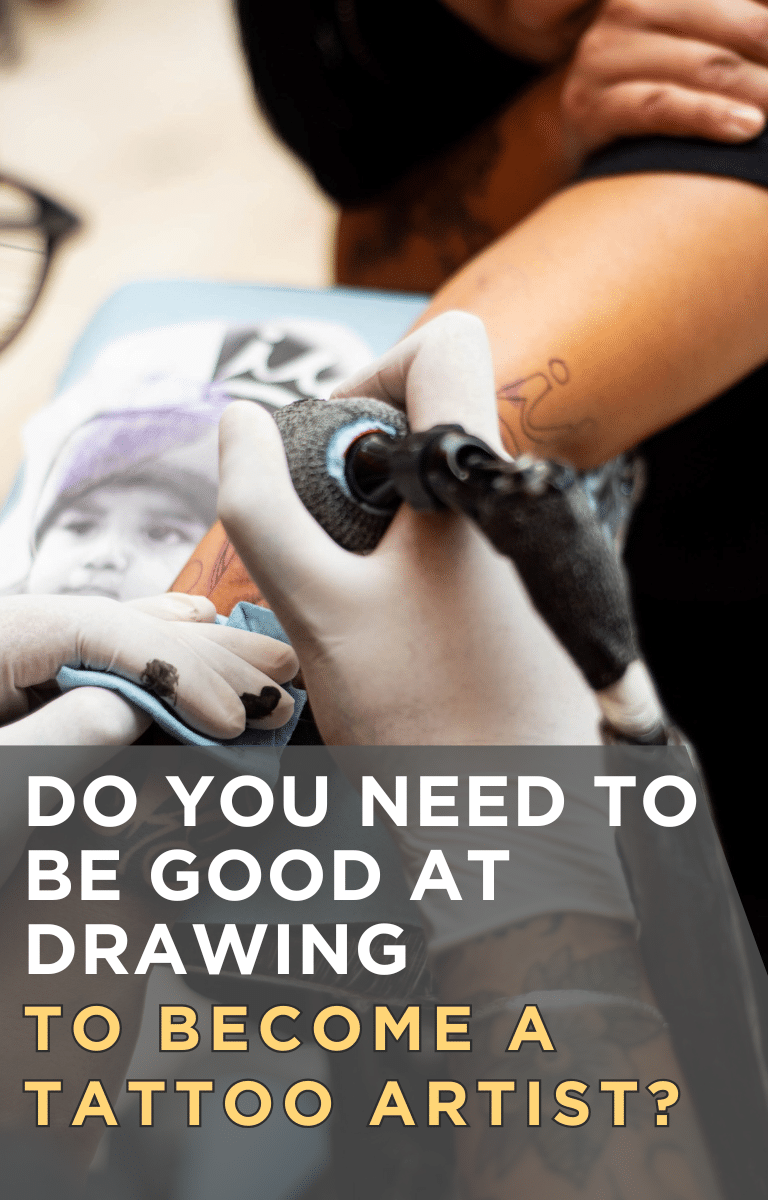
In This Article
- Key Takeaways
- Do You Need to Be Good at Drawing to Become a Tattoo Artist?
- What Skills Actually Matter More Than Natural Talent?
- Is Drawing a Skill You Can Learn From Scratch?
- How Can You Improve Your Drawing for Tattooing?
- Why Is Tattooing Different From Drawing on Paper?
- Why Does Mentorship Beat Raw Talent Every Time?
- What You Can Expect From Our Traditional Tattoo Apprenticeship
- Mentorship That Pushes Your Brand and Skills Further
- Making Tattoo Training Accessible for Everyone
- Ready to Become a Tattoo Artist?
- FAQ
Drawing ability for Tattoo Artists is not an innate talent you’re born with, but a trainable skill you can master through structured practice, mentorship, and repetition.
That’s the fear behind nearly every hesitation we hear at Ink Different Tattoos: “I could never do that, my drawing isn’t good enough.” It’s also the number one thing holding capable people back from a career they were built for. The truth is simpler and far more freeing than you think.
Key Takeaways
- No, you do not need to be naturally gifted at drawing to become a professional Tattoo Artist.
- Discipline, hand control, attention to detail, and quality mentorship outweigh raw talent every time.
- Drawing is a fully learnable skill; line work, shading, and composition can be taught through practice.
- Beginners with zero art experience are welcome; Ink Different’s apprenticeship starts from scratch.
- Structured training with live mentors builds an AI-proof, future-ready career with licensing support.
Do You Need to Be Good at Drawing to Become a Tattoo Artist?
No, you do not need to already be good at drawing to become a professional Tattoo Artist, because drawing is a learnable skill, not a genetic gift. What separates working Tattoo Artists from hobbyists is not talent you’re born with; it’s training, repetition, and guidance.
Think of drawing like a seed. Some people are handed a sprout, sure, but most professionals planted that seed themselves and watered it daily until it grew. The Tattoo Artists you admire were not all prodigies. Many of them started exactly where you are: intimidated, self-doubting, and convinced their work would never be good enough.
The real requirement is not talent. It’s a willingness to show up, put in reps, and let someone experienced correct your course. That’s a decision, not a lottery ticket.
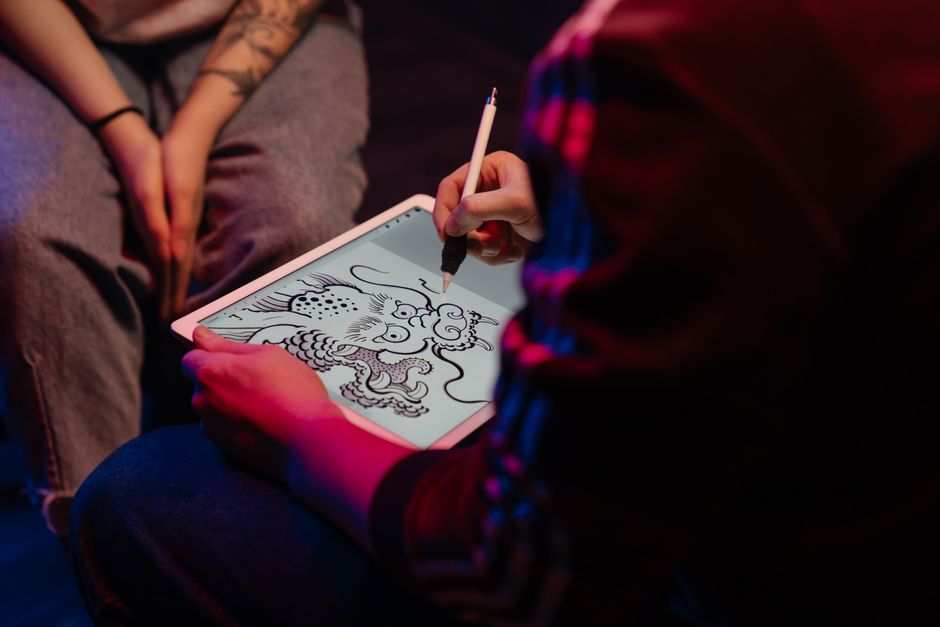
What Skills Actually Matter More Than Natural Talent?
Discipline, steady hand control, patience, attention to detail, and the ability to take feedback matter far more than natural drawing talent when becoming a Tattoo Artist. These are the traits that separate professionals from people who quit early.
A gifted sketcher who won’t practice loses to a determined beginner who shows up every day. We’ve seen it play out again and again over our 15 years training professionals. The people who succeed share a specific set of habits, not a specific birth certificate.
- Consistency: Small daily practice beats occasional bursts of inspiration.
- Coachability: The willingness to hear “do it again” without ego.
- Precision: Caring about the millimeter, because skin is unforgiving.
- Grit: Pushing through the messy early stage when your work embarrasses you.
If you recognize even one of these in yourself, you have more raw material than you realize. If you want to sidestep the common early pitfalls, read our guide on mistakes aspiring tattoo apprentices should avoid.
Is Drawing a Skill You Can Learn From Scratch?
Yes, drawing is a fully teachable skill that anyone can learn from scratch through structured practice, fundamentals, and expert feedback. Nobody arrives knowing how to draw; they simply started earlier than you.
The Bureau of Labor Statistics on craft and fine artists classifies tattoo and fine artists as skilled professionals who develop their abilities through training and long-term practice, not innate magic. Drawing follows rules: perspective, proportion, contrast, and line weight. Rules can be taught.
What most self-taught beginners lack isn’t talent. It’s a system and someone to point out exactly what they’re doing wrong. That’s where guidance changes everything.
How Can You Improve Your Drawing for Tattooing?
You improve your drawing for tattooing by practicing fundamentals daily, focusing on clean line work, and building hand control through repetition and mentor feedback. Here’s a simple, proven path to start today.
Step 1: Master the line
Draw straight lines, smooth curves, and clean circles every day. Tattooing lives and dies by line work, so this is your foundation before anything else.
Step 2: Study shading and contrast
Practice gradients from light to dark using pencil. Learning how value creates depth translates directly into how you’ll shade skin later.
Step 3: Copy, then create
Redraw designs you admire to learn their structure, then start blending styles into your own. Imitation is how every artist begins.
Step 4: Get real feedback
Show your work to someone who knows more than you. Feedback shortens the learning curve dramatically and stops you from repeating invisible mistakes.
Step 5: Learn your tools
Understand the equipment before you ever touch skin. Our breakdown of tools every beginner tattoo artist should know is a smart starting point.
Pro Tip: Keep a sketchbook and fill one page every day. In six months you’ll flip back to page one and barely recognize how far you’ve grown.
Why Is Tattooing Different From Drawing on Paper?
Tattooing differs from paper drawing because you’re working on living, moving skin with a Tattoo Machine, which demands hand control, pressure management, and sterile technique that pencil work never teaches. Being a great sketch artist is only part of the equation.
Plenty of skilled illustrators struggle the first time they hold a Tattoo Machine, and plenty of average sketchers become excellent Tattoo Artists once they master the tool. The medium is its own discipline. Skin stretches, bleeds, and heals, so precision and safety carry as much weight as visual skill.
Hygiene is non-negotiable here. Professional Tattoo Artists follow strict standards like the OSHA bloodborne pathogen standards to keep clients safe. This is craft, not just art, which is exactly why tattooing remains an AI-proof, deeply human profession.

Why Does Mentorship Beat Raw Talent Every Time?
Mentorship beats raw talent because a skilled Mentor spots your mistakes instantly, accelerates your growth, and teaches the studio realities that no amount of natural ability can replace. A guide turns years of trial and error into months of focused progress.
Left alone, a talented beginner reinforces bad habits without knowing it. With a Mentor, every session sharpens your fundamentals in real time. This is why the traditional apprenticeship model has endured for generations and why we’ve built our entire approach around live, in-person guidance.
You are the hero of this story. Our role is simply to be the experienced guide who hands you the map, points out the pitfalls, and walks beside you until you’re ready to work on your own. If you’re weighing your next move, our take on tattoo apprenticeships as a college alternative is worth your time.
What You Can Expect From Our Traditional Tattoo Apprenticeship
Ink Different’s Traditional Tattoo Apprenticeship is an 18 to 24 month, four-phase Tattoo Artist Training built for beginners with no prior art experience, combining remote learning with hands-on studio work. You do not need to be good at drawing to start; you just need to be ready to grow.
For 15 years, since 2011, we’ve trained aspiring Tattoo Artists from the ground up. Our four-phase structure meets you exactly where you are and builds your skills brick by brick, from your first shaky line to confident work on real clients.
- Beginner-friendly: No formal art background required. We teach drawing fundamentals from day one.
- Flexible start: You start remote and finish in our Tattoo Studios with live, in-person mentorship.
- Personalized: Hands-on training tailored to your pace and goals.
- Career-ready: Job-ready skills and licensing support so you finish prepared to work professionally.
This is a career that comes with confidence: an AI-proof craft, a supportive “Good Humans” community, and a real path into a Tattoo Shop. Seats in our Tattoo Apprenticeship Program are limited by design, because personalized mentorship can’t be mass-produced. If you’re ready to plant that seed, learn why a tattoo apprenticeship is the career change worth making.
Mentorship That Pushes Your Brand and Skills Further
Our Master Mentorship is a one-year, in-person program where beginner and experienced artists train directly with celebrity and award-winning Mentors to master a style and build a business. It’s built for career explosion, not just entry.
You’ll learn from names like Al Fliction, Liz Cook, Kyle Dunbar, Boneface, and Jordi Pla. This intensive path focuses on advanced skill development, personal branding, and studio ownership. Once your fundamentals are solid, this is how you level up and stand out in a crowded field.
Building your name matters as much as building your line work. Explore our list of platforms to help tattoo artists build their brand and start thinking like a professional now.
Making Tattoo Training Accessible for Everyone
Ink Different offers Spanish-speaking locations so language never blocks your path into a tattoo career. Great mentorship should be available to every capable person, no matter the language they think and create in.
You can train with our Spanish-speaking Mentors in Denver, Orange County, NYC, Miami, San Antonio, and San Diego. Wherever you are, there’s likely a path near you to start building an AI-proof craft with people who speak your language, literally and creatively.

Ready to Become a Tattoo Artist?
Let’s put the myth to rest: you do not need to be a born artist to become a professional Tattoo Artist. You need discipline, the right guide, and the courage to stop waiting. The only real difference between you and the artists you admire is that they started. Your creative potential does not have to keep gathering dust in a job that leaves you empty.
Ready to become a Tattoo Artist? Apply now to Ink Different’s Traditional Tattoo Apprenticeship and start building an AI-proof career, with licensing support along the way. Prefer to test the waters first? Fill out our quick questionnaire and get personalized support to find out if our Tattoo Apprenticeship Program is right for you.
Frequently Asked Questions
Do you need to be good at drawing to become a Tattoo Artist?
No. Drawing is a teachable skill you can learn from scratch. Discipline, hand control, and quality mentorship matter far more than natural talent.
Do I need prior art experience to start a tattoo apprenticeship?
No. Ink Different’s Traditional Tattoo Apprenticeship is built for beginners and teaches drawing fundamentals from day one, so you can start with zero formal art background.
How long does it take to become a Tattoo Artist?
Most structured tattoo apprenticeships take 18 to 24 months. Ink Different’s four-phase program adjusts to how quickly you master each phase while meeting professional standards.
What makes Ink Different’s tattoo training different?
Ink Different offers live, in-person mentorship, 15 years of experience since 2011, a supportive community, award-winning mentors, and licensing support as a genuine college alternative.
Can I really improve my drawing quickly enough to tattoo?
Yes. With daily practice on line work and shading plus expert feedback, most people improve dramatically within months inside a structured Tattoo Artist Training program.
Is a career as a Tattoo Artist future-proof?
Yes. Tattooing is a deeply human, hands-on craft that machines cannot replicate, making it an AI-proof career with steady demand for skilled, licensed professionals.