
Dallas Just Voted 9-3 to Let Tattoo Studios Open in More Neighborhoods
September 18, 2026
The Tattoo License Renewal Deadline Most New Artists Forget
September 18, 2026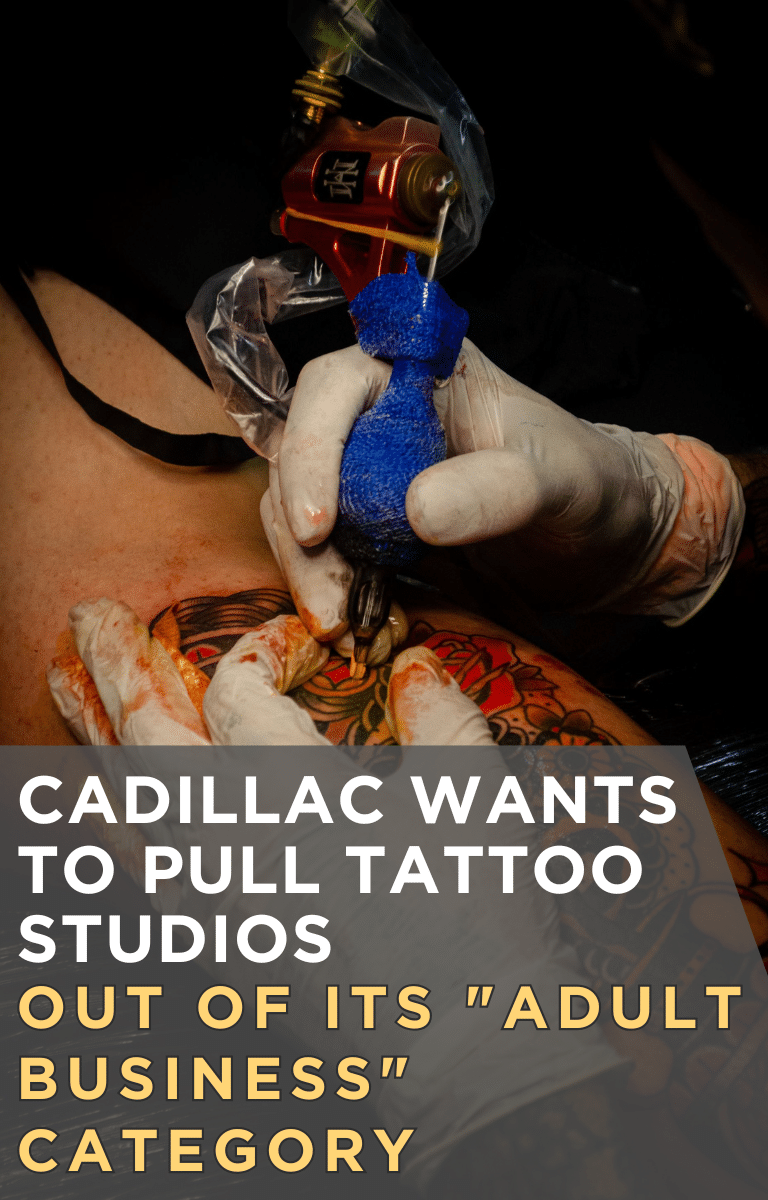
In This Article
- Key Takeaways
- What is Cadillac trying to change about tattoo studios?
- Why does the “adult business” label matter for the tattoo industry?
- How is tattooing becoming a legitimate professional career?
- What does this shift mean for you as an aspiring Tattoo Artist?
- How do you build a real career in this changing industry?
- What can you expect from our Traditional Tattoo Apprenticeship?
- How does Master Mentorship push your brand further?
- Where can you train in Spanish?
- Ready to Become a Tattoo Artist?
- Frequently Asked Questions
In Cadillac, Michigan, tattoo studios have been filed under the same zoning category as adult entertainment venues for years. Now the city’s Planning Commission has backed a change that would pull them out of that “adult business” classification entirely, opening the door for tattoo studios to operate in more commercial areas, downtown included.
Cadillac DDA Director Travis Owens put it: there are currently no tattoo studios in the city’s central business district, and that’s an easy gap to identify. The proposal still needs City Council approval before it’s official. But it’s a real signal about how this city sees the trade now.
At Ink Different Tattoos, we’ve watched this kind of shift build for over 15 years, and we want you to understand what it means for your own path into this craft.
Key Takeaways
- Cadillac’s push: The city’s Planning Commission backed removing tattoo studios from its “adult business” zoning category, a step toward letting them open downtown.
- Why it matters: Reclassification affects zoning access, insurance costs, and how the public perceives tattooing as a legitimate profession.
- The bigger picture: Tattooing remains a hands-on, human-centered trade that’s hard to automate, which makes it a stable career choice.
- Your path: Ink Different’s Traditional Tattoo Apprenticeship trains beginners over 18 to 24 months with full licensing support and hands-on mentorship.
- No experience needed: You can start with zero prior art background and train in a real tattoo studio with a supportive Good Humans community.
What is Cadillac trying to change about tattoo studios?
Cadillac’s Planning Commission has approved a zoning change that would remove tattoo and body art studios from the city’s “adult business” classification. This allows them into more commercial areas, including downtown.
Think about what that old classification actually meant in practice. Filing a tattoo studio under the same bucket as adult entertainment brings zoning restrictions, higher insurance costs, and landlord hesitation. It’s all built on a decades-old idea of what tattooing was.
That framing doesn’t match reality anymore. Cadillac’s Downtown Development Authority is actively looking for tattoo and body art studios to fill a gap in the city’s business mix. That’s a meaningful shift: a local government treating tattooing as a draw for its downtown, not something to zone away from it.
Why does the “adult business” label matter for the tattoo industry?
The “adult business” label matters. It directly shapes zoning access, rent, insurance pricing, and how the public perceives whether tattooing is a legitimate career to pursue.
Classification isn’t just a word on a form. It determines where a studio can open, what it pays for rent and liability insurance, and whether a landlord will even lease to it. When a business is coded like adult entertainment, some doors close before you get a chance to open them.
It also shapes something less visible: respect. If you’ve ever hesitated to tell family you want to tattoo for a living, part of that hesitation traces back to categories exactly like this one. Every time a city revisits the label, it chips away at a stigma that’s kept talented people stuck in work that doesn’t use their creative skill.
Reality check: The stereotype was never about the skill involved. It was about how slowly local codes get updated. The craft has deserved better for a while.
How is tattooing becoming a legitimate professional career?
Tattooing is becoming a widely recognized professional career through state licensing requirements, real safety protocols, and structured tattoo apprenticeships that treat it as a regulated trade.
Professional Tattoo Artists follow strict health protocols rooted in the OSHA bloodborne pathogen standards, and clients increasingly follow aftercare guidance from sources like the American Academy of Dermatology. This isn’t an informal trade. It’s a regulated, skill-driven field with real health and safety infrastructure behind it.
The career outlook backs that up. The Bureau of Labor Statistics tracks craft and fine artists as a recognized occupational group, which reflects real economic standing for hands-on creative work.
What does this shift mean for you as an aspiring Tattoo Artist?
This shift means the timing is solid for pursuing tattooing: the profession is gaining legal legitimacy in more places while the craft itself stays something a machine can’t replicate.
If you’re in a job that treats you like a replaceable resource, watching a city like Cadillac rethink its own zoning is worth paying attention to. It’s a small but real sign that attitudes toward this trade are shifting.
And unlike a lot of careers being reshaped by automation, tattooing stays deeply human. Trust, artistic judgment, and steady hands on living skin aren’t things a machine replaces.
How do you build a real career in this changing industry?
You build a real tattoo career through structured, hands-on training under experienced Mentors, proper safety and technique, licensing, and a professional brand built over time.
Riding a cultural shift isn’t a plan on its own. Skills are. Here’s a straightforward path to follow:
- Step 1: Commit to the decision. Decide that your creativity deserves more than a placeholder in your life, and choose to pursue this seriously instead of waiting for the “right time.”
- Step 2: Find real mentorship. Learn under licensed, experienced Tattoo Artists who correct your mistakes in real time and hold you accountable.
- Step 3: Master the fundamentals. Drawing, machine handling, line work, shading, color theory, and sanitation are the foundation everything else grows from. Get comfortable with the tools every beginner should know.
- Step 4: Earn your license. Licensing rules vary by state and jurisdiction. Whether it is getting your license in Texas or understanding how long it takes in Colorado, we guide you through each step.
- Step 5: Build your brand. Grow an audience and attract clients using the right platforms to build your brand and establish yourself in the market.
What can you expect from our Traditional Tattoo Apprenticeship?
Ink Different’s Traditional Tattoo Apprenticeship is an 18-to-24-month, four-phase path built for beginners with zero art experience, with hands-on mentorship, licensing support, and job-ready skills in a real tattoo studio.
You don’t need a single hour of formal art training to start. Our four-phase structure meets you where you are and builds your ability steadily, finishing inside a real, working tattoo studio where clients depend on your skill.
As a tattoo apprentice with Ink Different, you can expect:
- Personalized coaching: Live, in-person mentorship from working professionals, not prerecorded lectures or fragmented online courses.
- A real progression: Four distinct phases that take you from fundamentals through confident client work and business basics.
- Licensing support: Hands-on guidance through your state’s requirements so you finish genuinely job-ready.
- An AI-proof trade: A human craft built on trust, intuition, and skill that automation cannot copy.
- A “Good Humans” community: A supportive, family-like culture instead of cutthroat competition.
We’ve trained professional Tattoo Artists since 2011, and our culture means you join a supportive network rather than going it alone. Seats in a hands-on apprenticeship like this are naturally limited, so it’s worth deciding sooner rather than later.
How does Master Mentorship push your brand further?
Ink Different’s Master Mentorship is a one-year, in-person track where artists train with celebrity and award-winning Mentors to master a specific style, grow their brand, and build a sustainable business.
If you want intensive skill development and faster career growth, Master Mentorship connects you with award-winning artists and industry leaders. It’s where aspiring and experienced artists go to sharpen a specific style, level up their technical skill, and move toward tattoo studio ownership.
Whether you’re stuck in an unfulfilling job or already tattooing and hungry for more, this is a good moment to act.
Where can you train in Spanish?
Ink Different offers Spanish-language Tattoo Artist training in Denver, Orange County, New York City, Miami, San Antonio, and San Diego, making professional instruction accessible to more aspiring artists.
Talent doesn’t speak only one language, and neither should opportunity. If a language barrier has held you back, our Spanish-speaking locations remove that obstacle so you can focus on building your skill and career

Ready to Become a Tattoo Artist?
Cadillac reconsidering how it zones tattoo studios is a small but real sign that this profession keeps earning more respect. The question is whether you’re ready to build a career in it.
We’ve helped people build real, hands-on careers for over 15 years. If a career change has been on your mind, explore what it means to pursue a career change through a tattoo apprenticeship instead of letting your creative potential sit unused.
Ready to become a Tattoo Artist? Apply now to Ink Different’s Traditional Tattoo Apprenticeship and start building an AI-proof career with full licensing support and mentorship along the way. Not quite ready to commit? Fill out our quick questionnaire to get personalized guidance on your timeline.
Frequently Asked Questions
Why is Cadillac trying to reclassify tattoo studios?
Cadillac, Michigan’s Planning Commission backed removing tattoo studios from the city’s “adult business” zoning category, a step toward letting them operate in more commercial areas, including downtown.
Is now a good time to become a tattoo artist?
Yes. The profession is gaining legal legitimacy in more cities while remaining a hands-on, human craft, which makes it a solid time to start building a serious career.
Do I need art experience to join a tattoo apprenticeship?
No. Ink Different’s Traditional Tattoo Apprenticeship is built for complete beginners and teaches drawing, technique, and safety from the ground up.
How long does the Traditional Tattoo Apprenticeship take?
The Traditional Tattoo Apprenticeship takes 18 to 24 months across four phases, finishing in a working tattoo studio with full licensing support.
What makes Ink Different different from other tattoo training options?
Live, in-person mentorship from working professionals, a supportive Good Humans community, over 15 years of experience since 2011, and access to award-winning Mentors.
Can I train as a tattoo artist in Spanish?
Yes. Ink Different offers Spanish-language training in Denver, Orange County, New York City, Miami, San Antonio, and San Diego.