
Become a Tattoo Artist in Buffalo, New York
October 20, 2026
Become a Tattoo Artist in Anchorage, Alaska
October 20, 2026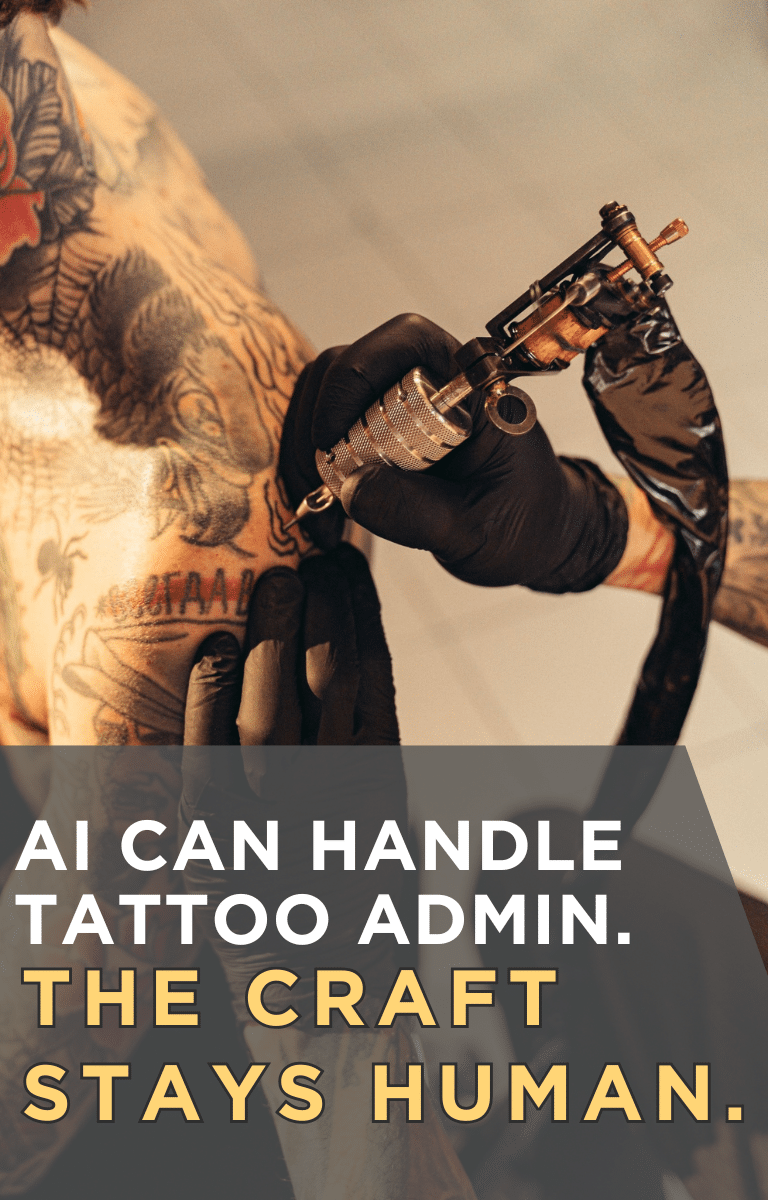
In This Article
- Key Takeaways
- What can AI actually do in a tattoo studio?
- Why can’t AI replace the human craft of tattooing?
- Which admin tasks should you hand over to AI?
- How does automating admin free you to grow as an artist?
- Why is tattooing an AI-proof career?
- How do you build skills no algorithm can copy?
- How does Ink Different train you for this future?
- What is the Master Mentorship program?
- Ready to take the first step?
- FAQ
Most people get into tattooing to tattoo, not to answer DMs and chase deposits. But the busier a Tattoo Artist gets, the more time disappears into admin. A new tool built inside a Philadelphia tattoo studio is trying to fix that without touching the craft itself.
As InkedMag recently reported, founder Jason Howie built his software after watching his brother, John, run Frequency Tattoo Company in East Falls. His guiding idea is simple: let automation handle the paperwork and leave the art to people. At Ink Different Tattoos, we agree, and it’s a big reason tattooing is one of the most AI-proof careers you can choose.
Key Takeaways
- The news: A software tool called Apprentice was built inside a Philadelphia tattoo studio to handle bookings, deposits, consent forms, and client messages.
- The rule: The software drafts replies, but nothing goes out without the Tattoo Artist’s review and approval.
- The split: Software handles the admin. Tattoo Artists keep the design judgment, the hands-on work, and the client relationship.
- AI-proof: Tattooing safely on living skin takes human skill and trust that no algorithm can replace.
- Training: Ink Different’s Traditional Tattoo Apprenticeship takes 18 to 24 months and ends with a guaranteed job offer.
What can AI actually do in a tattoo studio?
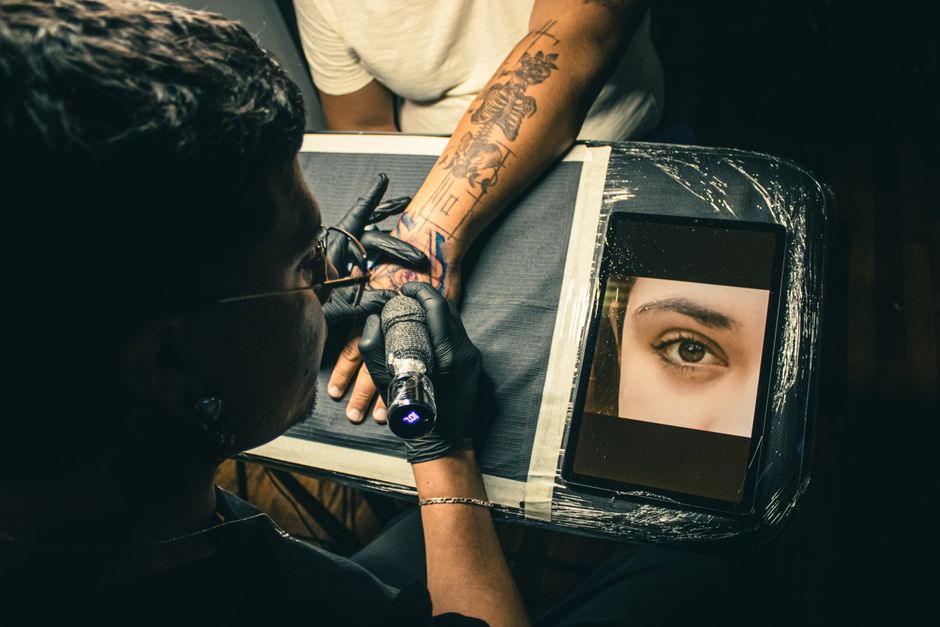
AI can organize the business side of a tattoo studio: booking requests, reference images, deposits, consent forms, and client messages.
Before Jason Howie built his software, his brother’s tattoo studio ran on chaos. Booking requests filled up inboxes. Paper consent forms piled up. Deposits were chased over Venmo, and a single no-show could wipe out an entire afternoon.
Howie noticed that regular scheduling tools only handled the time slot and ignored everything around it. So he built a system for how tattoo studios actually run. Clients book through a link in the Tattoo Artist’s social media bio. The form collects reference images, placement, and sizing right away.
Everything then lands in one profile per client: reference photos, design notes, scheduling, deposits, digital consent forms, and aftercare instructions. The AI also connects to the inbox. It filters real inquiries from spam, organizes reference photos, and drafts reply options based on project details.
Why can’t AI replace the human craft of tattooing?
AI can’t replace tattooing because the work depends on design judgment, a steady hand on living skin, and trust between Tattoo Artist and client.
Even the people building this software say so. Howie describes design judgment, the hands, and the client relationship as the actual job, and says no software should touch it. His brother John put it even more simply: the art is his.
A tattoo is permanent, and that changes everything. Skin stretches, moves, and heals differently on every person. A skilled Tattoo Artist reads all of that in the moment and adjusts.
We explored this in depth in our piece on why tattoo artists are still essential.
Remember this: Software is coming for the busywork, not the craft. Your hands are the part that can’t be downloaded.
Which admin tasks should you hand over to AI?
Hand over the repetitive tasks that eat your time without improving your work. Keep anything that involves your creative judgment or your relationship with the client.
Based on how tools like Howie’s work, these are good tasks to automate:
- Consult requests: Gather reference images, placement, and sizing up front instead of digging through three messaging apps.
- Deposits and scheduling: Collect payments and manage bookings in one place, so nothing slips through the cracks.
- Consent forms: Go digital and skip the paper piles.
- Aftercare instructions: Send clear post-session care steps automatically after every appointment.
- Inbox sorting: Let software flag spam and draft reply options, then review every message yourself before it’s sent.
Not every tattoo studio needs the same setup. Howie points out that a high-volume street shop runs differently from a private tattoo studio. A custom Tattoo Artist who opens their books now and then has different needs from someone booking weekly. The right tool fits how you work.
How does automating admin free you to grow as an artist?
Less admin means more time for drawing, practicing technique, and connecting with clients. That’s how you grow from beginner to in-demand Tattoo Artist.
Every hour spent chasing a deposit is an hour away from your sketchbook. When software handles the clerical side, you get that time back. You can spend it on line work, shading, and design.
Clients pay for skill, not for how fast you answer a message. That’s why the time you save matters so much early in your career.
If you’re just starting out, learn from other people’s slip-ups first. Read our list of mistakes aspiring tattoo apprentices should avoid.
Why is tattooing an AI-proof career?
Tattooing is AI-proof because it combines hands-on skill, human trust, and physical presence with every client.
Software can sort an inbox or draft a reply. It can’t tattoo a moving, breathing person or decide how a design will sit on someone’s body. Even the AI described in this news story can’t send a message without a Tattoo Artist approving it first.
Howie compares his software to a tattoo apprentice. Tattoo apprentices watch, handle the grunt work, and earn trust over time. That comparison works because the Tattoo Artist stays in charge, and the tool only supports them.
A trade that can’t be automated is worth learning now. We make the full case in our article on tattoo apprenticeships as a college alternative.
How do you build skills no algorithm can copy?
You build them through live, in-person mentorship, lots of practice, and real-time feedback from professional Tattoo Artists.
Books and videos can teach you theory. Only a Mentor beside you can catch a mistake before it becomes permanent. That hands-on feedback is how raw talent becomes a reliable career.
Safety is part of that skill set too. Learning the OSHA bloodborne pathogens standard protects you and your clients. A responsible tattoo apprenticeship teaches it from the start.
How does Ink Different train you for this future?
Ink Different Tattoos trains you through the Traditional Tattoo Apprenticeship, built around the human skills automation can’t touch.
We’ve been training professional Tattoo Artists for 15 years, since 2011. With 60+ locations nationwide, you learn in real tattoo studios alongside professional Tattoo Artists.
Here’s what you can expect:
- Length: 18 to 24 months across a four-phase structure.
- Hands-on training: Live, in-person mentorship in working tattoo studios.
- For beginners: No prior art experience needed. We teach you from the ground up.
- Safety first: Hygiene and bloodborne pathogen training built into your tattoo apprenticeship.
- Career outcome: Job-ready skills, licensing support, and a guaranteed job offer at one of our tattoo studios.
This is a career that comes with confidence. Each Mentor takes on only two tattoo apprentices per tattoo studio, so you get real one-on-one attention. You also join our “Good Humans” culture, a supportive community that has your back from day one.
We also offer Spanish-speaking locations in Denver, Orange County, NYC, Miami, San Antonio, and San Diego.
What is the Master Mentorship program?
The Master Mentorship is a one-year, in-person experience where you train directly with award-winning Master Mentors to master a style, grow your career, and learn tattoo business ownership.
It’s open to beginners and experienced Tattoo Artists who want to level up fast. You learn from Master Mentors Al Fliction, Liz Cook, Kyle Dunbar, Boneface, and Jordi Pla. That kind of access is rare in this industry.
If you dream of owning a tattoo studio or becoming known for a signature style, this is where skill and business strategy come together. It’s also a good place to learn how to run the business side well, so the craft always comes first.
Ready to take the first step?
Automation will keep taking over repetitive work, in tattoo studios and everywhere else. That’s exactly why a craft built on human hands and human trust is such a smart career move.
Let software handle the paperwork. You handle the tattooing.
Ready to become a Tattoo Artist? Apply now to Ink Different’s Traditional Tattoo Apprenticeship. You’ll get hands-on training at one of our 60+ locations nationwide, licensing support, and a guaranteed job offer at one of our tattoo studios. Not sure yet? Fill out our quick questionnaire to see if a tattoo apprenticeship is the right career change for you.
Frequently Asked Questions
Will AI replace tattoo artists?
No. AI can help with booking, deposits, and client messages, but it can’t replace the hand skill, judgment, and trust it takes to tattoo living skin.
How long does the Traditional Tattoo Apprenticeship take?
Ink Different’s Traditional Tattoo Apprenticeship takes 18 to 24 months across four phases, with live, in-person mentorship in real tattoo studios.
Do I need art experience to start a tattoo apprenticeship?
No. Ink Different teaches drawing fundamentals, machine handling, and safety standards from day one, so beginners are welcome.
What makes Ink Different different from a tattoo school?
You train inside working tattoo studios with live, in-person mentorship and licensing support. You also finish with a guaranteed job offer at one of our tattoo studios.
Which admin tasks can AI handle in a tattoo studio?
AI can help with booking requests, reference images, deposits, digital consent forms, aftercare instructions, and inbox sorting. The Tattoo Artist should still review every client message before it’s sent.
Where does Ink Different offer training locations?
Ink Different has 60+ locations nationwide. Spanish-speaking locations are available in Denver, Orange County, NYC, Miami, San Antonio, and San Diego.