
Become a Tattoo Artist in Richmond, Virginia
October 28, 2026
Become a Tattoo Artist in Huntsville, Alabama
October 29, 2026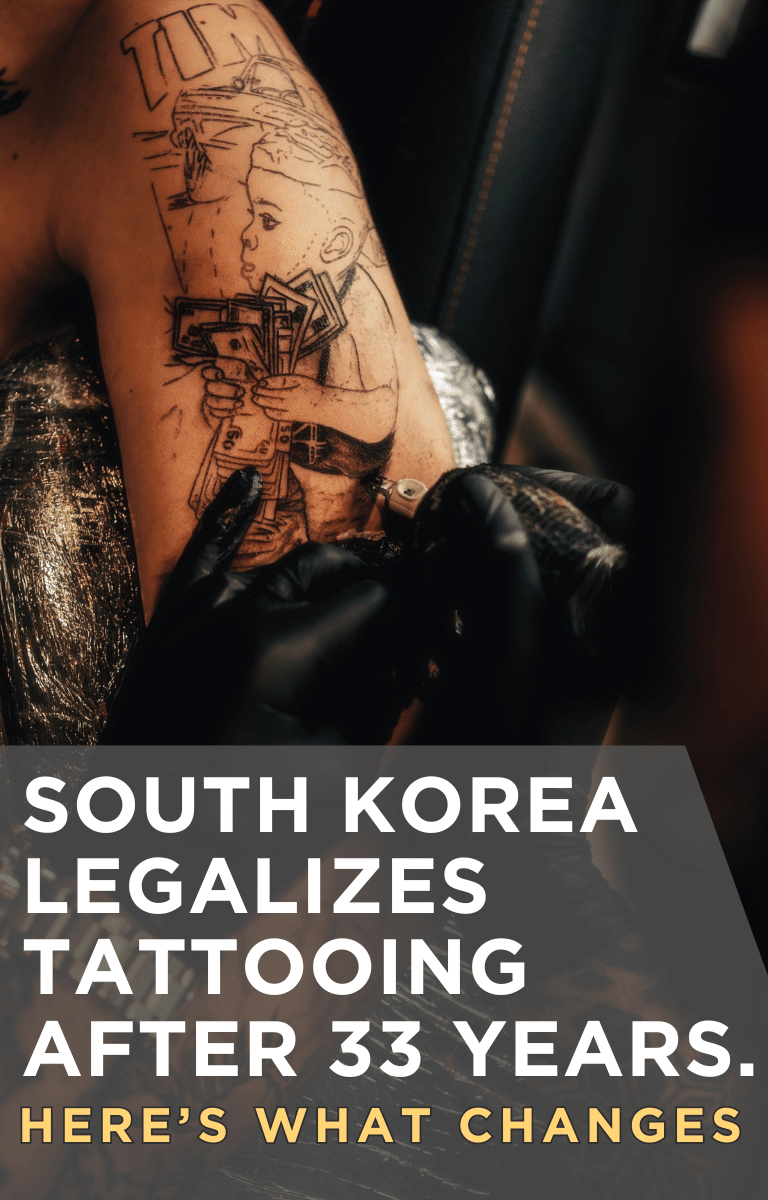
In This Article
- Key Takeaways
- What exactly happened in South Korea?
- Why was tattooing illegal for 33 years?
- What changes now that tattooing is legal?
- Why does this matter if you don’t live in Korea?
- What does this signal about the future of tattooing?
- How do you start a legit tattoo career today?
- What does the Traditional Tattoo Apprenticeship include?
- How does Master Mentorship push you further?
- How accessible is tattoo training for Spanish speakers?
- Ready to become a Tattoo Artist?
- FAQ
For 33 years, tattooing in South Korea was legally treated as a medical procedure. Tattoo Artists without a medical license could be punished just for doing their work. That’s about to change. South Korea’s new tattoo practitioner law legalizes tattooing by people without medical licenses, and it takes effect on October 29, 2027.
The government is already preparing. As Seoul Economic Daily reported, the Ministry of Health and Welfare has launched a nationwide survey of tattoo studios. It has also released detailed hygiene guidelines. At Ink Different Tattoos, we’ve been training professional Tattoo Artists for 15 years. This is a big moment for the craft, so let’s look at what’s changing and why it matters here too.
Key Takeaways
- The law: South Korea enacted its tattoo practitioner law in October 2025, legalizing non-medical tattooing after 33 years. It takes effect October 29, 2027.
- The background: A 1992 Supreme Court ruling classified tattooing as a medical procedure.
- What’s coming: A national licensing exam, a license system, and hygiene and safety rules for tattoo studios.
- The standards: New guidelines require single-use tools and consumables, sterile gloves, consent forms, and client health checks.
- Your move: Ink Different’s Traditional Tattoo Apprenticeship takes 18 to 24 months and ends with a guaranteed job offer.
What exactly happened in South Korea?
South Korea enacted a law on October 28, 2025 that legalizes tattooing by people without medical licenses. It also creates a national qualification system for Tattoo Artists. The law takes effect October 29, 2027.
The law covers both pictorial tattoos and cosmetic tattoos like semi-permanent makeup. It sets up a licensing system for tattoo practitioners and hygiene and safety rules for tattoo studio owners. It also bans tattooing minors without a guardian’s consent.
To get ready, the Ministry of Health and Welfare is surveying tattoo studios across the country. The survey goes to tattoo studio owners and to Tattoo Artists who aren’t tied to any tattoo studio. It takes about three minutes and is completed online.
The questions cover:
- Business basics: When the tattoo studio opened, its business category, the services offered, and how it operates.
- Staffing: How many Tattoo Artists work there, their employment types, and any association memberships.
- Workload: The average number of tattoos per month and how long each one takes.
- Materials: What supplies are used and how much waste is produced.
The ministry will use the results to shape the licensing exam, the license system, and hygiene and safety policies.

Why was tattooing illegal for 33 years?
In 1992, South Korea’s Supreme Court classified tattooing as a medical procedure. After that, Tattoo Artists without medical licenses could be punished under the country’s Medical Service Act.
Critics argued for years that this didn’t match reality. Most tattoos are cosmetic, and medical professionals rarely do them. In practice, the people actually tattooing were the ones at legal risk.
The concern behind the old rule was health and safety, and that part makes sense. Clean technique matters everywhere. In the US, for example, the OSHA bloodborne pathogens standard exists for that reason. South Korea’s new approach keeps the focus on safety but handles it through training, licensing, and hygiene rules instead of a ban.
What changes now that tattooing is legal?
Tattoo Artists in South Korea will be able to work legally through a licensing system with clear hygiene and safety rules.
The ministry’s new standard guidelines show how detailed those rules will be:
- Tattoo studio layout: Tattoo studios are divided into a waiting area, a procedure area, and a cleaning and disinfection area. Equipment should be arranged with foot traffic in mind.
- Single-use tools: Instruments should be sterilized, single-use, and thrown out right after use. Anything reused must be cleaned and disinfected, and sterilization is recommended.
- Single-use supplies: All consumables must be single-use. Pigment cups and gauze are labeled high-risk and must be sterilized.
- Protective gear: Tattoo Artists must follow rules for putting on and removing gloves, masks, and aprons. They must wear sterile gloves while tattooing.
- Client paperwork: Tattoo studios get sample consent forms, tattoo record sheets, and client health status forms.
- Health checks: If a client has a history of hepatitis B or C, the tattoo studio should get a medical opinion before going ahead.
The guidelines also define 55 terms related to facilities, tools, cleaning, and sterilization. They separate tattoos into pictorial and cosmetic categories.
There’s a transition period too. Tattoo studios can register temporarily for up to two years after the law takes effect, even before their Tattoo Artists are licensed.
Why does this matter if you don’t live in Korea?
It shows tattooing being formally recognized as a skilled, licensed profession, even in a country that treated it as a medical act for decades.
The standards South Korea is putting in writing will sound familiar to anyone who has trained properly: single-use supplies, sterile gloves, careful cleaning, consent forms, and client health checks. These are the basics any good tattoo apprenticeship should teach from the start.
Licensing rules in the US vary by state, but the direction is the same everywhere. Professional tattooing depends on proper training and safety habits.
Reality check: A license proves you met the standards. Real skill comes from training under someone who’s done the work.
What does this signal about the future of tattooing?
It signals a move toward professional legitimacy, where training, standards, and licensing define the craft.
Stigma hasn’t disappeared overnight. A 2024 Hankook Research survey found that 66% of South Koreans viewed tattoos or tattooed people as “delinquent or frightening.” Many are now watching to see whether the new law helps shift those views.
In the US, tattooing has come a long way toward mainstream acceptance. That makes professionalism even more important. Clients expect skill, safety, and clear communication from every Tattoo Artist they trust.
How do you start a legit tattoo career today?
You start with a structured tattoo apprenticeship that teaches technique, safety, and professionalism under experienced Mentors.
Here’s a simple path to follow:
- Step One: Commit to the decision. Decide your creative potential is worth more than another year in work that drains you.
- Step Two: Choose real training. Pick a structured tattoo apprenticeship built for beginners, not a weekend crash course.
- Step Three: Master the fundamentals. Learn drawing, line work, machine handling, and hygiene standards from the ground up.
- Step Four: Practice under supervision. Move from synthetic skin to supervised client work with a Mentor’s guidance.
- Step Five: Get licensed and go pro. Meet your state’s requirements and start working professionally.
Not sure which tools you will even touch first? Start with the tools every beginner Tattoo Artist should know. If you are weighing this against a traditional path, see why tattoo apprenticeships are gaining ground as a college alternative.

What does the Traditional Tattoo Apprenticeship include?
Ink Different’s Traditional Tattoo Apprenticeship takes beginners to job-ready in 18 to 24 months, across four phases. No prior art experience is required.
It’s available at 60+ tattoo studios nationwide, where you train hands-on with professional Tattoo Artists. We built it as a real college alternative for people ready to build an AI-proof career.
Here’s what you can expect:
- Personalized hands-on training: Live, in-person mentorship, not pre-recorded videos you watch alone.
- Safety from the start: Hygiene and bloodborne pathogen training built into your tattoo apprenticeship.
- Beginner-friendly: We teach drawing and technique from day one.
- Licensing support: Guidance on meeting your state’s requirements so you can work legally.
- Interest-free payment plans: Flexible options to make training more affordable.
A career that comes with confidence: You finish with job-ready skills, licensing support, and a guaranteed job offer at one of Ink Different’s own tattoo studios. Our 15 years of experience and “Good Humans” culture mean you’re never doing this alone.
Keep in mind: Each Mentor takes on only two tattoo apprentices per tattoo studio, so seats are limited. Real mentorship only works when Mentors can give each tattoo apprentice real attention.
How does Master Mentorship push you further?
Master Mentorship is a one-year, in-person experience where you train with award-winning Master Mentors. It helps you master a style, grow your career, or prepare to open your own tattoo studio. It’s open to beginners and experienced Tattoo Artists.
You learn from Master Mentors Al Fliction, Liz Cook, Kyle Dunbar, Boneface, Jordi Pla, and Marcel Oliveira. It’s intensive, focused skill development for Tattoo Artists who want to level up and stand out.
Once you are building a name, you will want visibility. These platforms help new Tattoo Artists build their brand and turn skill into a following.
How accessible is tattoo training for Spanish speakers?
Ink Different Tattoos offers Spanish-speaking locations in Denver, Orange County, NYC, Miami, San Antonio, and San Diego. Language should never stand between you and this career.
Whether you learn best in English or Spanish, we meet you where you are. If you’re considering a career change, it helps to focus on your craft instead of a language barrier.
Ready to become a Tattoo Artist?
South Korea spent 33 years treating tattooing as a medical act. Now it’s building a licensing system that recognizes Tattoo Artists as skilled professionals. The craft is earning respect around the world, and the path into it has never been clearer.
If you’re ready for a change, read why a tattoo apprenticeship is a smart career change.
Ready to become a Tattoo Artist? Apply now to Ink Different’s Traditional Tattoo Apprenticeship. You’ll get hands-on training at one of 60+ tattoo studios nationwide, licensing support, and a guaranteed job offer. Not sure yet? Fill out our quick questionnaire, and we’ll help you figure out if it’s the right fit.
Frequently Asked Questions
When did South Korea legalize tattooing?
South Korea enacted its tattoo practitioner law on October 28, 2025, legalizing non-medical tattooing after 33 years. The law takes effect October 29, 2027.
Why was tattooing considered a medical act in South Korea?
A 1992 Supreme Court ruling classified tattooing as a medical procedure. Tattoo Artists without medical licenses could then be punished under the Medical Service Act.
What hygiene rules will Korean tattoo studios follow?
Government guidelines call for single-use tools and consumables, sterile gloves, separate cleaning areas, consent forms, and client health checks.
Do I need prior art experience to start a tattoo apprenticeship?
No. Ink Different’s Traditional Tattoo Apprenticeship is built for beginners and teaches drawing, line work, machine handling, and hygiene from day one.
How long does the Traditional Tattoo Apprenticeship take?
It takes 18 to 24 months across four phases, moving you from the fundamentals to supervised client work with licensing support.
What makes Ink Different different from other training options?
You get live, in-person mentorship at 60+ tattoo studios nationwide, licensing support, and interest-free payment plans. You also finish with a guaranteed job offer at one of Ink Different’s own tattoo studios.