
What to Look for in a Tattoo Mentor
September 14, 2026
Tattoo Artist Licensing: What It Means for Your Career, Not Just Your Paperwork
September 14, 2026
In This Article
- Key Takeaways
- Is tattooing a good career in 2026?
- Why is tattooing an AI-proof career?
- How much can tattoo artists earn?
- Who is a tattoo career a good fit for?
- How do you become a tattoo artist in 2026?
- What makes Ink Different different?
- What programs does Ink Different offer?
- Ready to take the first step?
- FAQ
The question isn’t whether you’re talented enough to tattoo. The question is whether it’s a real, worthwhile career you can bet your future on. A tattoo career is a durable, human-centered creative profession where skilled, licensed artists earn a living creating permanent, custom body art that machines and software cannot replicate.
At Ink Different Tattoos, we’ve spent fifteen years helping people turn a restless “someday” into a working reality.
Key Takeaways
- Yes, it’s viable: Tattooing remains a strong, hands-on career in 2026, driven by steady demand for custom, personal art.
- AI-proof: Tattooing requires human touch, trust, and skin work that automation cannot replace.
- Income potential: Skilled Tattoo Artists build income through pricing, reputation, and repeat clients rather than a fixed hourly wage.
- Path to entry: A structured Traditional Tattoo Apprenticeship (18 to 24 months) teaches beginners from scratch with licensing support.
- Beginners welcome: No prior art degree is required to start training as a tattoo apprentice.
Is tattooing a good career in 2026?
Yes, tattooing is a good career in 2026 because it combines creative freedom, human demand, and independence in a way few modern jobs can match. People will always want meaningful art on their skin, and they want a real human to create it.
The early years are mostly foundation work: learning fundamentals, building skill, earning trust. Once that foundation is set, the growth compounds. Your reputation, your client base, and your income all grow from work you own.
Unlike a desk job where your ceiling is set by someone else, tattooing rewards the people who show up and sharpen their craft.
Why is tattooing an AI-proof career?
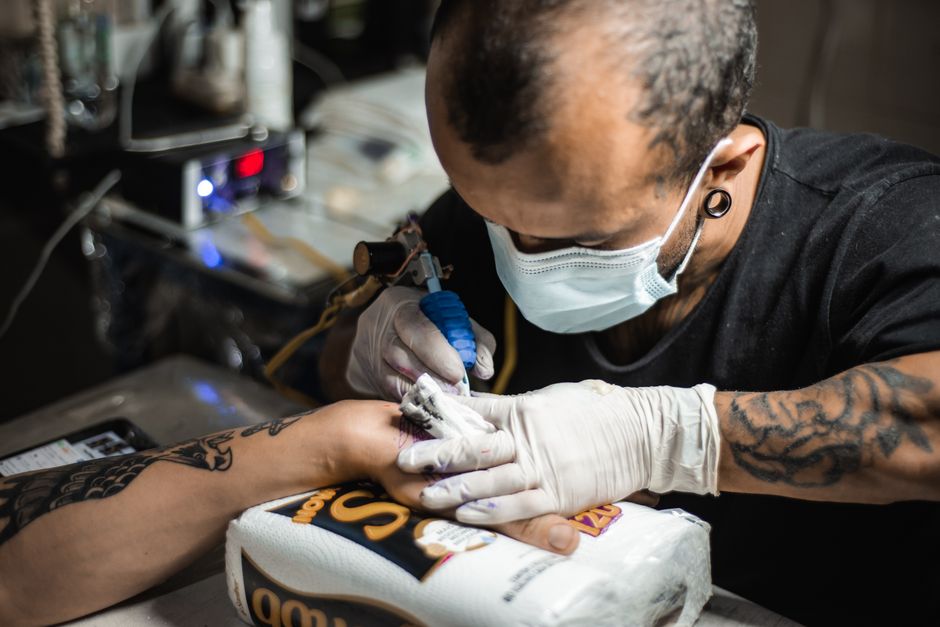
Tattooing is AI-proof because it depends on human touch, real-time judgment, trust, and physical skin work that no algorithm or robot can replicate. A client isn’t just buying a design, they’re buying an experience only a human can deliver.
While AI is quietly replacing spreadsheet jobs, copywriting, and customer service scripts, it cannot hold a tattoo machine steady on living, moving skin. It cannot read a nervous client’s body language or adjust pressure on a bony elbow.
We break this down further in why tattoo artists are still essential. The short version: as automation swallows more careers, hands-on trades built on human connection become more valuable, not less. The Bureau of Labor Statistics on craft and fine artists continues to categorize craft and fine artists as skilled, self-directed workers, a reminder that this is a legitimate profession, not a hobby.
Reality check: If you’re worried about your current job being automated away, learning a physical craft is one of the smartest bets you can make.
How much can tattoo artists earn?
Tattoo Artist income varies widely based on skill, location, reputation, and specialization, and experienced Tattoo Artists often out-earn many salaried office roles. Unlike a fixed paycheck, your earning potential grows as your craft and client base grow.
Early on, income is modest while you build fundamentals. But as your portfolio strengthens and your name spreads, you gain pricing power. Tattoo Artists who specialize in a sought-after style or open their own tattoo studio can build income streams most 9-to-5 jobs never offer.
Your reputation is your engine. That’s why we teach branding early, and why platforms matter so much. See our guide to platforms to help tattoo artists build their brand to understand how modern artists turn skill into visibility into income.
Who is a tattoo career a good fit for?
A tattoo career fits people who crave creative freedom, hands-on work, independence, and a profession where effort directly shapes success. You don’t need a formal art degree; you need drive and a willingness to learn.
This career tends to be a strong fit if you recognize yourself in any of these:
- The stuck creative: You have talent going to waste in a job that ignores it.
- The career changer: You’re done trading your best years for someone else’s vision.
- The complete beginner: You’ve never trained formally, but you’re hungry to start.
- The working artist: You already draw and want a career that pays for it.
If college never felt like the right fit, you’re not alone. Many aspiring artists are choosing tattoo apprenticeships as a college alternative, trading lecture halls and student debt for a hands-on path to a real profession.
How do you become a tattoo artist in 2026?
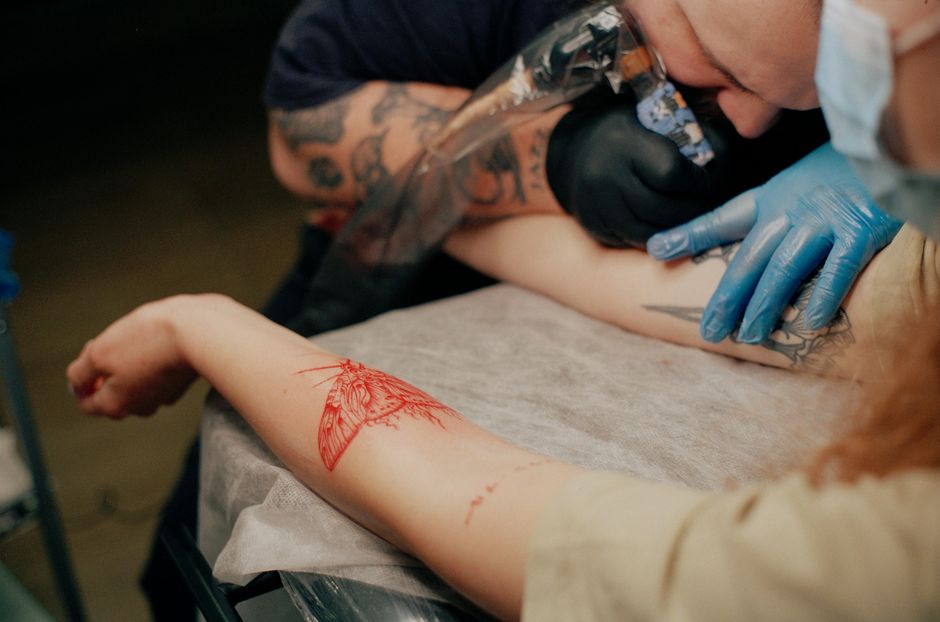
You become a Tattoo Artist by completing a structured tattoo apprenticeship, building a portfolio, meeting your state’s safety requirements, and earning your tattoo license.
- Step 1: Commit to the decision. Stop waiting for “someday.” Decide that this year is when you start building the career you actually want.
- Step 2: Learn the fundamentals. Drawing, line work, shading, and machine handling. Everything grows from these roots.
- Step 3: Get trained under a Mentor. Live, in-person mentorship is where fake-skin practice becomes real skill.
- Step 4: Master safety and hygiene. Study OSHA bloodborne pathogen standards, the backbone of every legitimate Tattoo Studio.
- Step 5: Meet your state’s licensing requirements. Rules vary by state.
- Step 6: Start working professionally. Build your client roster, refine your brand, and grow your income.
Along the way, dodge the common pitfalls. Our guide on mistakes aspiring tattoo apprentices should avoid will save you months of wasted effort. You should also check out the tools every beginner tattoo artist should know to make sure you’re equipped from day one.
What makes Ink Different different?
Ink Different Tattoos offers a nationwide tattoo apprenticeship built as a college alternative, pairing aspiring Tattoo Artists with award-winning Mentors and a supportive “Good Humans” culture. We’ve trained professional Tattoo Artists for fifteen years, since 2011.
You are the hero of this journey. We’re simply the guide who hands you the map, the tools, and the honest feedback you need.
Our culture matters as much as our curriculum. When you train with us, you’re not a number in a lecture hall. You join a family-like community of people who genuinely want you to succeed.
What programs does Ink Different offer?
Ink Different offers two paths: a Traditional Tattoo Apprenticeship for beginners and a Master Mentorship for those chasing advanced skills and business ownership. Both are built around live, in-person training with real Mentors.
The Traditional Tattoo Apprenticeship
Our Traditional Tattoo Apprenticeship runs 18 to 24 months across four progressive phases, with hands-on training in professional tattoo studios where the real growth happens.
- Beginner-friendly: No prior experience needed; we teach you from the ground up.
- Hands-on training: Personalized instruction from live, in-person Mentors.
- Job-ready skills: Graduate prepared to work professionally in the industry.
- Licensing support: We help you navigate your state’s requirements toward an AI-proof career.
Explore how a career change tattoo apprenticeship could be your next move.
Master Mentorship
Our one-year, in-person Master Mentorship is for beginners and experienced Tattoo Artists who want to level up fast. You train alongside celebrity and award-winning Master Mentors including Al Fliction, Liz Cook, Kyle Dunbar, Boneface, and Jordi Pla. It’s built for mastering a specific style, growing your career, and building toward tattoo studio ownership.
Making training accessible for everyone
We offer Spanish-speaking locations so language never blocks your path, including in Denver, Orange County, NYC, Miami, San Antonio, and San Diego. Wherever you’re starting from, there’s a seat with your name on it, though seats are limited, so hesitation costs you.
Ready to take the first step?
Tattooing in 2026 is a legitimate, AI-proof, human-centered career, and the only thing standing between you and it is the decision to start.
Ready to become a tattoo artist? Apply to Ink Different’s Traditional Tattoo Apprenticeship and start building an AI-proof career with licensing support along the way. Prefer to test the waters first? Fill out our quick questionnaire to get personalized support and find out if our Tattoo Apprenticeship Program is right for you.
Frequently Asked Questions
Is tattooing still a good career in 2026?
Yes. Tattooing remains a strong career in 2026 because demand for custom, human-made body art stays high and the work cannot be automated. Skilled, licensed Tattoo Artists build sustainable income and independence.
Do I need art experience to start a tattoo apprenticeship?
No. Ink Different’s Traditional Tattoo Apprenticeship is built for beginners and teaches drawing, line work, and machine handling from scratch. No prior art degree or experience required.
How long does it take to become a tattoo artist?
Most structured tattoo apprenticeships take 18 to 24 months. The exact timeline depends on the program’s structure and how quickly you master each hands-on training phase.
Is tattooing safe from being replaced by AI?
Yes. Tattooing relies on human touch, trust, real-time judgment, and skin work that AI and robots cannot replicate, making it automation-resistant.
What makes Ink Different different from other training?
Ink Different offers live, in-person mentorship from award-winning artists, a “Good Humans” community, and 15 years of experience training professional Tattoo Artists.
Can I do a tattoo apprenticeship if I only speak Spanish?
Yes. Ink Different offers Spanish-speaking locations in Denver, Orange County, NYC, Miami, San Antonio, and San Diego, so language is never a barrier.