How to Become a Tattoo Artist in Texas
July 28, 2026
How to Become a Tattoo Artist in Ohio
July 29, 2026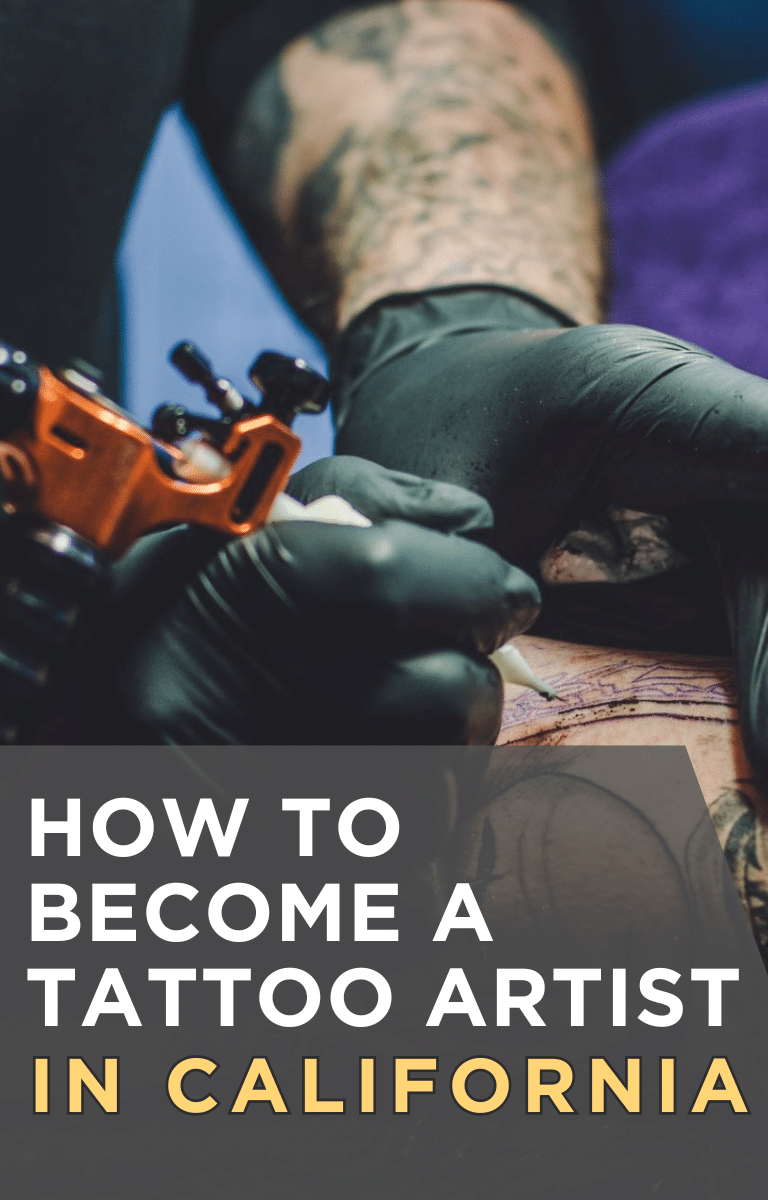
A tattoo license in California isn’t one statewide credential. It’s a county-level registration you earn by meeting state health and safety standards, enforced by your local health department.
Becoming a Tattoo Artist in California means completing hands-on training, a bloodborne pathogens course, and a Hepatitis B decision. Then you register with the county where you plan to work.
Here’s exactly how the system works, what it costs, and how a structured tattoo apprenticeship prepares you for a durable, AI-proof career.
Table of Contents
- How does California regulate tattooing?
- What does that mean for you as an aspiring Tattoo Artist?
- How do you get a tattoo license in California step by step?
- What does a tattoo license in California cost?
- What if you are moving to California from another state?
- What mistakes should you avoid?
- How do you learn to tattoo with Ink Different?
- Frequently Asked Questions
Key Takeaways
- Local registration: California uses a county model, so you register with the Local Enforcement Agency where you work, not a state board.
- Governing law: The Safe Body Art Act, Cal. Health and Safety Code sections 119300 to 119328, sets the statewide floor.
- Core requirements: You must be 18 with government ID, complete a Hepatitis B decision, and finish an approved bloodborne pathogens course.
- Example fee: Los Angeles County lists a $54 initial registration fee with annual renewal, but always confirm your own county.
- Career upside: A Professional Tattoo Artist can earn over $106,000 a year per ZipRecruiter.
How does California regulate tattooing?
California regulates tattooing through the Safe Body Art Act. This state law sets minimum health and safety rules, then hands registration, inspection, and enforcement to each county’s Local Enforcement Agency.
This is a hybrid system. The state sets the floor, and the counties run the day-to-day details.
The controlling statute is Cal. Health and Safety Code sections 119300 to 119328. It defines who counts as a body art practitioner, what infection control practices are required, and what documentation you must keep.
It does not, however, create a single statewide license you can carry everywhere.
Instead, the authority that matters to you is the Local Enforcement Agency, or LEA, in your county. Los Angeles County and Orange County, for example, each run their own body art registration process, with their own forms and inspection schedules. This means the same state law can look slightly different depending on where you work.
Because California uses a county-local model, your first step is finding which LEA covers your area. Then read their specific registration packet before you tattoo the public.
What does that mean for you as an aspiring Tattoo Artist?
It means your tattoo license in California is really a county registration. Your job is to meet the statewide health requirements, then file with the correct LEA before you tattoo the public. There is no state exam and no state-issued Tattoo Artist number to chase.
The verified requirements under the Safe Body Art Act are straightforward. You must be at least 18 and able to show a government-issued ID. You must also address Hepatitis B vaccination, either by getting vaccinated or signing a declination. And you must complete a bloodborne pathogens course that your LEA approves.
Once those steps are done, you register with the county where you work. The Safe Body Art Act is clear that counties handle registration, inspection, and approved-trainer lists. So two Tattoo Artists in different counties may follow different paperwork, even though the underlying law is the same.
The state doesn’t spell out a required number of supervised training hours for Tattoo Artists. That doesn’t make training optional. Strong, structured training is what separates a registered practitioner from a genuinely skilled Professional Tattoo Artist.
How do you get a tattoo license in California step by step?
You get licensed by turning 18, learning the craft through a proper tattoo apprenticeship, and completing your Hepatitis B and bloodborne pathogens requirements. Then you register with your county’s Local Enforcement Agency. Here is the sequence most people follow.
Step 1: Confirm you meet the age and identity requirements
You must be at least 18 years old and hold a government-issued ID. This is the baseline for every body art practitioner in California, and your LEA will verify it at registration.
Step 2: Learn to tattoo through a structured tattoo apprenticeship
This is the most important step. California’s verified facts don’t list a state exam, so your competence comes from training under an experienced Mentor. A quality Traditional Tattoo Apprenticeship teaches sterilization, skin theory, machine handling, needle groupings, line work, shading, and client care until your work is studio ready.
Step 3: Handle your Hepatitis B decision
Get the Hepatitis B vaccination or sign a formal declination. Either path satisfies the requirement, but you must keep the documentation. Because you will work with blood, most Tattoo Artists choose vaccination.
Step 4: Complete an LEA-approved bloodborne pathogens course
Take a bloodborne pathogens, or BBP, course and keep the completion certificate. Confirm the course you pick is recognized by your county before you pay for it. The requirement is specifically an LEA-approved course.
Step 5: Register with your county
File your body art practitioner registration with the LEA in the county where you will tattoo. In Los Angeles County, the listed initial fee is $54 with annual renewal. Your county’s fee and forms may differ, so use the official county page.
Tip: Build your documentation folder early. Keep your ID, Hepatitis B record, and BBP certificate together, so registration and annual renewal go smoothly.
What does a tattoo license in California cost?
The clearest verified cost is Los Angeles County’s $54 initial registration fee, with annual renewal. Total cost depends on your county, your bloodborne pathogens course, and your Hepatitis B choice. California doesn’t publish one universal fee, because counties set their own.
Break your costs into a few categories. There is the county registration fee, which LA County lists at $54 initially. There is the BBP course, a separate paid course from an approved provider. And there is the Hepatitis B vaccination series, if you choose to be vaccinated.
Beyond registration, the actual investment in this career is your training. That is the difference between meeting the legal minimum and building the skill that lets you charge professional rates. A Professional Tattoo Artist can earn over $106,000 a year, according to ZipRecruiter. That makes training an investment, not just an expense.
Because fees change and vary by county, don’t treat any number here as final except the verified LA County figure. Always confirm current costs on your county’s official page before you file.
What if you are moving to California from another state?
California’s transfer status for out-of-state credentials is unclassified in the verified facts. If you are relocating, assume you must register locally and meet California’s requirements directly. Do not assume another state’s license carries over.
Because the state runs a county-local model, there is no statewide reciprocity office to process an out-of-state license into a California one. Treat the process as registering fresh. Confirm your age and ID, sort out Hepatitis B, complete an LEA-approved BBP course, and register with your new county.
If you built strong skills elsewhere, that experience is still valuable. It simply means you focus on paperwork and county registration, rather than learning the craft from scratch. Contact your destination county’s LEA directly to confirm exactly what they need from an incoming Tattoo Artist.
What mistakes should you avoid?
The most common mistakes include assuming California has one statewide license and taking a bloodborne pathogens course your county doesn’t accept. Another mistake is treating registration as a substitute for proper training. Each of these can cost you time and money.
- Assuming a state board exists: There is no single state license. Your credential is a county registration through your LEA.
- Skipping the “LEA-approved” check: A BBP certificate only counts if your county recognizes the provider. Verify before you enroll.
- Registering in the wrong county: You register where you work. If you move tattoo studios across county lines, confirm what that means for your registration.
- Confusing registration with skill: Meeting the legal floor doesn’t make you a hireable Tattoo Artist. Clients and tattoo studios judge your portfolio.
- Guessing at fees: Only the LA County $54 figure is verified here. Do not assume your county matches it.
Warning: Never invent or assume a supervised-hours number, exam, or fee for California. If a detail isn’t on your county’s official page, call the LEA and ask.
How do you learn to tattoo with Ink Different?
Ink Different teaches the craft through a structured, Mentor-led Traditional Tattoo Apprenticeship. You build a portfolio, work toward a guaranteed job offer, and get support navigating California’s county registration.
- Mentor-led training: Learn under an experienced Mentor who teaches sanitation, bloodborne pathogens fundamentals, and proper technique.
- Portfolio building: Develop the technical and artistic skills tattoo studios actually hire for, not just the legal minimum.
- Guaranteed job offer: Graduate with a guaranteed job offer, backed by training that prepares you to work from day one.
- Licensing support: Get help understanding California’s county registration steps, so the paperwork never becomes a barrier.
- College alternative: Build a skilled trade without taking on college debt.
- AI-proof career: Learn a hands-on skill that depends on human judgment, not automation.
Tattooing is one of the most AI-proof careers left. A machine can’t sit with a client, read their skin, or place permanent art by hand. That hands-on skill is exactly what we train, and it’s what keeps this career durable.
We hold our Traditional Tattoo Apprenticeship to a high standard, so our graduates walk into a tattoo studio ready to work, not just legally registered.
Ready to become a Tattoo Artist? Apply now to Ink Different’s Traditional Tattoo Apprenticeship and start building an AI-proof career, with licensing support along the way.
Frequently Asked Questions
Do I need a state tattoo license in California?
No. California uses a county model. You register as a body art practitioner with the Local Enforcement Agency in your county, under the Safe Body Art Act, rather than through a single statewide license.
What are the basic requirements for a tattoo license in California?
You must be at least 18 with a government-issued ID, and address Hepatitis B vaccination or sign a declination. You’ll also need an LEA-approved bloodborne pathogens course and county registration.
How much does it cost to register as a Tattoo Artist in California?
Costs vary by county. Los Angeles County lists a $54 initial registration fee with annual renewal, but confirm current fees on your own county’s official page.
Does California require a certain number of supervised training hours?
The verified state facts don’t specify a supervised-hours number. Check your county’s Local Enforcement Agency for local expectations, and pursue a strong tattoo apprenticeship to become genuinely studio ready.
Can I transfer my tattoo license from another state to California?
California’s transfer status is unclassified, so assume no automatic reciprocity. Plan to meet California’s requirements and register directly with the county where you intend to work.
How long does it take to become a Tattoo Artist in California?
The registration steps are quick, but building the skill to work professionally takes dedicated training. A structured Traditional Tattoo Apprenticeship is the reliable path to a hireable portfolio.


