
Become a Tattoo Artist in Tacoma, Washington
November 2, 2026
Become a Tattoo Artist in Tallahassee, Florida
November 2, 2026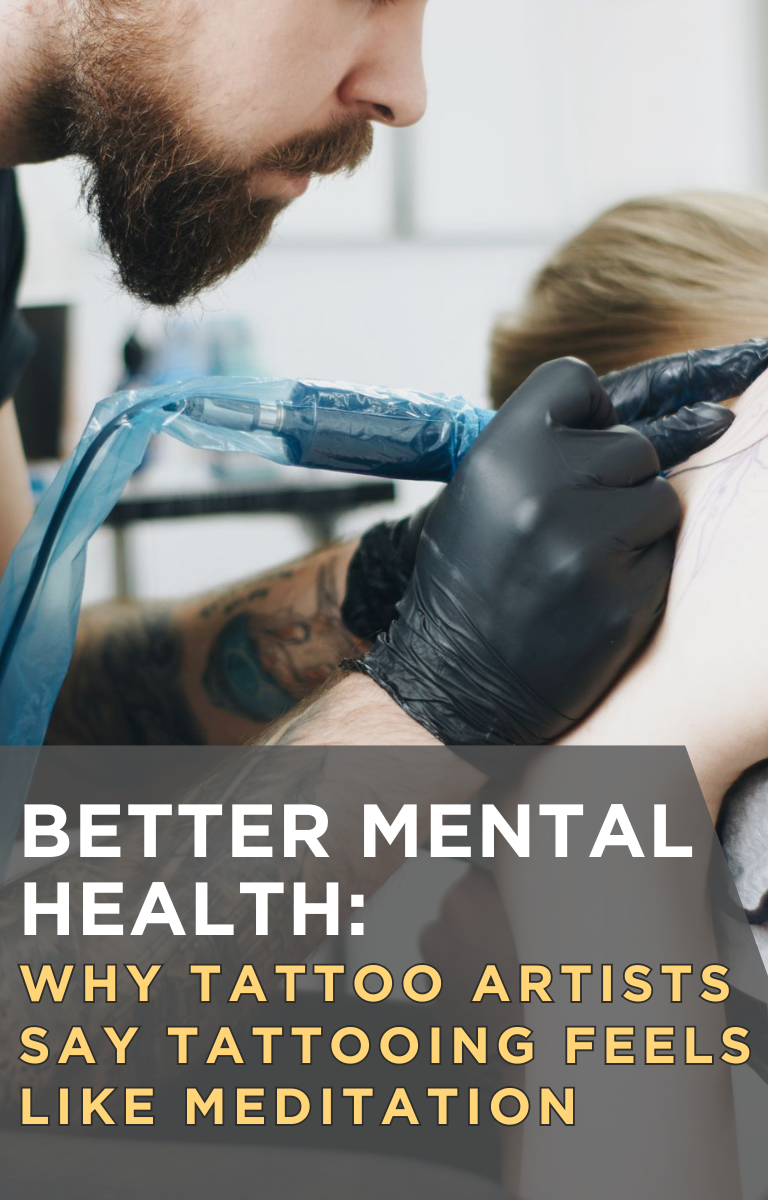
In This Article
- Key Takeaways
- Why does tattooing feel like meditation?
- What does the science say about creative focus and mental health?
- What do working Tattoo Artists say about the meditative state?
- How can you find that same calm in your own craft?
- Is your current job quietly draining your mental health?
- What is the Traditional Tattoo Apprenticeship?
- How does Master Mentorship push you further?
- Is tattoo training available in Spanish?
- Ready to trade burnout for a calmer calling?
- FAQ
Tattoo meditation is the term some Tattoo Artists use for the deep, present-focused state they enter while working, where concentration on line, shading, and breath quiets busy thoughts and produces a sense of calm. Some Tattoo Artists compare it to meditation.
This article looks at why, what research says about creative focus and stress, and how you could build a career around it. At Ink Different Tattoos, we have spent 15 years training Tattoo Artists, and we want you to understand the calm side of the craft as well as the skill side.
Key Takeaways
- Flow state: Tattooing demands focused, present attention that some Tattoo Artists compare to meditation and mindfulness.
- Research: A Drexel University study found that 45 minutes of art making lowered stress hormone levels in about 75% of participants, regardless of art experience.
- Mind and hands: Repetitive hand work, steady breathing, and present-moment attention can quiet a busy mind.
- Career path: Ink Different’s Traditional Tattoo Apprenticeship trains beginners for an AI-proof career with licensing support.
- Next step: Seats are limited, with only two apprentices per tattoo studio per Mentor.
Why does tattooing feel like meditation?
Tattooing feels like meditation because it demands total present-moment focus, steady breathing, and repetitive precision, which can quiet the anxious, wandering mind in a way similar to mindfulness practice.
When you tattoo, there is little room for yesterday’s regrets or tomorrow’s worries. Your attention narrows to a single moving point: the needle, the skin, the line. Psychologist Mihaly Csikszentmihalyi called this kind of full absorption in a challenging task “flow,” a state many people find deeply rewarding.
The repetition becomes a rhythm. The work pulls you out of your head and into your hands, and that shift is where the calm lives.
What does the science say about creative focus and mental health?
Research links hands-on creative work to lower stress, because absorbing, skill-based tasks can reduce rumination and ease the body’s stress response.
A Drexel University study measured the stress hormone cortisol in 39 adults before and after 45 minutes of art making. Cortisol dropped in about 75% of participants, and the effect did not depend on how much art experience they had. About 25% saw no change or an increase, so results vary. Tattooing was not part of the study, and it was small, but it shows that making things by hand can have measurable effects on stress.
Calm is not a cure. If stress or anxiety is affecting your health, a doctor or licensed therapist can help. Creative work can be one part of a healthier routine.
What do working Tattoo Artists say about the meditative state?
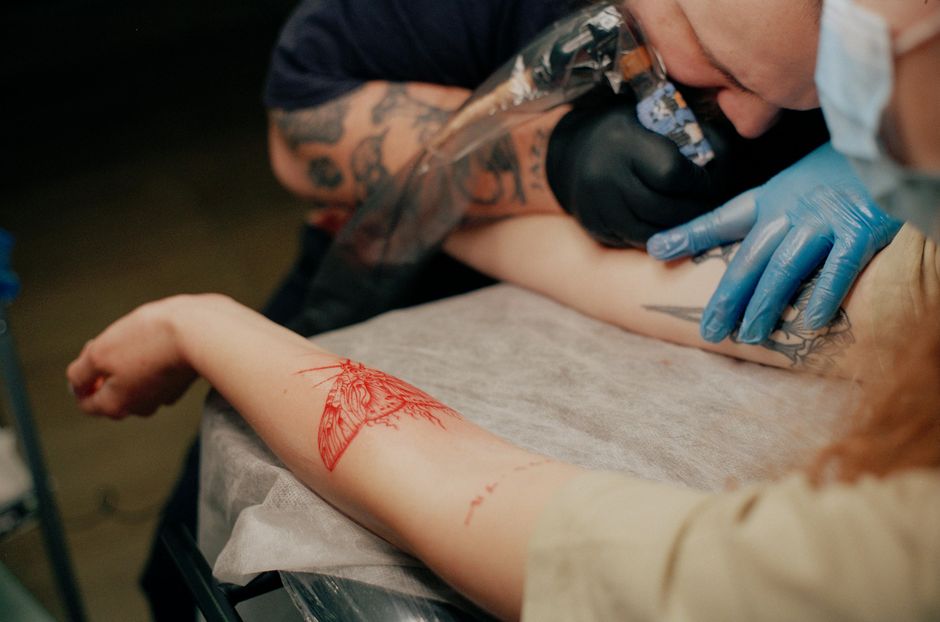
Some working Tattoo Artists describe hours at the tattoo machine as a form of moving meditation, where daily pressures fade and they feel grounded and present.
Research on Tattoo Artists themselves is limited, but it points the same direction. A qualitative interview study of Tattoo Artists in Amsterdam suggested that artists stay healthy for work partly because they have autonomy and experience their work as valuable.
Our Master Mentors have spent thousands of hours behind the machine, and they teach the habits that make steady, focused work possible. That calm is a skill you can learn, and it builds over time.
Pro Tip: The meditative calm of tattooing does not arrive on day one. It grows as your hands gain confidence and your foundations get stronger.
How can you find that same calm in your own craft?
You find the meditative calm of tattooing by building strong fundamentals first, then practicing consistently until the technical work becomes second nature and your focus can settle.
Flow is not luck. It is the reward for repetition and skill. Here is a simple path to start building that calm, whether you are doodling at your kitchen table or practicing on fake skin.
- Step One: Master your breathing. Slow, steady breaths support every meditative practice and every clean line.
- Step Two: Build daily drawing habits. Repetition trains both your hand and your focus.
- Step Three: Learn proper technique and safety. Confidence comes from knowing the fundamentals, including hygiene under the OSHA bloodborne pathogen standards.
- Step Four: Practice under a live Mentor. Nothing speeds up calm competence like in-person feedback from someone who has walked the path.
- Step Five: Protect your clients’ healing. Follow trusted aftercare guidance like the American Academy of Dermatology tattoo care guidelines so your work lasts.
If you want to avoid the common pitfalls, read our guide on the mistakes aspiring tattoo apprentices should avoid before you pick up a machine.
Is your current job quietly draining your mental health?
If your job leaves you anxious, numb, or creatively unfulfilled, it may be wearing on your mental health, and a hands-on creative career can offer a different kind of focus and purpose.
You are not alone in feeling this. According to the American Psychological Association’s 2023 Work in America Survey of 2,515 employed adults, 22% of workers said they have experienced harm to their mental health at work, and 19% described their workplace as very or somewhat toxic.
Be honest with yourself for a moment. Does Sunday night fill you with dread? Does your creative side feel unused? That low hum of unfulfillment is worth paying attention to. If it is affecting your health, a doctor or licensed therapist can help, and a career change can be one part of the picture.
You do not have to keep trading your best hours for work that empties you out. A tattoo apprenticeship is increasingly recognized as a serious college alternative for people who want meaningful, human work. And because it is built on human connection and craft, it is an AI-proof career, as we explain in why Tattoo Artists are still essential.
What is the Traditional Tattoo Apprenticeship?
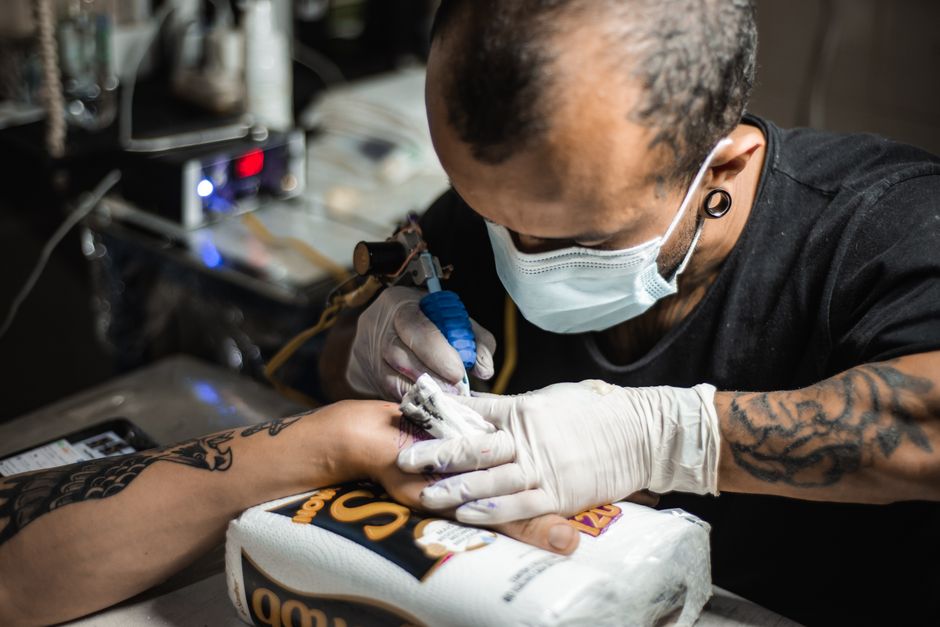
The Traditional Tattoo Apprenticeship at Ink Different Tattoos is an 18 to 24 month, four-phase tattoo apprenticeship that takes beginners from zero experience to job-ready, with licensing support along the way.
We built this tattoo apprenticeship around real, personalized, hands-on training. You train in tattoo studios led by experienced Mentors, and no prior art experience is required, because we teach the fundamentals from the ground up.
Here is what you can expect:
- Phase-based structure: A clear four-phase path from drawing basics to supervised live client work.
- Live, in-person mentorship: Real feedback from real Tattoo Artists, not just videos on a screen.
- Licensing support: Guidance on state requirements, including how to get your tattoo license in Texas and how long a tattoo license takes in Colorado.
- A career that comes with confidence: You graduate with job-ready skills, licensing support, and a guaranteed job offer at one of Ink Different’s own tattoo studios.
A “Good Humans” culture: A supportive, family-like community so you never walk the path alone.
This is a real path to working professionally in a craft many artists find absorbing and rewarding.
How does Master Mentorship push you further?
Master Mentorship is a one-year, in-person training track for beginner and experienced artists who want intensive skill development, style mastery, and the tools to grow their own brand or business.
If you already have some experience, or you simply want to accelerate, Master Mentorship connects you directly with our award-winning Master Mentors: Al Fliction, Liz Cook, Kyle Dunbar, Boneface, Jordi Pla, Kara Gutierrez, Joey Tattoo, James Vaughn, Big Jaz, Marcel Oliveira, Big Ceeze, BillyJack Gunter, Javi Antunez and Sebastian Murphy. This is where artists sharpen a signature style, grow their careers, and learn the business side of the craft.
Once your skills are strong, building your name matters. Explore our roundup of platforms to help Tattoo Artists build their brand.
Is tattoo training available in Spanish?
Yes. The Traditional Tattoo Apprenticeship is available at 60+ tattoo studios nationwide, each led by one of our chosen Mentors, including Spanish-speaking locations near Denver, in Orange County, near New York City, in Miami, near San Antonio, and in San Diego.
We believe excellence should not be gated by language. Seats are limited, with only two apprentices per tattoo studio per Mentor.
A note on timing: Seats in our Tattoo Apprenticeship Program are limited because live mentorship means small, focused groups. The sooner you start, the sooner the calm begins.
Ready to trade burnout for a calmer calling?
The calm many Tattoo Artists describe comes from skill built over time, and the first step is deciding to begin. Our “Good Humans” culture means you build that skill inside a supportive, family-like community.
Ready to become a Tattoo Artist? Apply now to Ink Different’s Traditional Tattoo Apprenticeship and start building an AI-proof career, with licensing support along the way. Prefer to explore first? Fill out our quick questionnaire to get personalized support and find out if the Traditional Tattoo Apprenticeship is right for you.
Frequently Asked Questions
Why do tattoo artists say tattooing feels like meditation?
Tattooing requires deep, present-moment focus and steady breathing, which can quiet anxious thoughts. Some Tattoo Artists describe this flow state as moving meditation.
Can tattooing really improve your mental health?
It may help some people. Focused creative work is linked to lower stress, but tattooing has not been studied directly, and it is not a substitute for professional care if you are struggling.
Do I need art experience to start a tattoo apprenticeship?
No. Ink Different’s Traditional Tattoo Apprenticeship teaches drawing fundamentals, technique, and safety from day one, with no prior experience required.
How long does the Traditional Tattoo Apprenticeship take?
The Traditional Tattoo Apprenticeship takes 18 to 24 months through four structured phases, moving you from foundational skills to supervised live client work.
What makes Ink Different Tattoos different from other training?
Ink Different offers live, in-person mentorship from award-winning Master Mentors, a four-phase structure, a supportive culture, and 15 years of experience training professional Tattoo Artists.
Where can I find Spanish-speaking tattoo training?
The Traditional Tattoo Apprenticeship is available at 60+ tattoo studios nationwide, including Spanish-speaking locations near Denver, in Orange County, near New York City, in Miami, near San Antonio, and in San Diego.