
Become a Tattoo Artist in Fort Worth, Texas
October 22, 2026
Become a Tattoo Artist in Mesa, Arizona
October 23, 2026
In This Article
- Key Takeaways
- What Does Tattooing Really Ask of You?
- Why Does Commitment Matter More Than Talent?
- What Is Craft in Tattooing?
- How Do You Build the Foundation?
- How Do You Know You’re Ready to Commit?
- What You Can Expect from Our Traditional Tattoo Apprenticeship
- Mentorship That Pushes Your Brand and Skills Further
- Making Tattoo Training Accessible for Everyone
- Ready to Become a Tattoo Artist?
- Frequently Asked Questions
Among creative careers for veterans, tattooing stands out because it rewards patience and long-term commitment more than natural talent. It’s a hands-on craft you build through 18 to 24 months of steady training, and if you’ve served, the habit of seeing hard things through may already be part of how you work.
This guide covers what the craft actually asks of you day to day, why commitment matters more than talent, how the foundation gets built step by step, and how to tell when you’re ready.
Key Takeaways
- The real ask: Tattooing rewards consistent practice and patience far more than natural talent.
- Craft is earned: Mastery comes from repeating the fundamentals until they’re second nature.
- Timeline: Ink Different’s Traditional Tattoo Apprenticeship takes 18 to 24 months across four phases.
- No experience needed: Beginners start from scratch with hands-on mentorship from professional Tattoo Artists.
- What you finish with: Working skills, licensing support, and a guaranteed job offer.
What Does Tattooing Really Ask of You?
Tattooing asks for patience, consistency, and the discipline to keep improving long after the excitement of starting wears off. It’s not a weekend hobby. It’s a trade you build with your hands and your attention, one session at a time.
Every line you place is permanent, and your client trusts you with their skin for life. That trust is the heart of the job, and it’s why the craft asks so much.
This page is for you if you’re leaving the military or already out, you’re drawn to hands-on, creative work, and you want an honest picture of what it takes before you commit.

Why Does Commitment Matter More Than Talent?
Tattooing is a skill built through repetition. Only consistent effort over months turns shaky first lines into confident, professional work. Talent can give you a head start, but commitment is what gets you to the finish line.
That’s where your experience can help. If you’ve served, you’ve likely spent a long stretch working toward a standard, showing up when it wasn’t easy, and finishing what you started. A tattoo apprenticeship asks for that same kind of follow-through over 18 to 24 months.
The early months are often the hardest, because progress is slow and hard to see. The people who make it are usually the ones who keep practicing through that stretch.
Remember this: Nobody is born a Tattoo Artist. Every professional started as a beginner who kept going.
What Is Craft in Tattooing?
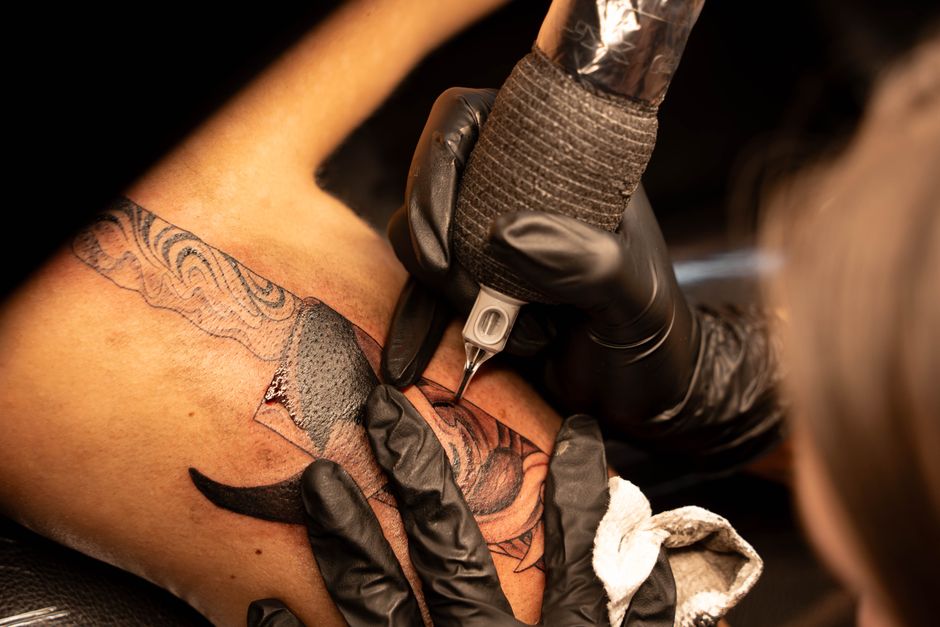
Craft in tattooing means mastering the technical fundamentals: steady line work, smooth shading, color theory, machine control, and an understanding of how skin takes and holds ink. It’s the difference between a nice drawing and a tattoo that holds up for a lifetime.
Craft also covers the things clients never see, like a clean setup and strict safety habits. Professional tattooing follows bloodborne pathogen safety practices based on OSHA’s Bloodborne Pathogens standard, and following them every time is part of the job.
How Do You Build the Foundation?
You build it in stages: drawing first, then machine handling, then supervised practice, then real clients under a Mentor’s eye. Rushing any stage weakens everything that comes after it.
Step one: Master drawing fundamentals. Train your eye and hand with line work, proportion, and composition before you ever pick up a tattoo machine.
Step two: Learn machine control. Understand how machines, needles, and inks behave so your hands move with intention.
Step three: Practice on synthetic skin. Repeat core techniques until consistency becomes muscle memory.
Step four: Tattoo real clients under supervision. Put it all together with a Mentor guiding you in real time.
Step five: Prepare for licensing. Work toward meeting your state’s requirements so you’re ready to work.
Licensing rules vary by state, so it helps to know yours early.
How Do You Know You’re Ready to Commit?
You’re ready when you can honestly picture yourself practicing the same fundamentals for months, and you still want to do it. You don’t need to feel fearless. You just need to be willing to put in the time.
A few practical signs you’re ready:
- You can set aside consistent time for training and practice.
- You’ve planned how you’ll handle money while you train.
- You’re drawn to hands-on, creative work, not just the idea of it.
- You’re comfortable being a beginner again.
If you’re wondering about the long-term outlook, tattooing is human, hands-on work that automation can’t replace. We explore this more in why tattoo artists are still essential.
What You Can Expect from Our Traditional Tattoo Apprenticeship?
Ink Different’s Traditional Tattoo Apprenticeship takes 18 to 24 months across four phases. It trains beginners into working Tattoo Artists, with licensing support and a guaranteed job offer when you finish.
We’ve been training new Tattoo Artists since 2011, with 60+ locations nationwide. You don’t need any prior art experience. You learn hands-on from Mentors who are professional Tattoo Artists, inside working tattoo studios, and you move from fundamentals to confident client work one phase at a time.
To be straight about what we can’t promise: how fast you move through each phase depends on your practice and progress, and licensing timelines depend on your state. That’s exactly where commitment pays off.
Our culture: We call it “Good Humans.” You’ll train inside a supportive community of Mentors and fellow tattoo apprentices who have your back from day one.
Seats are limited because real, in-person mentorship cannot be mass-produced. If you’re considering a leap, our post on the career change tattoo apprenticeship speaks directly to you.
Mentorship That Pushes Your Brand and Skills Further
The Master Mentorship is Ink Different’s one-year, in-person intensive for experienced Tattoo Artists who want to master a specific style, grow their career, and build toward owning a tattoo studio.
You train directly with celebrity and award-winning Master Mentors, including Al Fliction, Liz Cook, Kyle Dunbar, Boneface, and Jordi Pla. Most people start with the Traditional Tattoo Apprenticeship, and the Master Mentorship is where you can go once you’re working.
Making Tattoo Training Accessible for Everyone
With 60+ locations nationwide, there’s a good chance you can train close to home. We also have Spanish-speaking locations in Denver, Orange County, NYC, Miami, San Antonio, and San Diego, so language doesn’t have to stand between you and a new career.
Wherever you train, the same standard applies. What’s left is your decision to begin.
Ready to Become a Tattoo Artist?
Tattooing asks for your patience, your commitment, and your respect for the craft. In return, it offers a hands-on, creative career that’s built on your own skill and your own name.
If you’re thinking about timing, here’s how to start your tattoo apprenticeship this spring.
Ready to become a Tattoo Artist? Apply Now to Ink Different’s Traditional Tattoo Apprenticeship. Not sure yet? Fill out our quick questionnaire for personalized support.
Keep reading in this series:
Frequently Asked Questions
Is tattooing one of the creative careers for veterans worth considering?
Yes, if you’re drawn to hands-on, creative work and you’re ready for a long commitment. Tattooing rewards patience and steady practice, and it doesn’t require a college degree.
What hands-on careers for veterans don’t need a degree?
Many skilled trades don’t, including tattooing. Tattoo Artists train through a tattoo apprenticeship and get licensed in their state.
Do I need prior art experience to begin?
No. Ink Different’s Traditional Tattoo Apprenticeship is built for beginners and starts with drawing fundamentals.
How long does the Traditional Tattoo Apprenticeship take?
It takes 18 to 24 months across four phases, with hands-on training under Mentors in professional tattoo studios.
What does tattooing actually require of me?
Commitment, patience, and respect for the craft. Consistent daily practice matters far more than natural talent.