
Become a Tattoo Artist in Reno, Nevada
October 20, 2026
Become a Tattoo Artist in Lubbock, Texas
October 21, 2026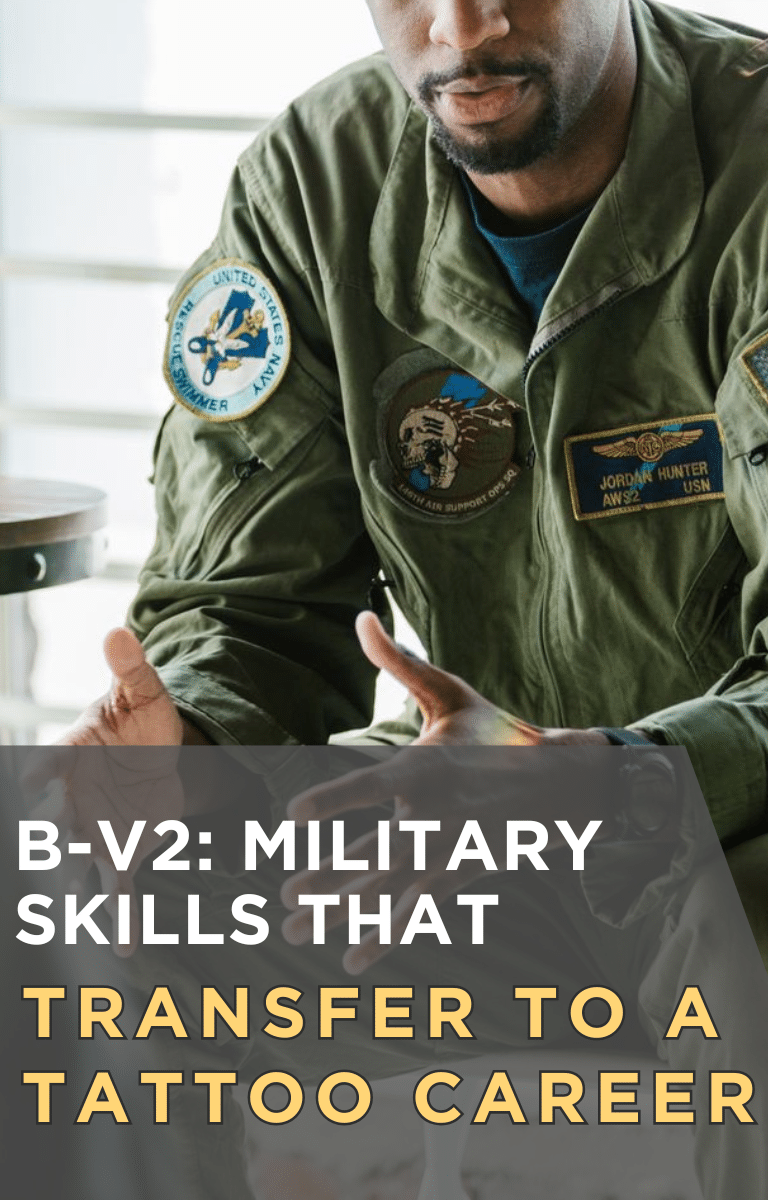
In This Article
- Key Takeaways
- What military skills transfer to a tattoo career?
- How does military discipline help you become a Tattoo Artist?
- Why does attention to detail matter in tattooing?
- How does performing under pressure translate to the Tattoo Studio?
- Can leadership and mentorship skills build your tattoo brand?
- How do you turn military experience into a tattoo career?
- What can you expect from our Traditional Tattoo Apprenticeship?
- How does the Master Mentorship push your skills further?
- Ready to become a Tattoo Artist?
- Frequently Asked Questions
The military skills for civilian jobs that carry over most directly into tattooing are focus, precision, discipline, hygiene protocols, and working under pressure. Each one shows up in the daily work of a tattoo apprenticeship, from drawing the same line until it’s automatic to keeping a clean, safe setup for every client.
This guide breaks down how each skill shows up in real tattoo work, where you’ll still need to learn something new, and how to turn your experience into a career with a structured tattoo apprenticeship.
Key Takeaways
- Focus: Long sessions of fine detail work where every line is permanent.
- Precision: Clean lines, accurate placement, and a setup done to spec every time.
- Discipline: Daily practice and showing up on routine, not mood.
- Hygiene protocols: Strict bloodborne pathogen safety on every client.
- Working under pressure: Steady hands during long sessions and with nervous clients.
What military skills transfer to a tattoo career?
The skills that carry over most directly are focus, precision, discipline, hygiene protocols, and working under pressure. Relating to people from all walks of life helps too, since every client is different.
These aren’t tattoo skills yet. They’re habits. A tattoo apprenticeship gives those habits a new job: learning a craft where consistency and standards matter every single day.
Here’s the honest part: your habits give you a head start, not a shortcut. You’ll still be learning to draw, handle a machine, and work on skin from scratch, and that takes 18 to 24 months of steady training. What your experience changes is how you handle that training.
This page is for you if you’re leaving the military or already out, you’re weighing a civilian career, and you want to know whether your experience actually fits the work.
Think of it this way: You already completed one of the toughest training programs on earth. A tattoo apprenticeship is you redeploying those skills toward a creative career you actually own.
How does military discipline help you become a Tattoo Artist?
Discipline is what keeps you practicing through the slow early months, when progress is hard to see.
Tattooing takes more repetition than most people expect. You’ll draw the same line, circle, and shading pattern over and over until your hand does it without thinking. A lot of beginners lose steam here because there’s no quick payoff.
If you’re used to working on routine and standards instead of motivation, that stretch feels familiar. You show up, put in the reps, and trust the process.
Discipline also helps you avoid the most common early slip-ups. Read our guide on mistakes aspiring tattoo apprentices should avoid.

Why does attention to detail matter in tattooing?
Tattoos are permanent, so precision isn’t optional. Clean lines, accurate placement, and a safe setup protect both the result and the client.
On the art side, a line that wanders or a stencil placed a little off doesn’t wash out. Getting it right the first time is the job.
On the safety side, hygiene protocols are strict. Tattooing involves blood exposure, so you’ll follow bloodborne pathogen safety practices based on OSHA’s Bloodborne Pathogens standard, including sterilization, cross-contamination prevention, and safe disposal. If you’re used to following a checklist exactly, every time, this part of the work will feel natural.
How does performing under pressure translate to the Tattoo Studio?
Working under pressure keeps your hands steady and your decisions calm when a session runs long or a client gets nervous.
Focus is a big part of that. During a long session, you’re watching line weight, depth, and placement at the same time, for hours, without letting your attention drift. One lapse can show up in the finished piece. If you’re used to staying locked in on a task until it’s done right, that kind of sustained concentration is a real advantage.
A big tattoo can take hours. The client may be uncomfortable, the design has to land exactly right, and you can’t stop halfway through. Staying composed through all of that is a real skill, and clients can feel it when you have it.
Confidence at the machine comes from preparation and repetition, the same way it does anywhere else. The more you’ve practiced, the calmer you’ll be when it counts.
It’s also why the craft lasts. Tattooing is human, hands-on work that automation can’t replace, which is why tattoo artists are still essential.
Can leadership and mentorship skills build your tattoo brand?
Yes. Leading, listening, and communicating clearly all help you build trust with clients and grow a following.
Tattooing is as much about people as it is about skill. Your clients come from every background, and the consultation is where trust gets built: listening to what they want, guiding them toward a design that works, and following through on what you promised.
Those same skills help on the business side, too. Managing your schedule, showing up consistently, and building a reputation all take organization.
How do you turn military experience into a tattoo career?
You commit to a structured tattoo apprenticeship, learn the fundamentals, practice under a Mentor, and get licensed. Here’s the path, step by step.
Step one: Make the decision. Decide you’re ready to commit 18 to 24 months to learning a trade.
Step two: Choose a structured tattoo apprenticeship. Look for hands-on training with professional Tattoo Artists, a clear phase-by-phase structure, and licensing support.
Step three: Master the fundamentals. Drawing, line work, machine handling, and hygiene come before you ever work on skin.
Step four: Practice under supervision. Move from practice surfaces to real clients under a Mentor’s direct guidance.
Step five: Get licensed. Licensing rules vary by state, so you’ll work toward meeting your state’s requirements as you finish.

What can you expect from our Traditional Tattoo Apprenticeship?
Ink Different’s Traditional Tattoo Apprenticeship takes 18 to 24 months across four phases. It trains beginners into working Tattoo Artists, with licensing support and a guaranteed job offer when you finish.
You don’t need any art experience to start. We’ve been training new Tattoo Artists since 2011, with 60+ locations nationwide, and it’s a real alternative for anyone who’d rather build a skill than sit in a lecture hall. See how tattoo apprenticeships are gaining ground as a solid alternative to college.
- Hands-on training: You learn from Mentors who are professional Tattoo Artists, inside working tattoo studios.
- Four phases: You go from drawing fundamentals to machine handling to supervised work on real clients.
- Licensing support: We help you work toward meeting your state’s requirements.
- Guaranteed job offer: You finish with a job offer waiting.
- “Good Humans” culture: A community of Mentors and fellow tattoo apprentices who have your back.
To be straight about what we can’t promise: how fast you move through each phase depends on your practice and progress, and licensing timelines depend on your state. Your habits will help, but the craft itself is new, and you’ll learn it one step at a time.
How does the Master Mentorship push your skills further?
The Master Mentorship is Ink Different’s one-year, in-person intensive for experienced Tattoo Artists who want to master a specific style, grow their career, and build toward owning a tattoo studio.
You train directly with celebrity and award-winning Master Mentors, including Al Fliction, Liz Cook, Kyle Dunbar, Boneface, and Jordi Pla. Most people start with the Traditional Tattoo Apprenticeship, and the Master Mentorship is where you can go once you’re working.
Note: Seats in our Tattoo Apprenticeship Program are limited because live, in-person mentorship can only scale so far. When you’re ready, move.
Ready to become a Tattoo Artist?
Focus, precision, discipline, hygiene habits, and composure under pressure are hard to teach, and you may already have them. A tattoo apprenticeship puts them to work in a craft you can build a career on.
With 60+ locations nationwide, there’s a good chance you can train close to home. We also have Spanish-speaking locations in Denver, Orange County, NYC, Miami, San Antonio, and San Diego.
Ready to become a Tattoo Artist? Apply now to Ink Different’s Traditional Tattoo Apprenticeship. Want to talk it through first? Call our veteran liaison or an advisor at 855 600 4465, or fill out our quick questionnaire for personalized support.
Frequently Asked Questions
Which military skills for civilian jobs help most in tattooing?
Focus, precision, discipline, hygiene protocols, and working under pressure carry over most directly. They support daily practice, safe setups, and long client sessions.
What transferable skills do veterans bring to a tattoo apprenticeship?
If you’ve served, you may already have habits like following a routine, working to a standard, and staying calm under pressure. In a tattoo apprenticeship, those habits help with practice, safety, and client work.
Do I need art experience to become a Tattoo Artist?
No. The Traditional Tattoo Apprenticeship is built for beginners and starts with drawing fundamentals.
How long does the Traditional Tattoo Apprenticeship take?
It takes 18 to 24 months across four phases, depending on how quickly you master each stage.
Where can I find a tattoo apprenticeship near me?
Ink Different has 60+ locations nationwide, including Spanish-speaking locations in Denver, Orange County, NYC, Miami, San Antonio, and San Diego. Apply Now to find the right fit.