
How Long Does It Take to Become a Tattoo Artist? Here Is the Real Timeline
July 13, 2026
Tattoo Licensing 101: What Aspiring Artists Need to Know
July 15, 2026
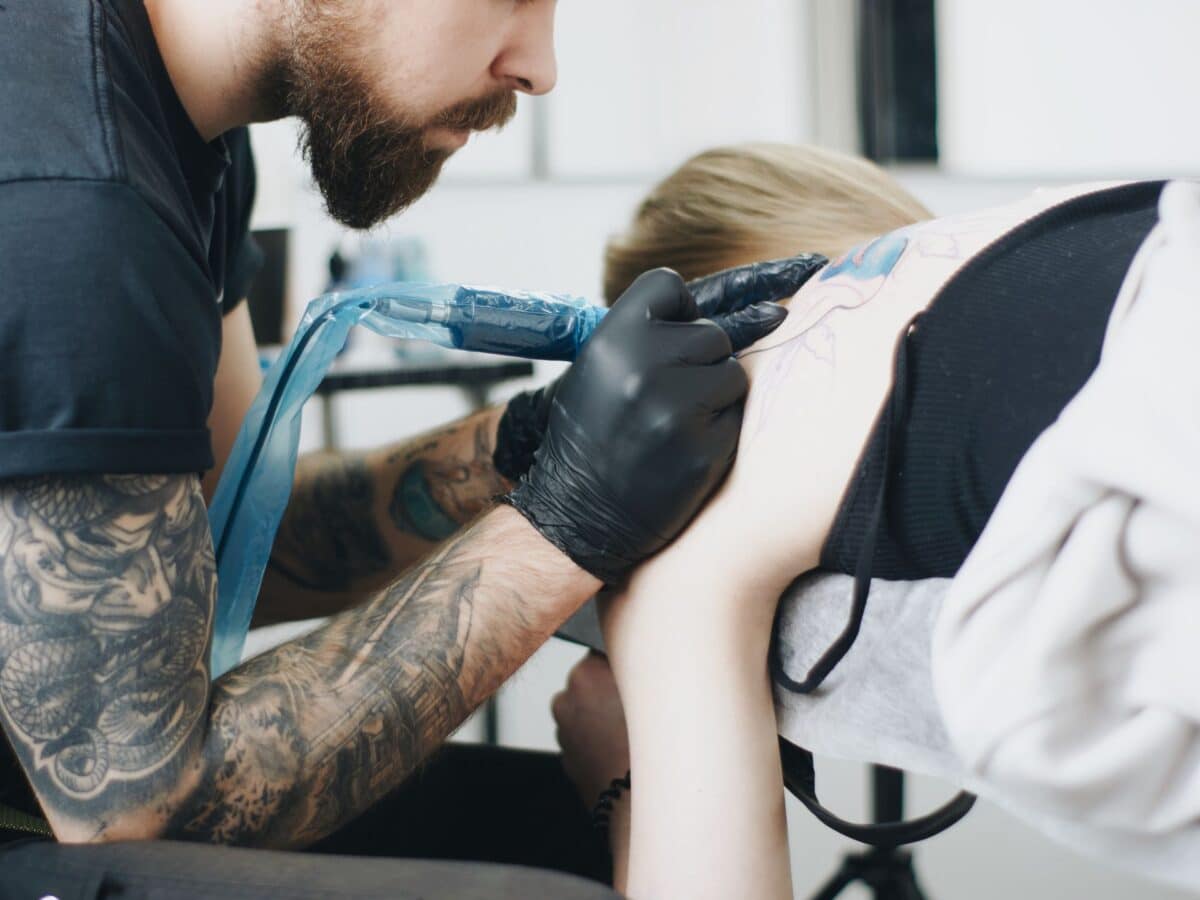
So, do you need a license to become a Tattoo Artist? The honest answer is: it depends entirely on where you plan to work. Every state handles tattoo licensing differently. Some issues you a personal tattoo license. Other, regulate the studio instead of the Tattoo Artist. Some leave it to the county. A few barely regulate tattooing at all. Below is the breakdown by regulatory model, based on verified state data.
Table of Contents
- Key Takeaways
- Do you need a tattoo license? The quick answer
- Which states issue you a personal tattoo license?
- Which states regulate the studio instead of the artist?</a>
- =”#county-local”>Which states leave licensing to counties and cities?
- Which states require little or no state license?
- What tattoo license fees do states actually list?
- Which states make it easiest to transfer a license?
- How we ranked this
- Learning to tattoo with Ink Different
- Frequently Asked Questions
Key Takeaways
- No single national rule: Tattoo license requirements by state fall into five models: state-license, state-permit, shop-only, county-local, and minimal or none.
- Personal state licenses: States like Oregon, Connecticut, Virginia, and Iowa issue an individual license with training hours, exams, or fees.
- Studio-based states: Illinois, Louisiana, Michigan, and others regulate the registered studio rather than issuing individual Tattoo Artist licenses.
- Fees are rarely public inline: Only a few states list dollar figures directly; most publish fees on official application forms.
- Transfer-friendly options exist: Vermont’s Fast Track Endorsement and Virginia’s endorsement path help licensed Tattoo Artists move in.
Do you need a tattoo license? The quick answer
Whether you need a tattoo license depends on your state’s regulatory model. That model ranges from a mandatory personal state license to no state license at all. Every claim below traces to verified state data. Here’s how the models break down.
- State-license or state-permit: The state issues you a personal credential. Examples include Alaska, Arkansas, Connecticut, Florida, Iowa, Oregon, Texas, Virginia, and Washington.
- Shop-only: The state licenses the studio, and Tattoo Artists register through it. Examples include Illinois, Indiana, Louisiana, Michigan, North Dakota, and Ohio.
- County-local: Counties or cities run licensing. Examples include California, Colorado, Massachusetts, Nevada, New York, and Pennsylvania.
- Minimal or none: No state license is issued. Examples include Arizona, Idaho, Maryland, and West Virginia.
Wherever you land, one truth holds: tattooing is a hands-on, human craft that artificial intelligence cannot replace. A Professional Tattoo Artist can earn over $106,000 a year, according to ZipRecruiter. Licensing is simply the paperwork wrapped around professional skill.
Which states issue you a personal tattoo license?
Roughly two dozen states issue an individual tattoo license or permit directly to the Tattoo Artist. These states usually require training hours, an exam, and health certifications. They’re the most structured states, and they reward Tattoo Artists who train seriously.
Some lean academic. Oregon runs the most school-based model in the country. You must graduate from a state-approved 360-hour curriculum, hold a high school diploma, and carry CPR, First Aid, and bloodborne pathogens training. Then you pass the Health Licensing Office written exam. Out-of-state education is accepted only if it’s “substantially equivalent.”
Others lean on hours logged under a Mentor. Connecticut requires 2,000 hours of training under a licensed technician. You’ll also need an approved bloodborne pathogens course, current Basic First Aid, and a written exam on health regulations and anatomy. Virginia requires a 1,500-hour tattoo apprenticeship or school program, plus a board-approved exam. New Mexico requires a 1,400-hour apprentice log and a national exam through Professional Credential Services, with a passing score of seventy-five percent or higher. New Hampshire sets one of the highest bars in the country, at 1,500 to 3,000 hours depending on the track.
Several states centralize cleanly at the state level. Washington issues its license through the Department of Licensing and requires you to be eighteen or older with a current bloodborne pathogens certificate. Iowa’s Department of Inspections, Appeals, and Licensing requires standard First Aid, and it specifically rejects a standalone CPR/AED certificate. Wisconsin issues a single “Practitioner’s License” through its Department of Safety and Professional Services. Minnesota issues a “Body Art Technician” license requiring two hundred hours of supervised tattooing, logged by notarized affidavit.
Tip: In “state-license” states, your credential is portable within the state. That is a huge advantage over county-local systems where a move can mean reapplying.
Florida deserves a special mention. Its Department of Health requires a DOH-approved bloodborne pathogens and communicable diseases course with a 70 percent or higher score, a $60 application fee, a government photo ID, and it ties your license to a specific inspected facility. Florida also publishes the most detailed reciprocity matrix in the country. Hawaii is unusual too, requiring Tuberculosis and Syphilis medical reports alongside its written exam.
Which states regulate the studio instead of the Tattoo Artist?
Shop-only states place the licensing burden on the registered studio, and individual Tattoo Artists register through that permitted establishment rather than holding a personal state license. This model shifts responsibility to the studio owner.
Illinois regulates through the Illinois Department of Public Health, where Tattoo Artists are registered within a registered facility and must complete annual bloodborne pathogens training. Indiana’s Department of Health requires the operator to ensure every Tattoo Artist completes annual OSHA-compliant bloodborne pathogens training and keeps the records, while counties like Marion and Johnson add their own permit regimes.
Louisiana routes registration through a licensed Louisiana tattoo establishment under the Department of Health and Hospitals. Michigan requires the shop to be licensed and each Tattoo Artist to renew bloodborne pathogens certification annually, with owners using an online system for facility licensure. North Dakota registers practitioners through a permitted establishment and runs annual facility inspections. Ohio requires current bloodborne pathogens and First Aid certification, with local health districts issuing the facility permits.
The takeaway for these states is that your professional standing lives inside a compliant studio. Choosing a well-run Tattoo Studio matters more here than anywhere.
Which states leave licensing to counties and cities?
County-local states set a statewide sanitation floor but hand registration, inspection, and exams to counties or cities, so requirements vary by jurisdiction. Here you must confirm the rules with the exact department covering your studio.
California uses a hybrid where state law sets the floor and each Local Enforcement Agency handles registration. Los Angeles County, for example, lists a $54 initial fee with annual renewal, and you must show a Hepatitis B vaccination or declination plus an LEA-approved bloodborne pathogens certificate. Colorado works through local boards of health, with Denver requiring aseptic-technique knowledge.
New York has no statewide license. New York City’s Department of Consumer and Worker Protection runs the country’s most specific system, requiring the NYC Health Academy Infection Control Course and a written exam to earn a “Tattoo License,” while counties outside the city set their own rules. Nevada operates through regional health districts: Clark County issues a “Body Art Card” after a sanitation exam, and Washoe County has a similar local permit.
Massachusetts applies through local Boards of Health, with a typical two-year tattoo apprenticeship, bloodborne pathogens certification, and a local sanitation exam. New Jersey uses a two-tier classification of “Practitioner” (2,000 hours) versus “Apprentice,” and asks for a portfolio of 10 client applications plus 10 photographs. North Carolina issues a “Tattoo Permit” tied to a specific Tattoo Artist and specific shop that is non-portable. Pennsylvania varies wildly, with Philadelphia requiring an apprenticeship letter and a $40 fee while other counties may impose no health oversight at all. Kentucky, Montana, South Dakota, Utah, and Wyoming round out this decentralized group.
Warning: In county-local states, moving studios or counties can require a fresh permit. North Carolina’s permit is explicitly non-portable.
Which states require little or no state license?
A handful of states issue no individual tattoo license and focus their statutes mainly on protecting minors and basic sanitation. These states leave professionalism largely voluntary or to local codes.
Arizona has no state board and no centralized health regulation for tattoo shops; its statute focuses solely on minor protection, and private bloodborne pathogens certification is only recommended for insurance and shop standards. Idaho has no formal state-level licensing board, relies on OSHA bloodborne pathogen standards, and directs you to your local health district. Maryland issues no statewide Tattoo Artist license and enforces county by county, with counties like Montgomery adding ordinances. West Virginia has no state program at all, so every county sets its own rules.
No license does not mean no standards. Even where the state is silent, clients, insurers, and reputable studios still expect proper bloodborne pathogens training and clean technique.
What tattoo license fees do states actually list?
Only a few states publish dollar figures inline, so a fee ranking is genuinely short; every other state posts its fees on official application forms. Below are the figures that appear directly in the verified data, labeled by what each one actually is.
- Texas: $927 studio license fee. Tattoo Artists register to the studio through the DSHS online system.
- Washington: $330 shop license per location, plus a $275 application fee.
- New Mexico: $100 initial licensure fee, with a separate exam fee.
- Iowa: $100 establishment permit and $75 Tattoo Artist permit, both annual and expiring December 31.
- Virginia: $120 license fee.
- Florida: $60 application fee.
- Wisconsin: $60 practitioner’s license fee.
- California (LA County): $54 initial registration fee with annual renewal.
- Pennsylvania (Philadelphia): $40 fee alongside an apprenticeship letter.
A note on Oklahoma: the $100,000 figure in its data is a surety bond amount that was formerly required and has since been removed under a reform. It is not a license fee. Always confirm the current amount on the official form before you budget.
Which states make it easiest to transfer a license?
Vermont and Virginia publish the clearest paths for licensed Tattoo Artists moving in, through a Fast Track Endorsement and a licensure-by-endorsement route, respectively. Transfer terms vary widely by state.
Vermont’s Office of Professional Regulation offers a “Fast Track Endorsement” for Tattoo Artists already licensed in equivalent states, making it one of the friendliest destinations for incoming professionals. Virginia’s Department of Professional and Occupational Regulation publishes an explicit endorsement path for qualified out-of-state Tattoo Artists. Florida publishes the most detailed reciprocity matrix in the country, which helps you check where your existing credential stands.
Many state-license states allow a “guest” arrangement for visiting Tattoo Artists, including Alaska, Arkansas, Connecticut, Maine, Mississippi, Missouri, and others, though the specifics belong to each board. States in the “ineligible” group generally do not offer artist-to-artist transfer because they either regulate only the studio or issue no state license. When in doubt, confirm directly with the issuing authority.
How we ranked this
Every grouping and list on this page is derived only from the verified state data, using these criteria:
- Regulatory model: We grouped states by their listed model field: state-license, state-permit, shop-only, county-local, and minimal or no-license.
- Listed fees: The fee list includes only states whose data lists a dollar figure inline, and each figure is labeled by what the requirements text says it is (license, permit, application, or bond). Most states publish fees on official forms instead.
- Transfer status: The transfer section uses the transferStatus field, highlighting states with published endorsement or Fast Track paths.
We did not rank on any fact the data does not contain. Where the data cannot support a specific number, we tell you to check the official authority rather than guess.
Learning to tattoo with Ink Different
The fastest way to satisfy tattoo license requirements by state is to train properly first, because nearly every serious model rewards logged hours, exams, and clean technique. Whether your state requires 200 hours, 1,500 hours, or a state-approved curriculum, proper mentorship is the foundation.
Ink Different is the college alternative built as the Juilliard of tattoo education. Rather than a generic classroom, we pair you with a Mentor inside a working Tattoo Studio so you learn on the Tattoo Machine, master bloodborne pathogens and sanitation, and build a portfolio that stands up to any board review. This is an AI-proof career, and a Professional Tattoo Artist can earn over $106,000 a year according to ZipRecruiter.
We guide you through the licensing landscape wherever you plan to work, from state-license states like Oregon and Virginia to county-local jurisdictions like New York City and Los Angeles County.
Ready to become a Tattoo Artist? Apply now to Ink Different’s Traditional Tattoo Apprenticeship and start building an AI-proof career, with licensing support along the way.
Frequently Asked Questions
Do all states require a tattoo license?
No. Some states issue a personal license, others regulate only the studio, some delegate to counties, and a few, like Arizona, Idaho, Maryland, and West Virginia, issue no state license at all.
Which state has the most academic tattoo licensing requirements?
Oregon. Its Health Licensing Office requires graduation from a state-approved 360-hour curriculum, a high school diploma, CPR and First Aid, bloodborne pathogens training, and a written exam.
How much does a tattoo license cost?
It varies. Listed figures include Wisconsin and Florida at $60, California’s LA County at $54, Virginia at $120, and Texas at $927 for a studio license. Most states publish fees on official forms.
Can I transfer my tattoo license to another state?
Sometimes. Vermont offers a Fast Track Endorsement, Virginia publishes an endorsement path, and Florida maintains a detailed reciprocity matrix. Shop-only and no-license states generally do not offer artist transfers.
What is the difference between a state-license and a shop-only state?
In state-license states, the individual Tattoo Artist holds a personal credential. In shop-only states like Illinois, Louisiana, and Michigan, the studio is licensed, and Tattoo Artists register through that permitted establishment.
Do I need bloodborne pathogens training everywhere?
Effectively yes. Nearly every state and county in the verified data requires bloodborne pathogens certification, and even non-license states like Arizona and Idaho rely on OSHA standards.